
10 Pest Tips That Actually Work
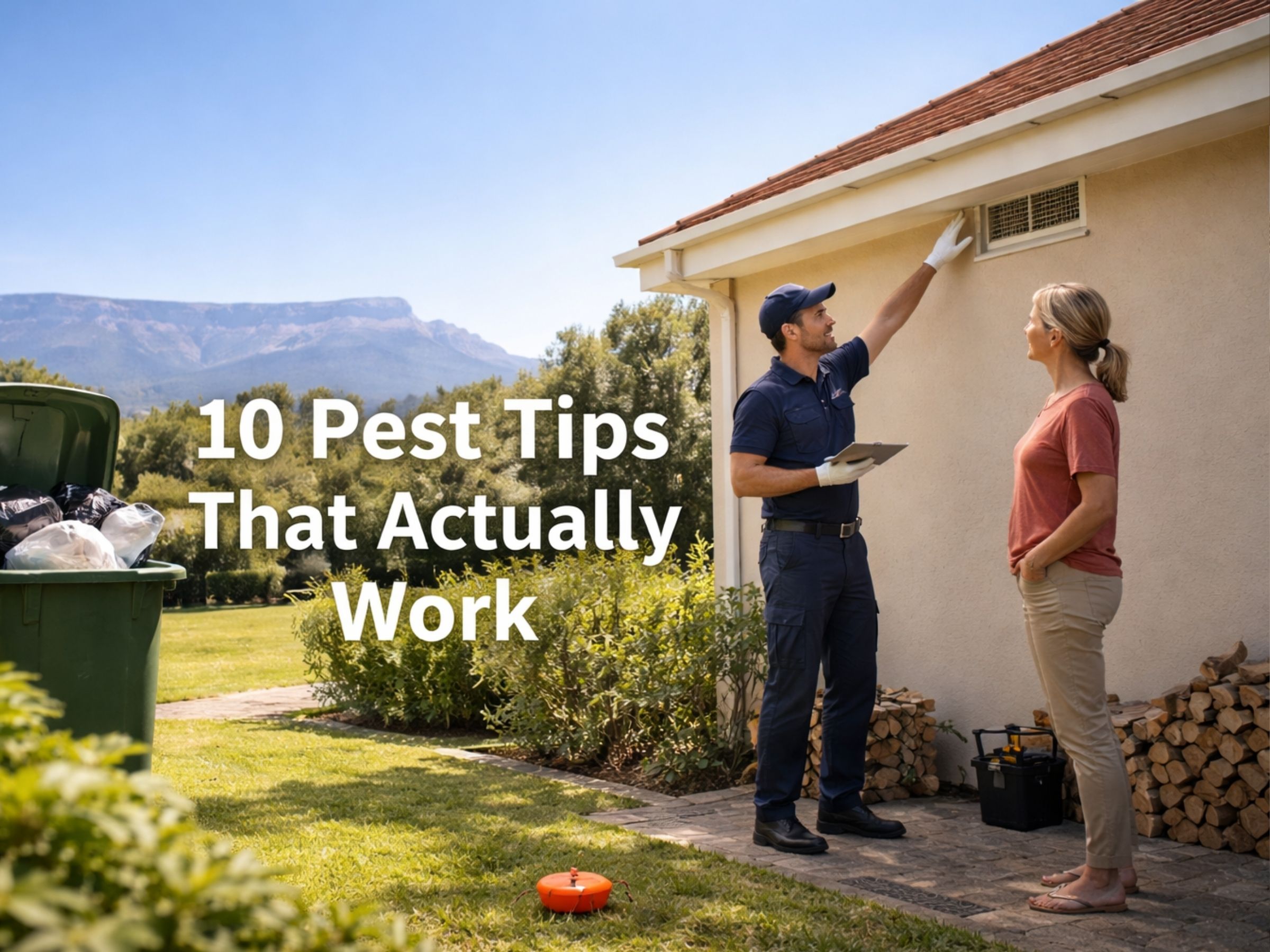
Pest Control Cape Town – Local Strategies That Deliver Results
Cape Town has a Mediterranean climate that shifts sharply between wet winters and dry summers. Each suburb carries its own environmental pattern, and pest activity follows those patterns closely. From the river corridors of Rondebosch to the coastal edges of Muizenberg, from high-density areas in Woodstock to family homes in Durbanville, effective pest control begins with understanding local conditions.
These strategies come from real properties across the Cape and reflect what consistently produces strong results.
1. Seal Entry Points Before Winter Rains Begin
In suburbs like Newlands, Claremont, and areas near the Liesbeek River, rodent movement increases as winter rain approaches. Rodent control in Cape Town starts with exclusion. Seal pipe penetrations with cement mortar or steel mesh, install brush strips beneath garage and external doors, and inspect roof eaves and fascia boards annually. When entry points are sealed early, rodent pressure reduces significantly during winter months.
2. Eliminate Moisture Sources in Apartments
In Sea Point, Green Point, and the Atlantic Seaboard, German cockroach activity often centres around plumbing areas. Cockroach treatment is most effective when moisture control is part of the plan. Repair leaking traps and under-sink plumbing, keep sink areas dry overnight, and store cleaning cloths outside cupboards. Moisture management supports long-term cockroach control.
3. Maintain Clean, Sealed Refuse Areas
In high-density suburbs such as Woodstock, Salt River, and parts of Observatory, refuse management directly influences rodent activity. Effective pest control includes environmental management. Use bins with intact, tight-fitting lids, wash communal bin areas weekly, and position bins away from boundary walls. Clean refuse areas reduce burrowing and nesting opportunities.
4. Trim Trees Away from Rooflines
In Durbanville, Brackenfell, and older northern suburbs with established trees, roof rats use branches as access routes. Rodent control specialists frequently identify roofline access as a primary entry factor. Trim branches at least one metre from roofs, store firewood away from exterior walls, and conduct annual roof void inspections. Clear rooflines protect internal spaces.
5. Begin Ant Control Early in Summer
In Table View, Blouberg, and coastal zones, ant activity rises sharply with warmer weather. Ant control services perform best when started early in the season. Apply professional baiting systems, seal window track gaps, and maintain clean kitchen surfaces. Early intervention supports long-lasting colony control.
6. Inspect and Protect Wooden Structures
In heritage areas such as Constantia, Bishopscourt, and parts of Kenilworth, exposed beams and timber floors benefit from annual inspection. Wood borer treatment services regularly detect early-stage infestations in roof spaces. Inspect exposed timber annually, maintain airflow in roof spaces, and apply targeted professional treatments when required. Timber maintenance preserves structural integrity.
7. Secure Stormwater and Drainage Points
In coastal suburbs like Muizenberg, Kalk Bay, and Strand, drainage systems influence rodent pathways. Rodent control solutions often include drainage inspections. Install non-return valves where applicable, repair broken drain covers, and monitor sewer connection points. Well-maintained drainage systems support long-term protection.
8. Monitor Holiday and Short-Term Rental Properties
In Camps Bay, Bantry Bay, and luxury coastal areas, properties that stand vacant for periods benefit from preventative monitoring. Pest control inspections reduce surprise infestations. Remove food before vacancy, install monitored trapping systems, and schedule periodic inspections. Consistent monitoring maintains property standards.
9. Maintain Lawn Health to Reduce Subterranean Activity
In Milnerton, Edgemead, and sandy-soil areas, lawn grubs and mole activity are seasonal considerations. Integrated pest control services often include soil treatment. Apply seasonal soil treatments, maintain balanced irrigation, and address mole tunnels promptly. Healthy lawns support stable outdoor environments.
10. Schedule an Annual Professional Inspection
Across Cape Town, pest patterns shift with climate cycles, new construction, and seasonal changes. A structured inspection plan strengthens overall property protection. Annual roof and perimeter inspections, increased monitoring in high-risk suburbs, and clear documentation of findings all provide measurable long-term value.
Why Cape Town Requires Local Expertise
Cape Town's Mediterranean climate produces wet winters that influence rodent movement, dry summers that increase ant and cockroach activity, coastal salt air that affects structural seals, and mountain winds that shift organic debris. Local knowledge enhances effectiveness, and suburb-specific strategies produce stronger results than generic approaches.
Final Word
Effective pest control in Cape Town is built on timing, structure, and environmental awareness. From Durbanville to Muizenberg, from Sea Point to Milnerton, these ten strategies form a practical foundation for residential and commercial protection. Well-maintained properties remain resilient, and consistent prevention supports peace of mind.