Weed species guide
National weed methodology: weeds hub, how we treat weeds, weed guarantees, weed control by area. Identification: weed identification. Safety: treatment safety.
Poa annua · cool-season · low-cut seeding
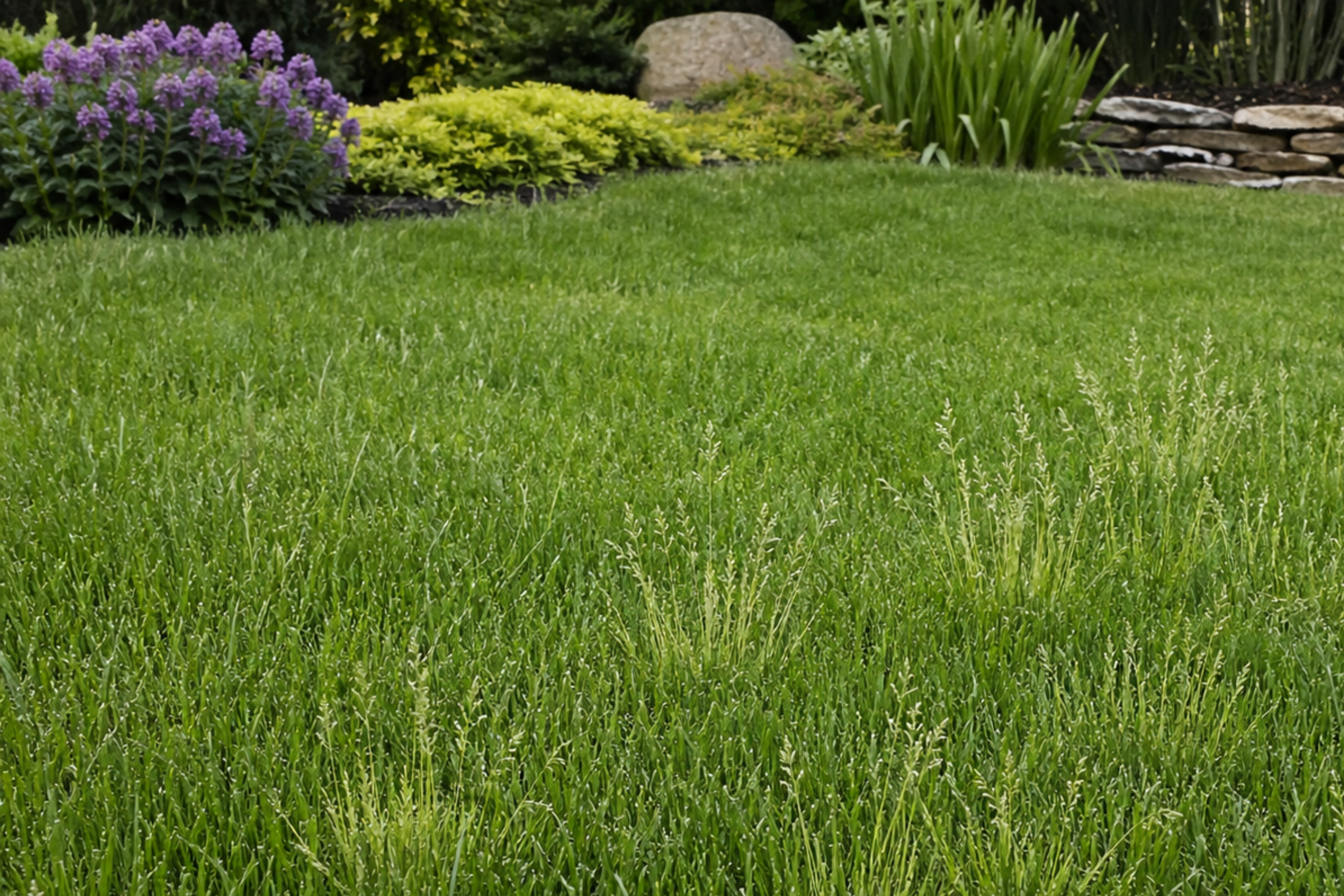
Annual bluegrass (Poa annua) often blends into turf before revealing itself with heavy pale seedheads. Its key strength is reproduce-first survival: it stays low, tolerates close mowing, and still sets seed.
It is a cool-season grassy weed in the genus Poa, commonly treated as a winter annual. Some forms, however, behave as short-lived perennials in managed turf.
For turf management, the key truth is this: Poa annua is not just rough lawn grass. It is a fast cool-season opportunist that establishes quickly, reproduces heavily, and maintains a strong seedbank.
Identify annual bluegrass by color, growth form, and distinctive seedheads.
Annual bluegrass combines fast cool-season establishment, prolific seed production, and tolerance of close mowing. It can germinate quickly under moisture, flower early, and keep feeding the soil seedbank.
This is why it often seems to appear suddenly: it is built to establish, reproduce, and reset the cycle before harsher summer conditions suppress annual forms.
Its special power is low-cut reproduction. Poa annua can stay short under managed mowing while still producing seedheads and viable seed.
Poa annua has flexible life strategy. Some populations behave strictly annual; others act more short-lived perennial. This adaptability helps explain its persistence across both home lawns and intensively maintained turf.
Myth: Annual bluegrass is just young lawn grass. Truth: It is a separate species with distinct seedheads and texture.
Myth: “Annual” means it always dies in one season. Truth: Some forms behave as short-lived perennials.
Myth: Mowing very low will stop it. Truth: It can still reproduce under close mowing.
Myth: Seedheads mean it is fading out. Truth: Seedheads are active reproduction, not decline.
Myth: It only appears in poor lawns. Truth: It also persists in highly managed sports and fine turf.
What is annual bluegrass / winter grass?
It is Poa annua, a cool-season grassy weed commonly described as a winter annual, though some forms can behave like short-lived perennials.
How do you identify annual bluegrass?
Look for a light green clump, pale seedheads, and leaf features such as a boat-shaped tip and membranous ligule.
Why is it so noticeable in spring?
It produces lots of pale seedheads, which stand out strongly against surrounding turf.
Is annual bluegrass always annual?
No. Many forms are annual, but some can behave as short-lived perennials.
Does low mowing stop it?
Not reliably. Poa annua is known for producing seedheads even at very low mowing heights.
What is its hidden advantage?
Its hidden advantage is low-cut reproduction: the ability to stay short and still reproduce effectively.
Annual bluegrass is underestimated because it looks soft and ordinary until seedheads surge. Its real supremacy is short-form reproduction: live low, seed heavily, and persist through seedbank strength and flexible life strategy.