Weed species guide
National weed methodology: weeds hub, how we treat weeds, weed guarantees, weed control by area. Identification: weed identification. Safety: treatment safety.
Digitaria spp. · summer annual · lateral spread
Crabgrass usually refers to Digitaria species such as large crabgrass (D. sanguinalis) and smooth crabgrass (D. ischaemum). It is a warm-season annual grass weed that spreads outward across open turf in hot weather.
Crabgrass is a summer annual grass weed in the genus Digitaria. It is not just “bad grass” — it is a heat-adapted annual coloniser built to exploit thin turf and open soil, grow quickly, set seed, and leave the next generation behind in one season.
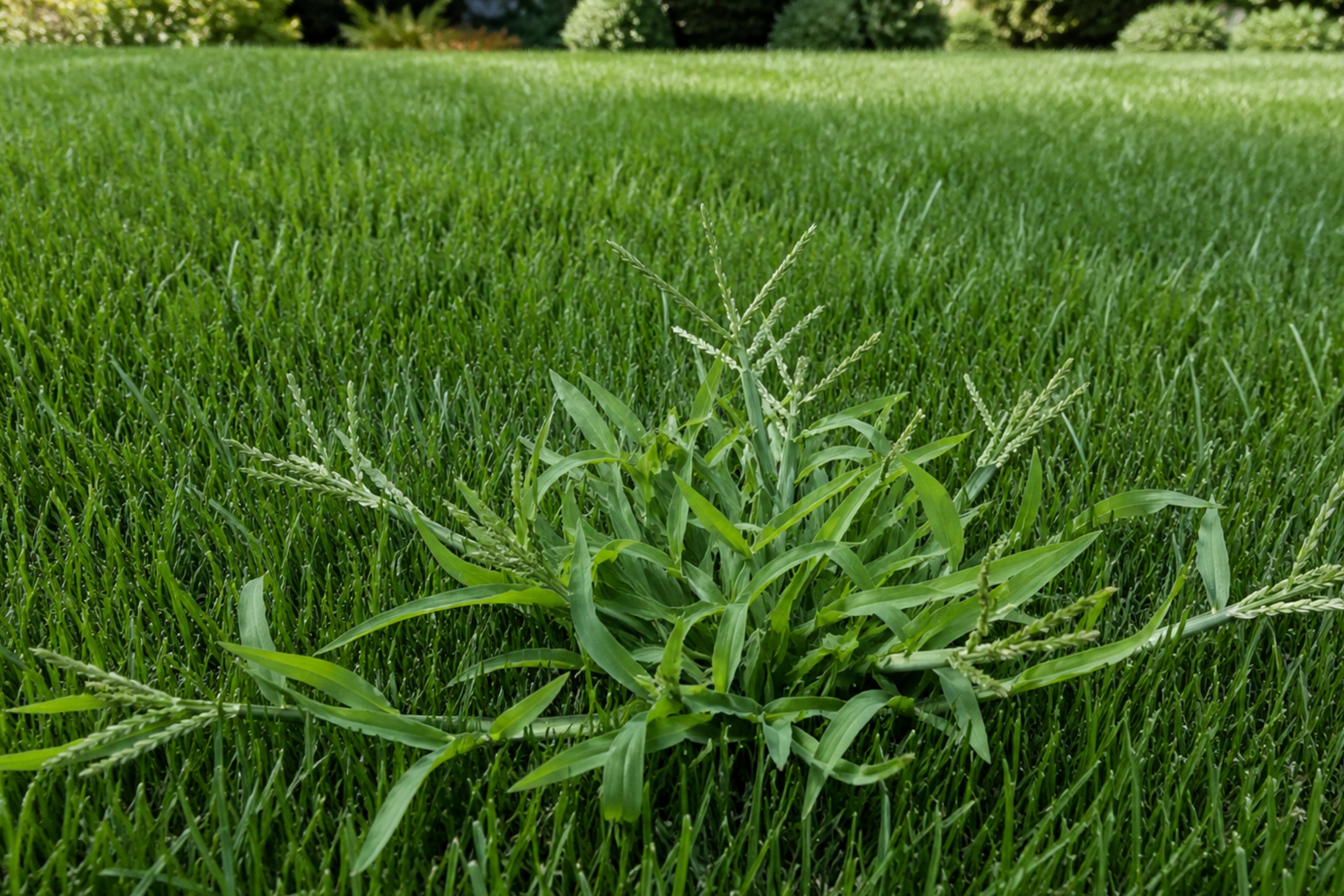
Identify crabgrass by growth form, color, and seedhead shape.
Crabgrass combines rapid warm-season growth, aggressive tillering, and heavy seed production. A single plant can produce huge seed loads, turning one missed survivor into a broad infestation when turf is stressed by summer heat.
Its special power is lateral occupation. Crabgrass wins by taking surface territory sideways rather than competing by height.
Crabgrass can still reproduce under mowing pressure. Low mowing may suppress appearance without stopping seed set once plants are established.
Myth: Crabgrass is immature lawn grass. Truth: It is a separate weed grass genus (Digitaria).
Myth: All crabgrass is identical. Truth: Large and smooth crabgrass differ in surface traits like hairiness.
Myth: Mowing short makes it disappear. Truth: Short mowing often hurts turf more than it stops crabgrass reproduction.
Myth: It only spreads by seed. Truth: Seed drives long-term persistence, while lateral tillering and spread drive in-season dominance.
Myth: Crabgrass means lawn failure is permanent. Truth: It usually signals openings — thin turf, stress, and exposed soil.
What is crabgrass?
Crabgrass is a group of warm-season annual grasses in the genus Digitaria, especially large crabgrass (D. sanguinalis) and smooth crabgrass (D. ischaemum) in lawns.
How do you identify crabgrass?
Look for a light green, spreading grassy clump with coarse leaves and finger-like seedheads.
Why is it so persistent?
It grows fast in heat, spreads outward through many tillers, and can produce huge amounts of seed.
Is crabgrass perennial?
No. In turf settings it is usually a summer annual, meaning it completes its life cycle in one season.
Does mowing get rid of it?
Not by itself. Established crabgrass can still survive low mowing and even set seed.
What is its hidden advantage?
Its hidden advantage is lateral occupation: the ability to spread outward, stay low, and dominate open ground quickly.
Crabgrass is underestimated when seen as rough grass in the wrong place. Its real supremacy is horizontal control: low spread, high tillering, heat-timed growth, and heavy seed output that turns small misses into large infestations.