Weed species guide
National weed methodology: weeds hub, how we treat weeds, weed guarantees, weed control by area. Identification: weed identification. Safety: treatment safety.
Cyperus spp. · triangular stems · tubers
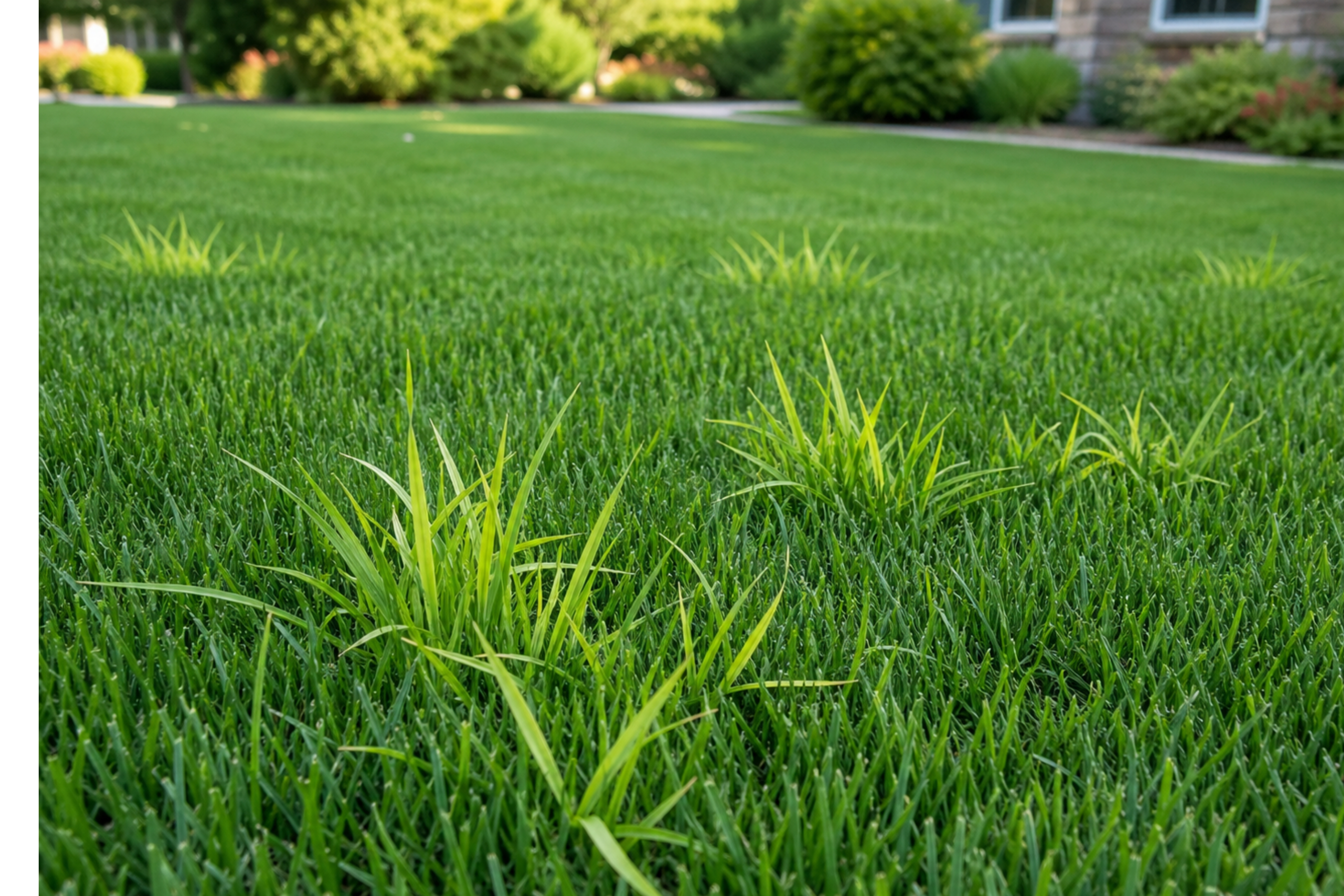
Nutsedge is one of the most frustrating turf weeds because it looks grassy but behaves differently. Its core advantage is underground survival engineering: rhizomes, bulbs, and tubers drive persistence beyond the visible shoots.
Nutsedge is a sedge in the genus Cyperus, not a true grass. The most troublesome lawn species are usually yellow nutsedge (Cyperus esculentus) and purple nutsedge (Cyperus rotundus).
For practical identification, the key rule is: sedges have edges. Nutsedge stems are typically triangular, unlike many round-stemmed turf grasses.
Identify nutsedge by growth habit, leaf arrangement, stem geometry, and seedhead form.
Nutsedge combines rapid top growth with deep underground persistence. Surface shoots regrow from hidden reserves in rhizomes, basal bulbs, and tubers, which is why visible removal often fails to end an infestation.
Its special power is underground energy banking. Tubers (“nutlets”) store reserves that fuel repeated resprout cycles after top growth is removed.
Not all nutsedges behave equally. Yellow and purple nutsedge differ in underground aggressiveness, with purple nutsedge often regarded as the tougher long-term eradication problem.
Myth: Nutsedge is just another grass. Truth: It is a sedge with triangular stems and different biology.
Myth: If pulled, it is gone. Truth: Regrowth from nutlets and rhizomes is common.
Myth: It only grows in wet soil. Truth: Wet conditions favor establishment, but underground reserves drive persistence beyond wet spots.
Myth: All nutsedge is equally bad. Truth: Species differ, and purple nutsedge is often more difficult due to prolific tubering.
Myth: No seedheads means no nutsedge. Truth: Vegetative underground spread can dominate even before seedheads are obvious.
What is nutsedge?
Nutsedge is a group of troublesome sedges in the genus Cyperus, especially yellow nutsedge (Cyperus esculentus) and purple nutsedge (Cyperus rotundus).
Is nutsedge a grass?
No. It is a sedge, not a grass. A key clue is the triangular stem.
Why is nutsedge so hard to remove?
It spreads and survives through rhizomes, bulbs, and tubers, not just visible shoots.
Does nutsedge only spread by seed?
No. Seed can be produced, but vegetative spread through underground structures is a major reason it persists.
What is the difference between yellow and purple nutsedge?
They differ in appearance and underground behavior. Purple nutsedge is often considered harder because of more prolific tubers, while yellow nutsedge is often somewhat shallower and less aggressive underground.
What is its hidden advantage?
Its hidden advantage is underground energy banking: the ability to store reserves in tubers and resprout repeatedly.
Nutsedge is deceptive because the visible top looks simple. Its true power is below ground: a reserve-and-repeat system that keeps sending up new growth from rhizomes, bulbs, and tubers.