
When the Cats Left, the Birds Came
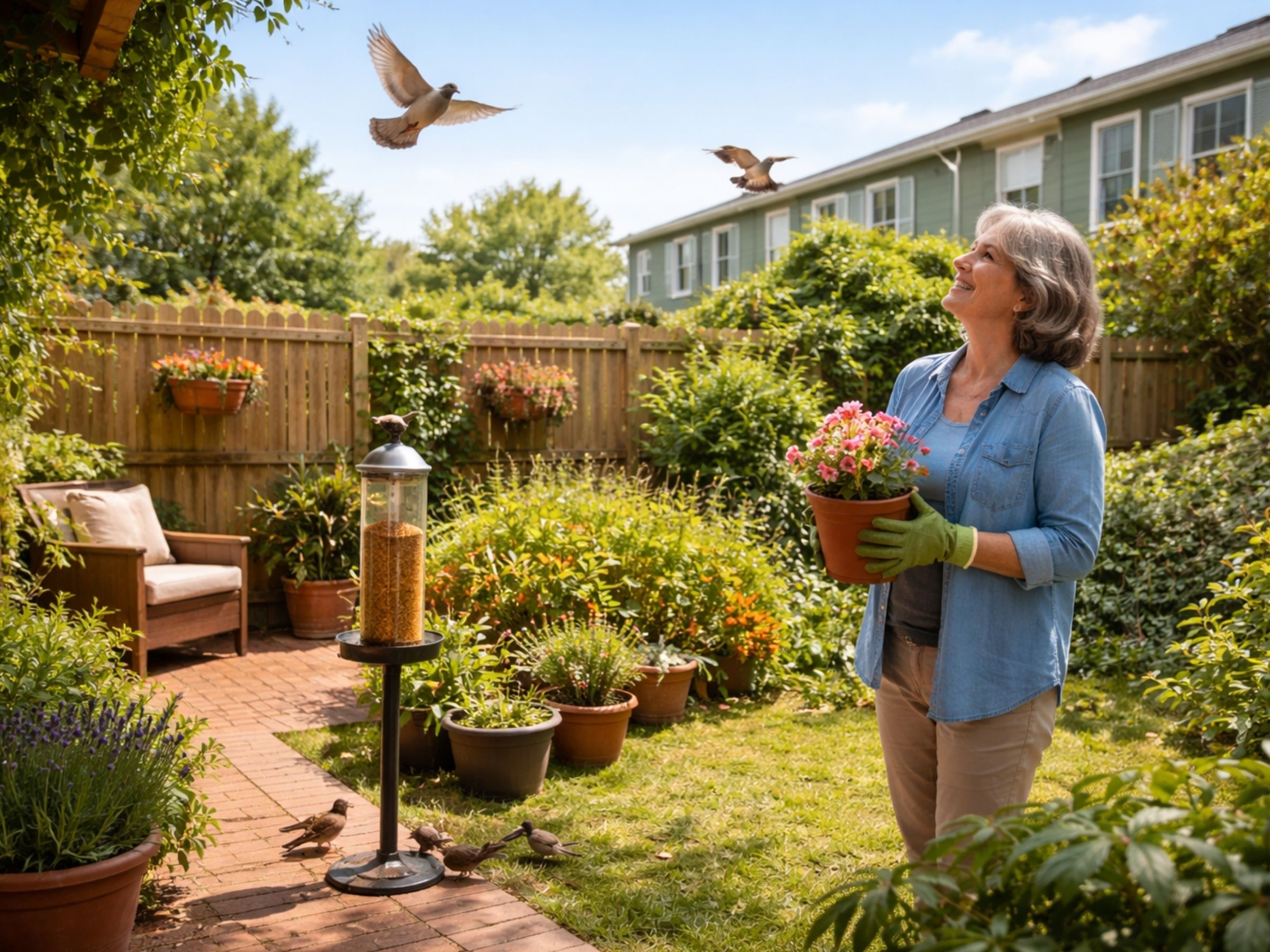
She had always had cats.
The garden had known it. The doves had known it. The starlings that massed on the power lines at dusk had known it—they had kept a respectful distance from the stoep and the fruit trees for twenty years. The cats had never been cruel; they had simply been present. Their smell, their movement, the occasional flash of a tail in the long grass. It was enough. The birds had found other places to loaf and nest and leave their droppings.
Then the last cat went. Old age. A quiet end under the vet’s care. She buried him at the bottom of the plot where the aloes grew, and the garden fell silent in a way it had not been silent since she had first moved in.
Within a week, the birds had arrived.
The Sky Filled With Wings
They came in waves. Doves cooing from the gutters at first light. Starlings in chattering clouds on the roof. Sparrows in the creepers, finches in the feeder she had never quite taken down. They fouled the paving, blocked the downpipes with nesting material, and woke her at dawn with a din that felt almost deliberate. She had never wished the cats back out of malice—but she had begun to understand, in a raw and practical way, why their presence had been so effective. They had been real. Alive. Unpredictable. The birds had learned, over generations, that this patch of ground was not entirely theirs.
So she went looking for something to take their place.
The Lights That Promised Everything
Someone at the co-op told her about LED deterrents. Flashing lights, they said. Birds don’t like it. She bought a unit that promised to sweep the yard with pulses of light at intervals—harmless to the eye, unbearable to birds. She mounted it where the old cat used to sit in the sun, and for three days she allowed herself to hope. The doves did seem jumpy at first. They lifted from the gutter when the pattern changed. Then they came back. Then they stayed. By the end of the week they were roosting in the same spot, and the LED had become part of the scenery. Another flicker in a world full of flickers. She had read, later, that ordinary LED systems are not regarded as a universal bird-repellent—that effectiveness depends on species, environment, time of day, and whether the birds simply get used to the pattern. They had got used to it.
The Sound of False Hope
Next she tried sound. A device that played distress calls and predator warnings on a loop. For a few mornings the starlings did not settle. They wheeled and called and left the roof empty. She felt a grim satisfaction. Then they returned. Then they ignored it. The manual said to vary the pattern; she varied it. The effect did not last. Birds habituate to repeated sound—it is a well-recognised limitation of acoustic deterrents. What disturbs one species may mean nothing to another. Ultrasonics, she was told, were not well supported by evidence for bird control; many birds do not respond to those frequencies at all. She had learned the hard way what the reports state plainly: sound may give short-term relief when it is new. It is not a guarantee, and it is not a permanent solution.
Light and Sound Together
She tried both. A combined unit—LED and speaker—meant to disrupt and disorient. Perhaps, in some settings, such systems add to the confusion. On her property, the birds adapted. They learned the rhythm. They learned that the noise and the light did not lead to danger. They came back to the gutters, the roof, the fruit trees. The mess and the noise and the dawn chorus remained. She was left with boxes of equipment and the same problem she had started with.
What Actually Works
When she finally spoke to a bird control professional, the advice was clear. LED lights, sound devices, or both together may help in some circumstances—but they cannot be relied on to repel all bird species. Results are variable and often temporary. The only approach that holds up is a combined one: physical proofing and exclusion, reducing nesting and roosting sites, removing food and water that draw birds in, and using targeted, species-specific measures where they make sense. Then monitoring, and adjusting. No single gadget replaces that. Not lights. Not sound. Not the promise on the box.
For her, that meant netting where it was practical, sealing gaps that had given access to ledges and beams, and rethinking the feeder and the water dish that had been left out for the cats. It meant accepting that the solution would be ongoing—not a switch to flip, but a strategy. She had learned, in the same way she had learned from the cats, that the natural world does not respond to simple tricks. It responds to pressure that is consistent, intelligently applied, and grounded in how birds actually behave.
The Garden After
She never got another cat. The house had turned a corner; she was not sure she could go through that loss again. But she had taken back the stoep and the gutters and the quiet of the early morning. Not with a miracle device, but with proofing, exclusion, and a plan that the professionals had helped her put in place. The doves still passed over. The starlings still gathered on the lines. But they no longer owned the place. She did.
If you are facing a bird problem and have already discovered that lights and sound alone are not enough, the same principle applies: an integrated, site-specific approach is the only one that is both credible and effective. Book a free inspection and we can help you design a bird management strategy that works—without false promises, and without gadgets that let you down when the birds learn to ignore them.