Where the Tide Turned
For months, the complex had lived under a quiet oppression.
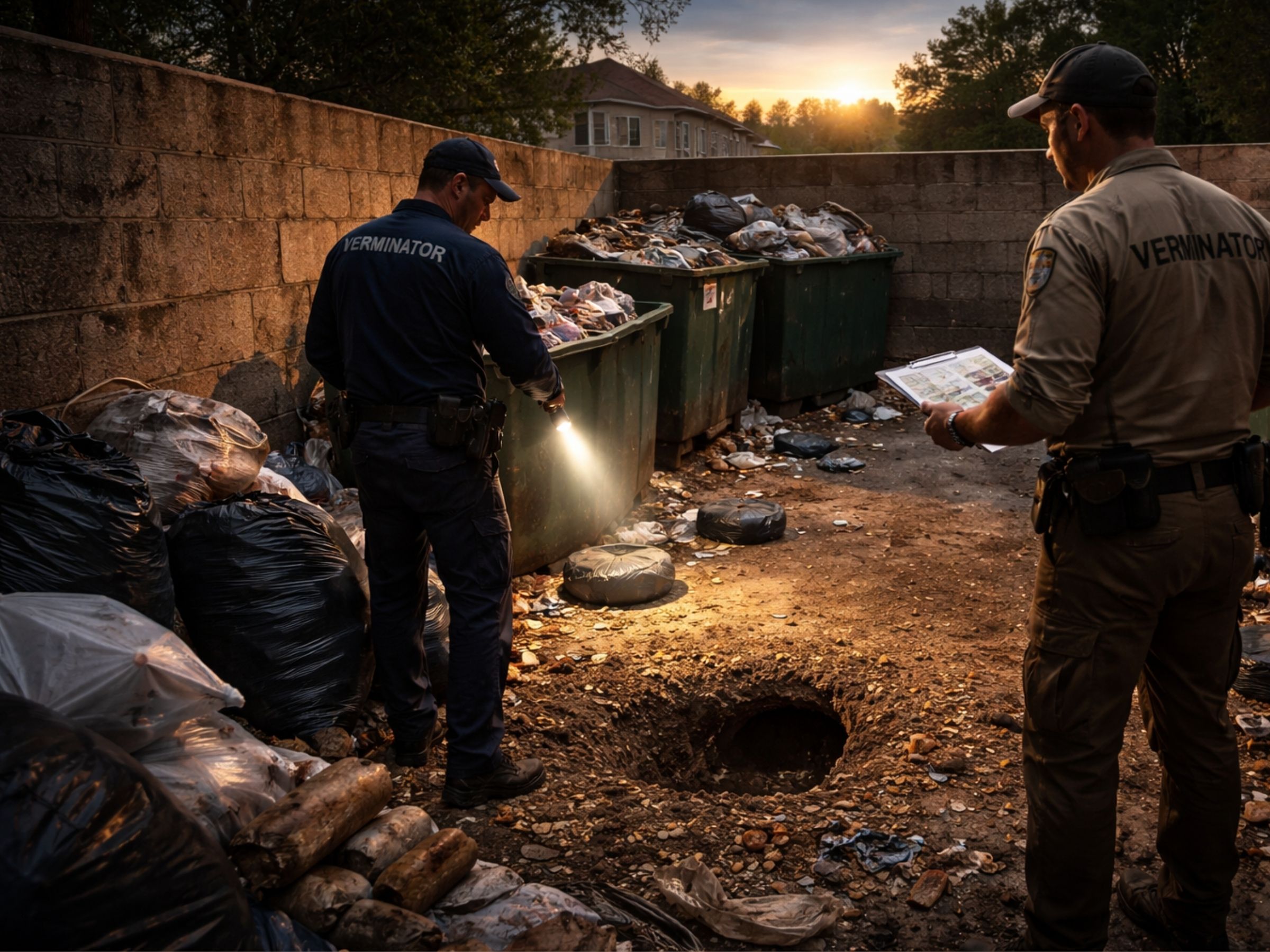
It settled first over the waste area, though no one used words so dramatic at the beginning. People spoke instead of signs. A sound in the night near the refuse zone. Disturbed soil in the morning. Tunnels appearing where the ground had once been smooth. The quick, unnerving movement at the edge of sight. Then came the deeper discomfort that rodent infestation always brings — not only the physical intrusion, but the feeling that something unclean and persistent has laid claim to part of one's environment.
At a residential complex, this is never a small matter.
The burden falls on everyone. The caretaker grows weary of seeing the same activity return. Residents lose their ease. The waste area becomes a place of unease rather than simple routine. Property managers face the slow frustration of repeated complaints, repeated measures, repeated expense. And always there is the same heavy question hanging over the site: why does this problem keep returning?
At this Durban complex, every ordinary effort had already been made.
Treatments had been attempted. Measures had been put in place. Attention had been given. Yet the infestation kept its footing. The rodents remained woven into the life of the waste area, moving with the confidence of a population that knew the ground well, knew the rhythms of the place, and knew exactly where sustenance could be found.
That was the true nature of the problem.
This was not a passing nuisance.
It was an established pestilence.
A Place That Fed the Problem
The waste area held everything the rodents desired. Food came to it continually. Shelter lay close by. Edges, walls, corners, and ground conditions all created natural lines of movement. Over time, the place had become more than a feeding point. It had become a centre of confidence — a place where the infestation could gather, renew itself, and extend its reach into the surrounding property.
The signs in the ground told the story clearly.
Tunnels near the refuse perimeter.
Runways pressed into habit.
Small openings in the soil that spoke of movement beneath the surface.
A pattern not of desperation, but of order.
An infestation becomes formidable when it finds routine. It becomes truly exhausting when routine survives every ordinary attempt to break it.
And that was why a different quality of thinking was required.
The Sardine Run Principle
Along the South African coast, the sardine run reveals one of nature's great lessons. A vast body of life gathers and moves according to current, temperature, and instinct. Then the predators begin their work. Dolphins shape the shoal. Sharks read its movement. Gannets strike from above. The sea becomes a theatre of intelligence, where success belongs to those who understand concentration, timing, and flow.
The strength of the predator lies in reading the system as a whole.
This principle translates powerfully into rodent control.
A serious infestation cannot be understood as scattered moments of activity. It must be read as a living pattern. Where does the population gather? Where is it fed? Where does it move with the greatest ease and confidence? Which area acts as the current line that draws the whole system into form?
At this Durban complex, the answer was unmistakable.
The waste area had become the sardine run of the infestation — the place where movement concentrated, where the population thickened, where the invisible tide of rodent life gathered itself into something structured and powerful.
And once that was understood, the campaign could begin properly.
What Others Had Missed
Previous efforts had touched the problem.
They had not mastered it.
That is often the difference between general treatment and true field understanding. The eye sees activity, but the trained mind sees organisation. One sees a pest problem; the other sees a population behaving according to reward, shelter, pressure, and habit.
The earlier measures at this complex had not lacked sincerity. They had simply not yet found the heart of the matter. The rodents had retained their rhythm. The waste area continued to sustain them. The tunnels continued to speak of confidence. The site continued to bear that peculiar weariness known to anyone who has dealt with a mature infestation — the sense that the pest has learned to outlast interruption.
Then Verminator arrived.
And from the first inspection, the reading of the site changed.
The ground was not merely disturbed; it was expressive.
The waste area was not merely active; it was central.
The tunnelling was not merely troublesome; it was revealing.
This was the place to apply pressure with real intelligence.
The Opening of the Campaign
The first phase centred on the waste area with full intention.
Not because it was the easiest place to start, but because it was the truest place to start.
The refuse zone offered concentration. It offered repeat movement. It offered behavioural clarity. It offered the sort of site intelligence that allows a serious operator to begin with strength rather than guesswork.
The area was studied carefully.
Burrow openings were read as living indicators of use.
Perimeter edges were treated as channels of movement.
Runways were observed for rhythm and consistency.
The waste zone itself was understood as the great meeting point of the infestation.
This is where predatory reasoning has value. A predator does not waste effort on spectacle. It commits force where movement is richest and where the pattern yields the greatest advantage. In the sardine run, the shoal itself provides the key. At this complex, the waste area did the same.
The Weight of the Pestilence
People who have never endured a serious rodent problem often imagine it as a simple inconvenience. Those who have lived with it know better.
There is a weariness that comes from repeated sightings.
There is disgust in seeing tunnels spread through the ground near a communal waste area.
There is frustration in knowing that food, filth, and movement have become joined in one ongoing cycle.
There is a loss of dignity when a shared residential environment begins to feel as though it is being contested by vermin.
Rodent pestilence diminishes a place. It burdens staff. It unsettles residents. It erodes confidence in the management of a property. It creates the sense that disorder has gained a foothold and intends to keep it.
This is why success in rodent control matters so deeply.
It is never only about removing pests.
It is about restoring peace.
It is about restoring standards.
It is about giving a property back its order.
When the Site Began to Change
As the first phase progressed, the tone of the site began to shift.
The waste area, once the stronghold of the infestation, became the very place where its patterns were most legible and most effectively addressed. The more the behaviour was understood, the more the control service gathered authority. What had once felt oppressive and repetitive began to yield to structure, reporting, and disciplined intervention.
The team could feel it.
The caretaker could feel it too.
There is a moment in any successful campaign when hope returns quietly. It does not arrive with fanfare. It appears in the confidence of the reporting, in the steadiness of the strategy, in the sense that the problem is finally being met by something equal to its scale.
That moment came here.
The site was no longer simply suffering from infestation.
It was being understood.
And because it was being understood, it could be overcome.
A Believable Scene from the Property
One can picture the caretaker again in the early light, standing near the refuse area where so much frustration had gathered over time. He had seen the ground open and reopen. He had watched the same zone carry the same pressure. He had likely wondered more than once whether the place would ever truly come right.
Now, however, there was method where before there had only been recurrence.
The area was no longer just a place of activity. It had become the focal point of a coherent campaign. Every sign in the soil carried meaning. Every treatment point had purpose. Every visit added to a growing body of knowledge about how the infestation lived and moved.
This is the kind of change that restores faith in professional work.
The Meaning of Success
Success at a site like this is not simply a reduction in visible activity, though that matters greatly. Success is deeper than that.
It is the turning of the tide.
It is the moment when a property no longer feels at the mercy of a hidden population. It is the moment when suffering gives way to confidence, when repeated failure gives way to disciplined progress, when the very place that once sustained the pest becomes the place where control is first and most powerfully established.
At this Durban complex, that success began at the waste area.
That was where the infestation had gathered its strength.
That was where previous efforts had failed to break its rhythm.
And that was where Verminator applied the intelligence, patience, and predatory reading required to shift the balance.
Conclusion
A rodent pestilence takes more than comfort from a property. It takes ease, confidence, and dignity with it. It lays a burden on those who live there and those who manage it. Where earlier efforts fail, frustration grows heavier with every passing week.
Yet even a mature infestation carries within it the clues to its own undoing.
At this Durban complex, those clues were written around the waste area: in the tunnelling, in the concentrated movement, in the repeated return to one sustaining point. Like predators reading the sardine run, the campaign began by understanding where the life of the infestation had gathered and how that gathering could be used to bring control.
And so the tide turned.
Not by chance.
Not by routine.
But by clear sight, disciplined strategy, and the arrival of a team prepared to read the ground properly and act with purpose.
Because when a property has suffered long enough under the pressure of pests, true success is more than treatment.
It is relief.
It is restoration.
It is the return of order.
Book a free inspection — and let us read the ground at your site.