Hairy larvae shred woollens and hide in lint lines while adults often come from outside. We inspect harbourages, treat the quoted zones, and set clear vacuum and wash steps so the damage stops.
We follow lint lines and wardrobes—not just the first hole.
6-month agreed premises/textile programme when quoted; vacuum and discard cooperation; not wood-borer damage; Super 15 variegated carpet beetle on package paperwork; quote prevails
Carpet beetles guide
Larvae in textiles and lint lines, targeted treatment, vacuum and wash cooperation—then city landings or quote.
Carpet beetle adult activity is low in winter. Larvae can still feed in undisturbed fabrics. We treat and advise on storage and cleaning so the problem does not worsen in spring.
Low
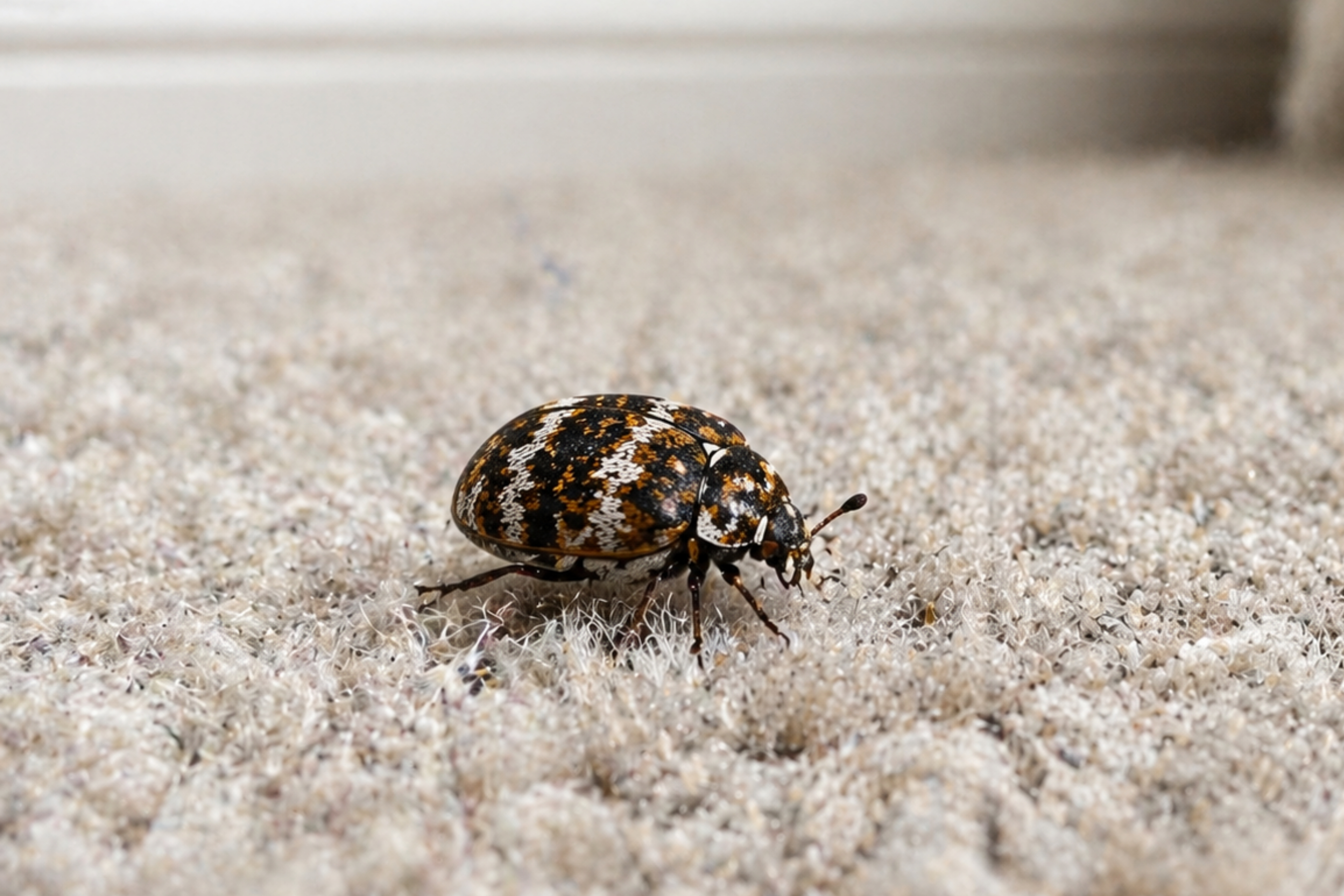
Varied carpet beetle, Furniture carpet beetle
Bare wool, hairy skins, or adults at windows—we map the larval line.
What we look for:
Understanding the cause is the first step to lasting control—otherwise you're just hosting a sequel. Here's what we see on every job.
Larvae graze along edges where vacuum misses. We map those lines and advise on cleaning cadence.
Unwashed second-hand textiles and old blankets harbour eggs. Hot wash or discard cooperation is often on the quote.
Bird nests and insect remains in voids can feed larvae. Remediation may pair with proofing when quoted separately.
Clothes moths leave different damage patterns. Correct ID stops wasted treatment and protects woollens faster.
Treating one room while larvae sit in an adjacent wardrobe spreads pressure back. Scope lists named zones.
Larvae hide in seams and under fixed carpet. We inspect, agree footprint, and schedule follow-up when included.
Carpet beetle larvae are quiet destroyers. They follow protein and lint, shed bristly skins, and can ruin a wardrobe before adults are noticed. Adults often arrive from outside—so treating only the window sill misses the harbourages in the carpet line.
Adults may feed on pollen outdoors; larvae eat wool, hair, and debris indoors. Control targets larval harbourages and removes what feeds them.
Pet hair and dust along skirting and under edges sustain larvae. Vacuum cooperation and edge treatment matter as much as the centre of the room.
Round flight holes with frass in timber point to wood borer. We escalate when signs do not match textile larvae so you get the right programme.
Variegated carpet beetle is sometimes listed on general packages. When that product is purchased, its paperwork—not this summary—may govern that pest line.
That is why we treat carpet beetles as premises and textile hygiene plus targeted treatment—not a single generic spray.
Harbourage-led inspection, agreed footprint, targeted treatment, and textile hygiene cooperation.
Wardrobes, skirting lines, pet beds, and roof hatches—map lint and fibre risk.
Named rooms and textile zones on the quote so callbacks match what we treated.
Residual application to agreed harbourages per label; not a broadcast fog by default.
Vacuum, hot wash, discard, and storage steps listed for warranty cooperation.
Confirmatory check when purchased; reinforce edges if pressure returns.
Flight holes in wood → wood borer pathway when signs fit—documented on site.
Carpet beetle work should feel honest about textiles and timber. We treat the larval footprint you purchased, tell you what to wash or discard, and call wood borer when the evidence fits.
Six months on quoted premises and textile scope when sold as such; vacuum and discard cooperation; wood borer on separate paperwork. Your quote prevails.
We treat lint lines, skirting, and built-in robes—not only the middle of the floor.
Woollens and pet bedding steps are spelled out so larvae lose food.
Emergence holes get a borer conversation, not masked as textile-only work.
Revisit windows included on programme paperwork.
Variegated carpet beetle on packages follows Super 15 terms when that is what you bought.
Adult flights can spike in warmer months; we align timing to pressure.
Done properly, carpet beetle control should protect wardrobes and carpets without guessing the wrong beetle.
Fast response. Expert assessment. Treatment tailored to your site—engineered to get it right, not just get them gone.
Quick answers on textiles, timber, and programmes.
Ready when you are—get a quote.
We inspect lint lines and wardrobes, treat the quoted footprint, and spell out wash-and-vacuum steps.