
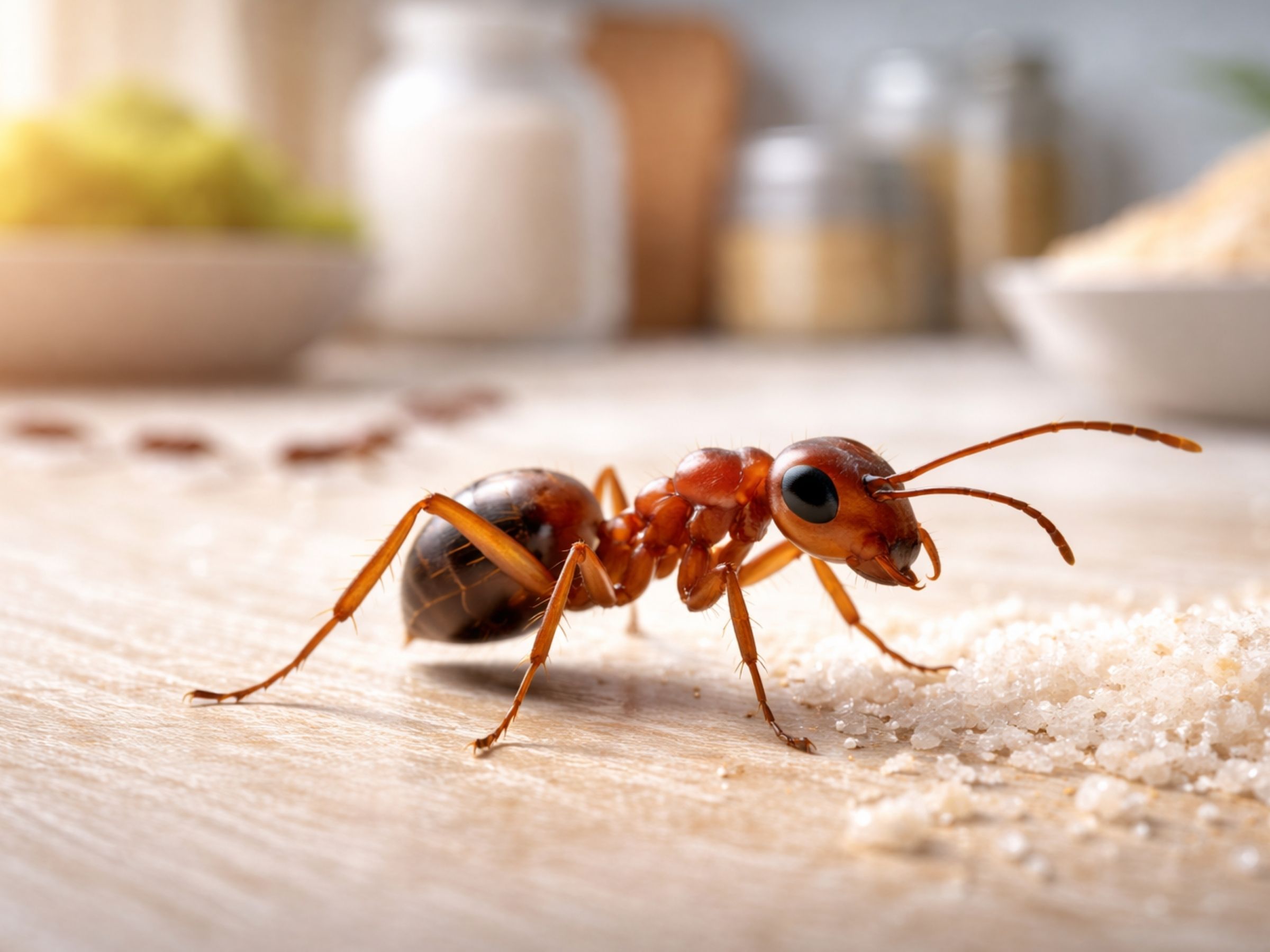
Ant Control Swartland
Hub for rodents in the Swartland—Malmesbury, Riebeek Kasteel, Riebeek West, Piketberg, Moorreesburg, and Darling. Grain storage, silos, and vineyard sheds drive intense rat pressure; homes still get mice via garage and roof gaps. Ant Control Cape Town is our city-level page; Pest Control Swartland covers all pests for this area.
This page is the regional hub for ant control in the Swartland agricultural belt, aligned with Pest Control Swartland.
Colony-focused treatment, not just surface sprays.
Species-specific baiting · Perimeter and entry-point treatment · 6-month guarantee

Book ant control in Swartland
engineered to eliminate™—so you get control that holds. Tell us your address, property type, and where you are seeing ants (kitchen, garden, paving, skirting).
- Town or farm
- Silo, shed, packhouse, or home
- Approximate tonnage or area if commercial
- Audit / certification needs if any
- Quote, booking, or WhatsApp
Protecting your property from recurring ant activity
Ants follow trails to food and moisture. Surface sprays may stop visible foragers but rarely reach the colony. Professional control combines species-specific baiting with entry-point treatment and follow-up so activity does not rebound.
Why Swartland clients choose Verminator for ants
We match treatment to species and property — sugar ants in the kitchen need a different approach than Argentine ants nesting under paving. Our team targets the colony, not just the trail.
- Swartland towns and farms
- Grain silo and shed experience
- Wine cellars and pack lines
- Tamper-resistant baiting plans
- Harvest-season flexibility
ants activity in Swartland right now
Ant activity remains moderate as temperatures cool. Some species reduce outdoor foraging; others shift indoors. Good time to eliminate colonies before they concentrate inside.
Activity level
Moderate
Most active now
Argentine ants, Black house ants, Pharaoh ants
Less active this season
Big-headed ants (often reducing outdoors), Fire ants
What to maintain now
- Continue sealing gaps; cooler nights can push ants indoors.
- Keep kitchen and pantry sealed; reduce pet food left out overnight.
- Clear garden debris and trim vegetation away from walls.
- If trails persist, treat before winter so nests are not established indoors.
Area brief — Swartland (ant)
Operations and partner context — same regional source data as broad pest control. Machine-readable JSON embedded for tools (schema v1).
Regional snapshot
Regional reference and pest control for the Swartland: Malmesbury, Riebeek Kasteel, Riebeek West, Piketberg, Moorreesburg, Darling. Pest ecology of the wheat and wine belt: grain storage, harvest cycles, vineyards, farm and town premises. Why pests behave differently here; town-by-town intelligence; property-type segments. Western Cape agricultural expertise.
Service line
Pest control for the Swartland: Malmesbury, Riebeek Kasteel, Riebeek West, Piketberg, Moorreesburg, Darling. Treatments tailored to grain and wine farms, packhouses, and town homes. Rodent, ant, fly, and bird control. Fast response.
Ant angle (regional pest matrix)
Ants thrive in the Swartland’s mix of irrigated gardens and farm premises. Harvest and food on site increase trails into buildings. We treat nests and entry points and advise on proofing so homes and farm buildings stay ant-free.
- Kitchens
- Farm offices
- Packhouse canteens
- Irrigation edges
- Town homes
- Paved areas
- Gardens
Local drivers (pest behaviour)
- Grain storage and silos create ideal conditions for rodents — food, shelter, and seasonal peaks during and after harvest. Proofing and ongoing baiting plans are essential for co-ops and farm storage.
- Harvest and seasonal labour bring increased activity and food on site — ant and fly pressure rises; hygiene and refuse management are critical on farms and in town.
- Town homes and smallholdings have roof voids, sheds, and gardens that support rodents and ants; we tailor treatment to the mix of rural and residential.
Suburb callouts (sample)
Malmesbury
Malmesbury is the main town and service centre of the Swartland, with grain handling, retail, and residential. Pest pressure includes rodents in storage and roof voids, ants in gardens and kitchens, and flies around harvest. We serve farms, businesses, and town properties and understand the harvest-driven calendar.
Riebeek Kasteel and Riebeek West
Riebeek Kasteel and Riebeek West are heritage wine towns with tourism and farming. Rodent control for cellars and outbuildings, ant control for homes and tasting rooms, and discreet service for guest accommodation are common requests. We provide heritage-aware and tourism-sensitive pest control.
Darling
Darling is known for wildflowers and a mix of smallholdings and town life. Rodent and ant control for homes and outbuildings, and bird proofing where needed. We serve the town and surrounding smallholdings with the same care we bring to the rest of the Swartland.
Piketberg and Moorreesburg
Piketberg and Moorreesburg sit in the grain belt. Grain storage and farm rodent control are priorities; town and smallholding homes need ant and rodent control. We work with farmers and residents and schedule visits around harvest.
Area coverage (sample)
- Malmesbury
- Riebeek Kasteel
- Riebeek West
- Darling
- Piketberg
- Moorreesburg
- Koringberg
- Goedverwacht
Full all-pests regional page: Pest control Swartland
Ant control for Swartland homes and businesses
From residential kitchens to office pantries and garden perimeters, we structure treatment around how your property is used and where ants are foraging and nesting.
Grain and storage
Perimeter baiting, door sweeps, and interior trapping plans coordinated with loading schedules.
Wine and fruit farms
Cellar doors, cold rooms, and staff canteens—discreet interior work.
Town homes
Older Malmesbury and Riebeek stock with thick walls—targeted cavity and roof proofing.
Why ant problems show up in Swartland
Harvest peaks pull rodents from fields into buildings; spilled grain must be managed alongside treatment.
Bird-proofing failures on sheds often coincide with rat entry at the same gaps.
Our approach to ant control in Swartland
We assess whether the primary pressure is interior, perimeter, or field-edge—and sequence work accordingly.
Documentation supports audit conversations where required.
Our ant control service
Our ant control is colony-focused: we identify the species and activity pattern, locate harbourage and entry points, and use baits and targeted treatment so the fix lasts.
- No vacating or unpacking
- 6‑month guarantee on treatment
- Species-specific approach
- Follow-up included where needed
Why ants keep coming back after DIY treatment
Shelf sprays may flush visible foragers but miss the colony, eggs, and entry points. If the source pressure remains, new trails form quickly. Professional services target nesting sites and follow up until activity stops.
Ready to stop the colony? Call.
We target the colony, not just the trail. If you notice any of the signs below, act before the problem spreads.
Signs you may need professional ant control
- Droppings on pallet stacks
- Gnawed grain bags
- Noises in ceiling above kitchens on farms
- Burrows along shed slabs
- Smears on warehouse doors
Common ant species and behaviour in Cape Town
In Cape Town and the Western Cape, a few ant species account for most call-outs. Knowing what you’re likely dealing with helps us target the colony and reduce repeat activity. Here are the species we see most often and the clues that point to them.
Argentine ants
Linepithema humile
Small light to dark brown ants (about 2–3 mm) that form massive colonies with multiple queens. They move in distinct trails and are among the most widespread ants in South Africa. In the Western Cape they have invaded much of the coastal belt and are often the dominant house ant—residents frequently report rivers of little brown ants in summer.
- Distinct trails to food and water
- Tiny cracks used as entry points
- Strong in numbers; persists after surface spray
- Often peaks in warmer months
Cape Town and the coastal belt are classic Argentine ant territory. Colony elimination with baiting is essential.
Black house ant / Black garden ant
Ochetellus glaber, Lasius niger
The classic tiny shiny black ant in kitchens and gardens, about 2.5–3 mm long. They forage in long trails to anything sweet and often nest in wall cavities, under paving, or outdoors. Killing foragers alone is rarely enough—the colony keeps sending more.
- Shiny black ants in trails
- Drawn to sugar, spills, and pet food
- Nests in walls, paving, or garden
- Activity returns quickly after DIY spray
Found across Cape Town suburbs. Sweet baits and perimeter treatment are highly effective when the nest is targeted.
Pharaoh ants
Monomorium pharaonis
Very small (about 2 mm), yellowish or light brown, almost translucent. They thrive in warm, humid spots and nest in wall voids, behind cabinets, and in hidden spaces. Colonies have multiple queens and can “bud”—split into new colonies if threatened by spray—so baiting is critical.
- Tiny yellow or pale ants in faint trails
- Often near sinks, baseboards, or pet bowls
- Indoor-focused; rarely seen outside in cold months
- Spraying can worsen by causing colony to split
Common in Cape Town homes and apartments year-round. Indoor baiting is the right approach; we avoid sprays that trigger budding.
Big-headed ant (Coastal brown ant)
Pheidole megacephala
Two worker sizes: smaller minors (2–3 mm) and larger majors with big heads (4–5 mm). Colour ranges from yellow-brown to reddish-brown. They build loose sandy mounds at nest entrances and can out-compete other ants. They nest in soil, under paving, and sometimes indoors in wall cracks or potted plants.
- Small brown ants with some larger “soldier” types
- Sandy soil piles or mounds at nest openings
- Aggressive foragers in kitchens and bathrooms
- Can displace Argentine ants in some areas
Seen in some Cape Town suburbs and coastal spots. Protein and sugar baits plus perimeter treatment work best.
Fire ants
Solenopsis species
Reddish-brown ants that build noticeable mounds in soil or lawn and deliver a painful sting when disturbed. They forage for food and can enter homes. Less common in the Western Cape than in warmer, drier regions, but they do occur in suitable microclimates.
- Mounds in lawn or garden that erupt when disturbed
- Painful sting; aggressive when nest is threatened
- Reddish-brown colour; 2–6 mm
- More often in northern/eastern SA; occasional in Cape Town
If you have stinging ants and visible mounds, we treat the nest directly and use baits for lasting control.
Identify the ants in your property
Compare common Cape Town ant types, behaviour clues, and likely activity patterns.
Identify the ants in your propertyAnt identification and resources
Identify species and learn how we treat ants so the fix lasts. Use the guides below, then book or WhatsApp for a quote.
Ant identification guide
Identify common Cape species—sugar ants, pavement ants, carpenter ants—and understand behaviour so we can target the colony correctly.
Ants — full service & how we treat
Our colony-focused approach: inspection, harbourage and entry points, baits and targeted treatment. We match treatment to species and property. No vacating, 6‑month guarantee.
Swartland areas
Towns and suburbs listed here align with our regional coverage for Swartland. Dedicated suburb pages link from the graph when published; broad suburb intel stays on Pest Control Swartland.
Key areas
Malmesbury, Riebeek Kasteel, Riebeek West, Piketberg, Moorreesburg, Darling
Explore more pest control
Ant resources, related services, and authority pages for this region.
Ant resources
Related services
Regional context
For consultants and agents: broader ecology and property-type notes for Swartland live on the pest control Swartland regional reference. Cockroach service: Cockroach Control Swartland. Rodent service: Rodent Control Swartland.
