
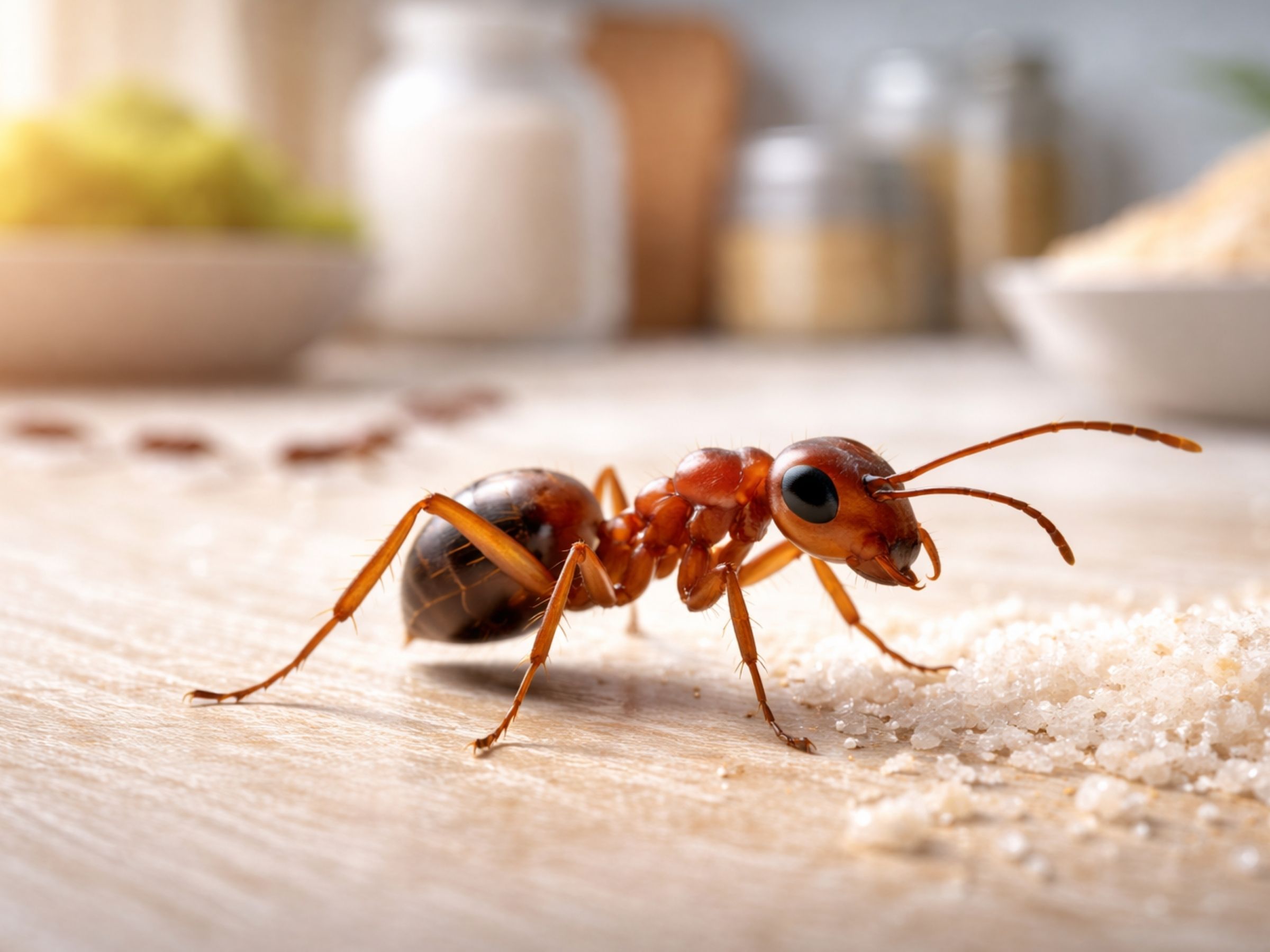
Ant Control West Coast
Hub for rodents along Cape Town’s West Coast—Table View, Parklands, Sunningdale, Milnerton, Century City, and Bloubergstrand. Canals, reed edges, and estate landscaping support Argentine ants; mice enter via garage gaps. Ant Control Cape Town is our city-level page; Pest Control West Coast covers all pests for this area.
This page is the regional hub for ant control on the West Coast corridor, complementing Pest Control West Coast.
Service assurance
Ant programmes: published internal, external, and bundle rules
Colony-led ant programmes: six months written guarantee on standard internal scope when quoted; three months on agreed outdoor areas when sold on the external package. Bundled programmes (for example Super 15) follow that package paperwork. Callbacks under guarantee are free within eligible scope per contract.
Your written quote and agreement are always the contract.
Colony-focused treatment, not just surface sprays.
Species-specific baiting · Perimeter and entry-point treatment · Written guarantee scope on your quote

Book ant control in West Coast
engineered to eliminate™—so you get control that holds. Tell us your address, property type, and where you are seeing ants (kitchen, garden, paving, skirting).
- Estate or suburb name
- Canal-front, lagoon, or inland block
- Single or double storey
- Activity in roof, ceiling, or garage
- Quote, booking, or WhatsApp
Protecting your property from recurring ant activity
Ants follow trails to food and moisture. Surface sprays may stop visible foragers but rarely reach the colony. Professional control combines species-specific baiting with entry-point treatment and follow-up so activity does not rebound.
Why West Coast clients choose Verminator for ants
We match treatment to species and property — sugar ants in the kitchen need a different approach than Argentine ants nesting under paving. Our team targets the colony, not just the trail.
- Blouberg–Table View corridor
- Canal and lagoon-adjacent homes
- Newer estates and freestanding houses
- Roof rat expertise
- Proofing for eaves and vents
ants activity in West Coast Cape Town right now
Ant activity remains moderate as temperatures cool. Some species reduce outdoor foraging; others shift indoors. Good time to eliminate colonies before they concentrate inside.
Activity level
Moderate
Most active now
Argentine ants, Black house ants, Pharaoh ants
Less active this season
Big-headed ants (often reducing outdoors), Fire ants
What to maintain now
- Continue sealing gaps; cooler nights can push ants indoors.
- Keep kitchen and pantry sealed; reduce pet food left out overnight.
- Clear garden debris and trim vegetation away from walls.
- If trails persist, treat before winter so nests are not established indoors.
Area brief — West Coast (ant)
Operations and partner context — same regional source data as broad pest control. Machine-readable JSON embedded for tools (schema v1).
Regional snapshot
Regional reference and pest control for Cape Town’s West Coast corridor: Table View, Milnerton, Bloubergstrand, Parklands, Sunningdale, West Beach, Century City. Pest ecology of the coastal strip: lagoon and wetland edge, canal systems, beachfront and wind exposure, newer residential and commercial development. Why pests behave differently here; suburb-by-suburb intelligence; property-type segments. Fast local response, coastal-and-estate expertise.
Service line
Pest control for the West Coast corridor: Table View, Milnerton, Bloubergstrand, Parklands, Sunningdale, Century City. Treatments tailored to lagoon-edge, canal-side, and beachfront properties, estates, and commercial premises. Fast local response.
Ant angle (regional pest matrix)
Argentine ants and other species thrive in the irrigated, garden-rich conditions. Paving and walls create nesting and foraging routes; canal-side and estate landscaping provide water and food. Ant trails into homes are common in family and estate properties.
- Paved pathways
- Garden beds
- Retaining walls
- Kitchens
- Bathrooms
- Irrigation edges
- Canal-side paving
- Driveways
Local drivers (pest behaviour)
- Newer estates and security complexes have managed landscaping but shared boundaries and irrigation that can still support ant and rodent pressure.
- Family homes with gardens and pets support flea cycles; irrigated lawns and shaded soil are ideal for flea larvae.
Suburb callouts (sample)
Milnerton
Milnerton sits on the Milnerton Lagoon (Rietvlei) and combines older residential pockets with retail and the racecourse area. Lagoon-edge and wetland interface create mosquito and rodent considerations; older homes may have sub-floor and roof-void pest issues. Restaurant and retail along the main road add cockroach and rodent pressure. We serve both lagoon-edge and inland Milnerton properties.
Table View
Table View is a large residential area with a mix of established homes and newer estates. Gardens, irrigation, and greenbelts support rodent, ant, and flea pressure; roof voids and sheds are common rodent entry points. Commercial nodes and body corporates need ongoing management. We provide family-home and estate-level pest control across Table View.
Parklands and Sunningdale
Parklands and Sunningdale are predominantly residential with estates, parks, and newer development. Pest pressure follows the same West Coast drivers: gardens, irrigation, and shared boundaries. Rodents, ants, and fleas are common; bird proofing is sometimes needed on newer builds with exposed rooflines. We work with homeowners and body corporates.
Bloubergstrand
Bloubergstrand is the beachfront strip known for Table Mountain views and wind. Restaurants, cafés, and holiday accommodation create food and turnover-related pest pressure; coastal moisture and wind exposure affect building fabric. Rodent, cockroach, and ant control for beachfront premises and residential homes is essential. We provide discreet, coastal-appropriate service.
Area coverage (sample)
- Milnerton
- Table View
- Parklands
- Bloubergstrand
- Sunningdale
- West Beach
- Century City
- Richwood
Full all-pests regional page: Pest control West Coast
Ant control for West Coast homes and businesses
From residential kitchens to office pantries and garden perimeters, we structure treatment around how your property is used and where ants are foraging and nesting.
Canal and lagoon properties
Water edges concentrate rodents in reeds; rooflines overhanging water need careful exterior proofing.
Estate living
High walls with vegetation give rats cover. We align stations and proofing with HOA rules.
Townhouses
Shared garages and ducts—inspection of party walls and risers to stop lateral movement.
Why ant problems show up in West Coast
Onshore winds push refuse and organic debris into fences and gardens, supporting harbourage.
New builds sometimes leave utility penetrations unsealed—mice exploit them within the first few years.
Our approach to ant control in West Coast
We map vegetation touching the roofline and prioritise trimming advice alongside mechanical proofing.
Interior trapping confirms species when exterior signs are ambiguous.
Our ant control service
Our ant control is colony-focused: we identify the species and activity pattern, locate harbourage and entry points, and use baits and targeted treatment so the fix lasts.
- No vacating or unpacking
- 6‑month guarantee on treatment
- Species-specific approach
- Follow-up included where needed
Why ants keep coming back after DIY treatment
Shelf sprays may flush visible foragers but miss the colony, eggs, and entry points. If the source pressure remains, new trails form quickly. Professional services target nesting sites and follow up until activity stops.
Ready to stop the colony? Call.
We target the colony, not just the trail. If you notice any of the signs below, act before the problem spreads.
Signs you may need professional ant control
- Noises in double-volume ceilings
- Droppings in garage near stored goods
- Gnawing on irrigation piping
- Sightings along canal paths at dusk
- Smudge marks on downpipes
Common ant species and behaviour in Cape Town
In Cape Town and the Western Cape, a few ant species account for most call-outs. Knowing what you’re likely dealing with helps us target the colony and reduce repeat activity. Here are the species we see most often and the clues that point to them.
Argentine ants
Linepithema humile
Small light to dark brown ants (about 2–3 mm) that form massive colonies with multiple queens. They move in distinct trails and are among the most widespread ants in South Africa. In the Western Cape they have invaded much of the coastal belt and are often the dominant house ant—residents frequently report rivers of little brown ants in summer.
- Distinct trails to food and water
- Tiny cracks used as entry points
- Strong in numbers; persists after surface spray
- Often peaks in warmer months
Cape Town and the coastal belt are classic Argentine ant territory. Colony elimination with baiting is essential.
Black house ant / Black garden ant
Ochetellus glaber, Lasius niger
The classic tiny shiny black ant in kitchens and gardens, about 2.5–3 mm long. They forage in long trails to anything sweet and often nest in wall cavities, under paving, or outdoors. Killing foragers alone is rarely enough—the colony keeps sending more.
- Shiny black ants in trails
- Drawn to sugar, spills, and pet food
- Nests in walls, paving, or garden
- Activity returns quickly after DIY spray
Found across Cape Town suburbs. Sweet baits and perimeter treatment are highly effective when the nest is targeted.
Pharaoh ants
Monomorium pharaonis
Very small (about 2 mm), yellowish or light brown, almost translucent. They thrive in warm, humid spots and nest in wall voids, behind cabinets, and in hidden spaces. Colonies have multiple queens and can “bud”—split into new colonies if threatened by spray—so baiting is critical.
- Tiny yellow or pale ants in faint trails
- Often near sinks, baseboards, or pet bowls
- Indoor-focused; rarely seen outside in cold months
- Spraying can worsen by causing colony to split
Common in Cape Town homes and apartments year-round. Indoor baiting is the right approach; we avoid sprays that trigger budding.
Big-headed ant (Coastal brown ant)
Pheidole megacephala
Two worker sizes: smaller minors (2–3 mm) and larger majors with big heads (4–5 mm). Colour ranges from yellow-brown to reddish-brown. They build loose sandy mounds at nest entrances and can out-compete other ants. They nest in soil, under paving, and sometimes indoors in wall cracks or potted plants.
- Small brown ants with some larger “soldier” types
- Sandy soil piles or mounds at nest openings
- Aggressive foragers in kitchens and bathrooms
- Can displace Argentine ants in some areas
Seen in some Cape Town suburbs and coastal spots. Protein and sugar baits plus perimeter treatment work best.
Fire ants
Solenopsis species
Reddish-brown ants that build noticeable mounds in soil or lawn and deliver a painful sting when disturbed. They forage for food and can enter homes. Less common in the Western Cape than in warmer, drier regions, but they do occur in suitable microclimates.
- Mounds in lawn or garden that erupt when disturbed
- Painful sting; aggressive when nest is threatened
- Reddish-brown colour; 2–6 mm
- More often in northern/eastern SA; occasional in Cape Town
If you have stinging ants and visible mounds, we treat the nest directly and use baits for lasting control.
Identify the ants in your property
Compare common Cape Town ant types, behaviour clues, and likely activity patterns.
Identify the ants in your propertyAnt identification and resources
Identify species and learn how we treat ants so the fix lasts. Use the guides below, then book or WhatsApp for a quote.
Ant identification guide
Identify common Cape species—sugar ants, pavement ants, carpenter ants—and understand behaviour so we can target the colony correctly.
Ants — full service & how we treat
Our colony-focused approach: inspection, harbourage and entry points, baits and targeted treatment. We match treatment to species and property. No vacating, 6‑month guarantee.
West Coast areas
Towns and suburbs listed here align with our regional coverage for West Coast. Dedicated suburb pages link from the graph when published; broad suburb intel stays on Pest Control West Coast.
Key areas
Table View, Milnerton, Parklands, Bloubergstrand, Century City, Sunningdale
Explore more pest control
Ant resources, related services, and authority pages for this region.
Ant resources
Related services
Regional context
For consultants and agents: broader ecology and property-type notes for West Coast live on the pest control West Coast regional reference. Cockroach service: Cockroach Control West Coast. Rodent service: Rodent Control West Coast.
