House Cricket
Acheta domesticus
Appearance
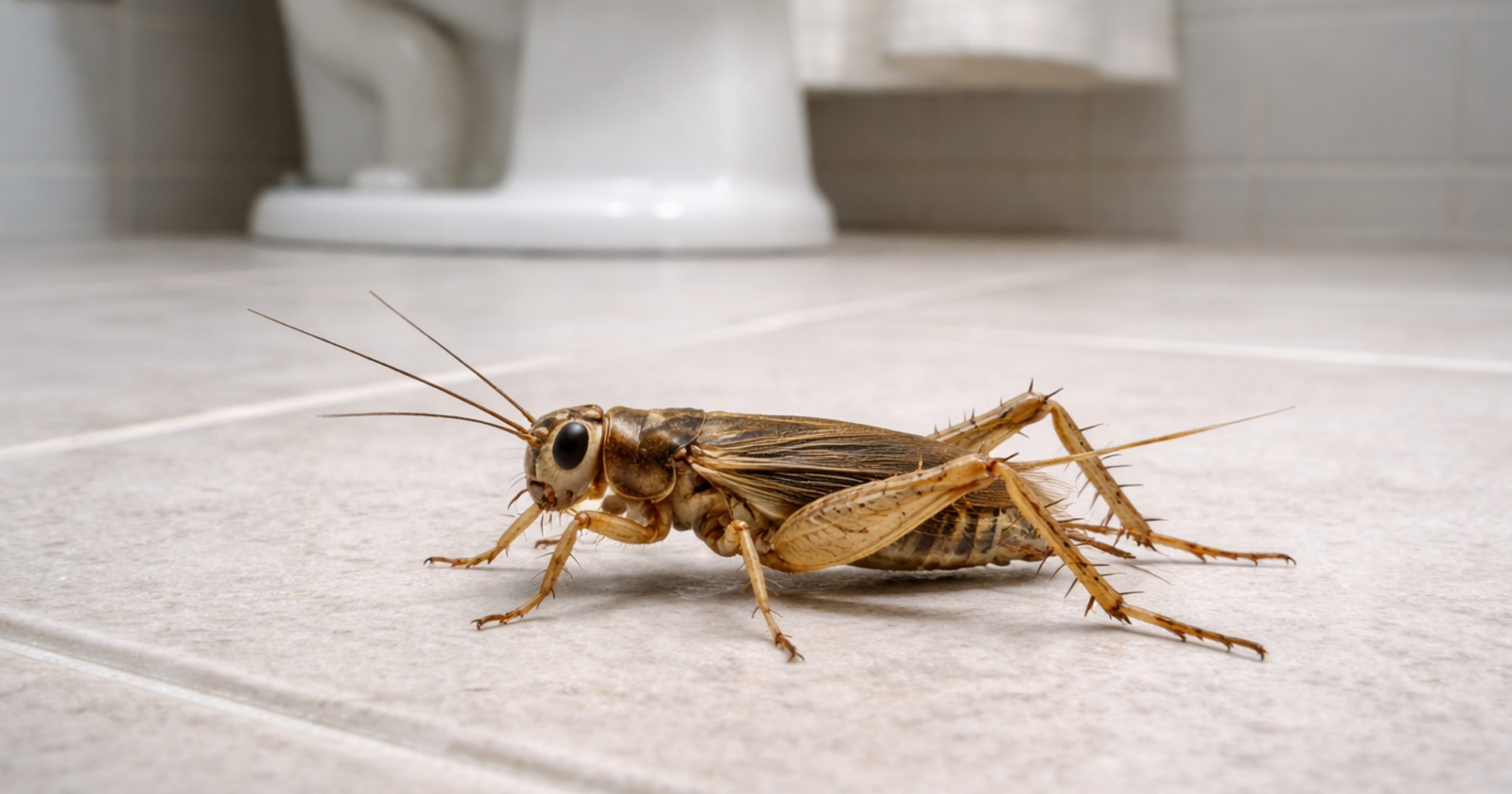
- Light yellowish-brown or grey; three dark bands on the head
- About 16–21 mm long; long, thin antennae (longer than body)
- Strong hind legs for jumping; wings held flat over body
- Female has long needle-like ovipositor at rear; male has cerci
Commonly found
Behaviour
House crickets are attracted to light and warmth. Males chirp at night by rubbing wings together. They do not bite or damage structures but can be a nuisance when they enter in numbers or chirp persistently. Residual treatment at entry points (doors, windows, gaps) and sealing reduce entry. Reducing or redirecting outdoor lighting helps keep them outside.
Why you may be seeing them
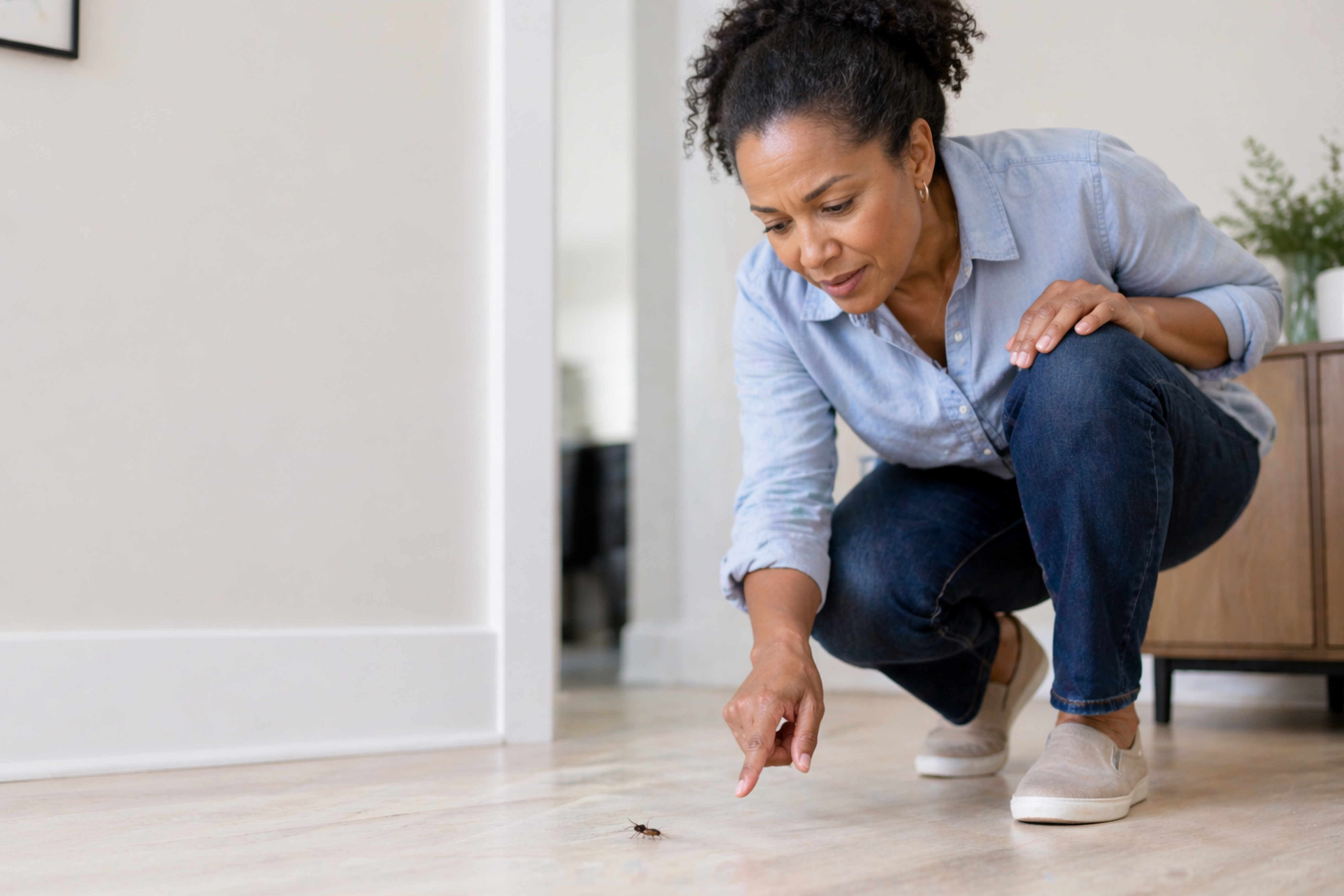
Outdoor lighting draws them to the building; they enter through gaps. Vegetation or gardens near doors and windows provide habitat. As evenings cool in late summer and autumn, they may seek warmth indoors. Sealing gaps and reducing lighting are key.
Often confused with
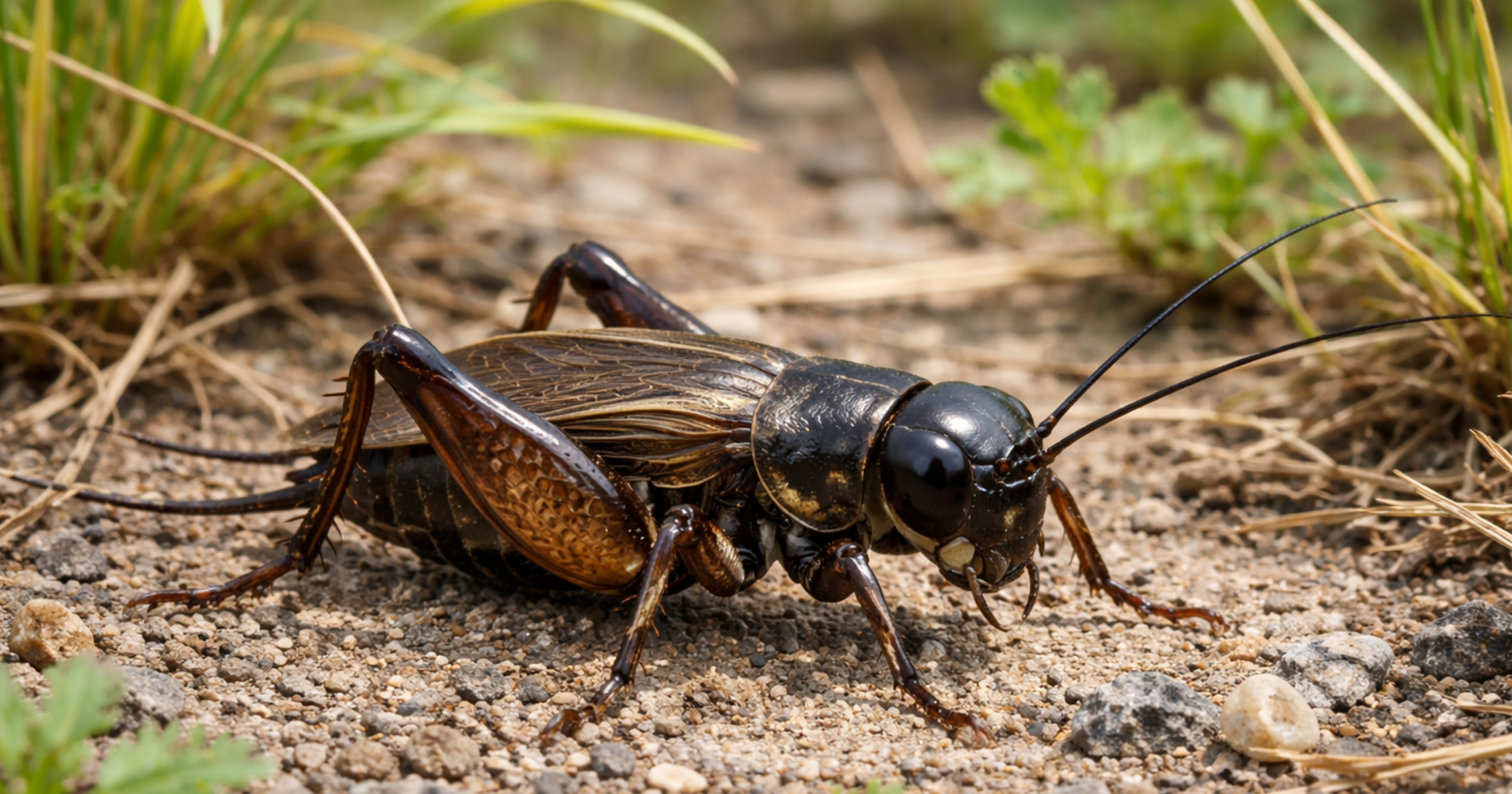
Field cricket (field cricket is usually black and larger; both chirp) · Cockroach (cockroaches have different body shape, no chirping; crickets have long antennae) · Grasshopper (grasshoppers have short antennae and are usually diurnal)
When to get help
Crickets repeatedly indoors or chirping at night; gaps are hard to seal; or you want residual treatment at entry points. We treat doors, windows, and gaps and advise on sealing and lighting.
Most common cricket to enter homes in South Africa. Chirping is from males calling for mates.