Pest guide · silverfish
National silverfish methodology: silverfish hub, how we treat silverfish, silverfish guarantees, silverfish control by area. Identification: silverfish identification.
Thermobia domestica
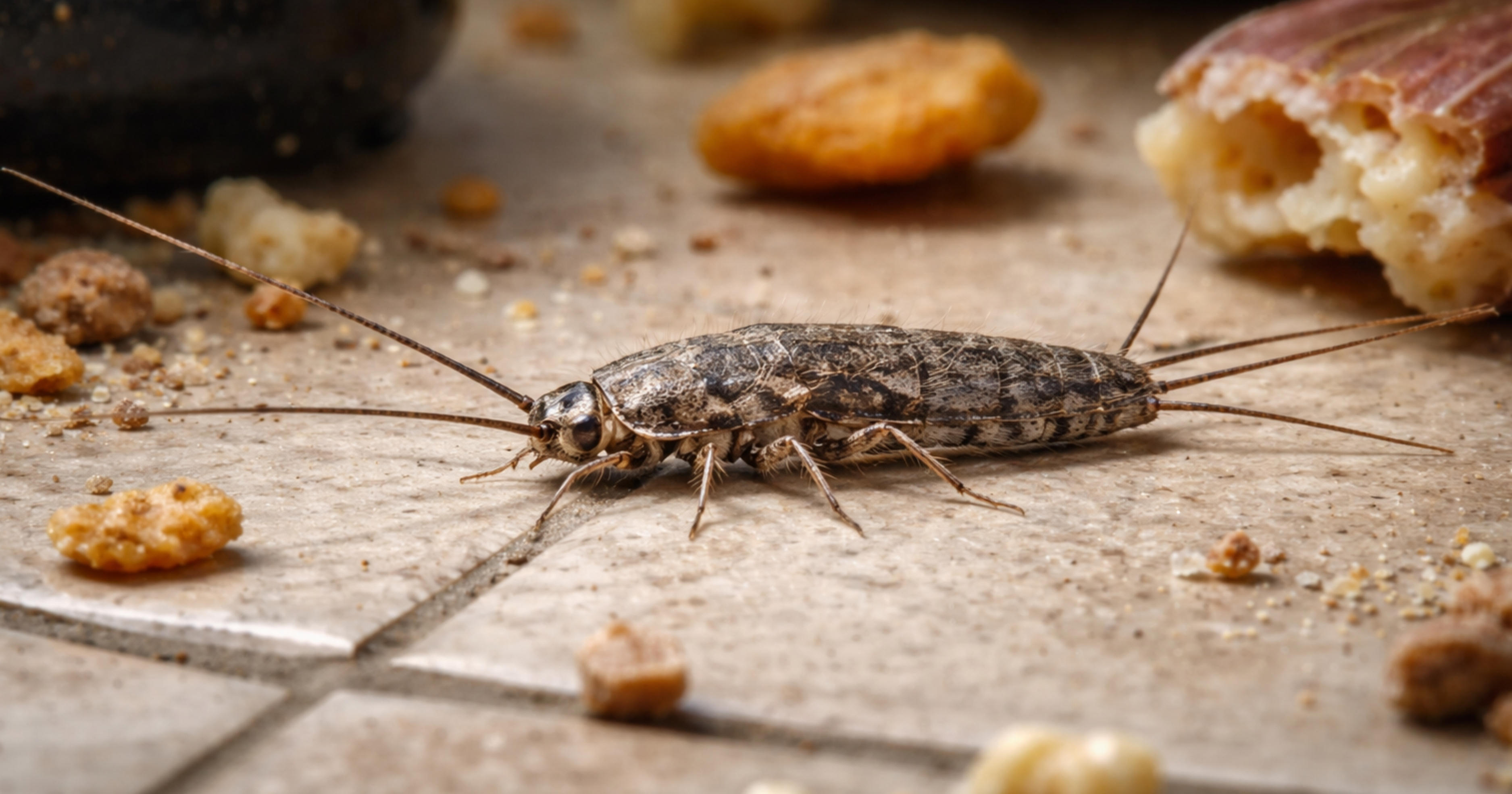
The firebrat is Thermobia domestica, a primitive wingless insect in the order Zygentoma, closely related to silverfish. It is a real indoor pest, but it behaves differently from the common silverfish in one very important way: it is built for heat. Firebrats thrive in unusually warm parts of buildings, especially around furnaces, boilers, ovens, fireplaces, hot-water pipes, and overheated roof spaces.
A firebrat is a small, flattened, carrot-shaped insect with long antennae and three tail filaments. Adults are typically about 1 to 1.5 cm long and are usually mottled grey-brown rather than shiny silver, which helps separate them from common silverfish. They are wingless, fast-moving, and avoid light.
A firebrat usually looks:
This species is strongly associated with hot indoor microclimates. Unlike common silverfish, which prefer cooler damp zones, firebrats favour very warm spaces, often around 95–105°F with an optimum around 98–102°F. They can survive a surprisingly wide temperature range, but they do best where heat is steady. That is why they are often found near ovens, furnaces, hot pipes, fireplaces, and overheated attic spaces.
Firebrats are successful because they exploit a part of the building that many pests do not use well: the hot zone. They feed on carbohydrates and starchy materials, including flour, cereals, paper sizing, book bindings, glues, and similar materials. They are nocturnal, hide deeply in cracks during the day, and their populations usually build slowly enough that people often miss them for a long time.
Most people think the firebrat's biggest strength is that it likes warm places.
That is true, but the deeper advantage is this:
Firebrats are not merely tolerant of warmth. They are remarkably adapted to very hot, dry indoor conditions that many similar household insects do not handle nearly as well. UC IPM notes that they can thrive in places above 90°F, with the optimum near 98–102°F, and one technical pest source reports egg hatching can still occur at very low humidity, with development taking place under relatively dry conditions compared with silverfish.
That means the firebrat can colonise spaces such as:
These are places many people do not inspect closely, and they are often too warm or too dry for the common silverfish's preferred conditions.
There is an older but well-known physiology finding on Thermobia showing it is highly impermeable to outward water loss. In plain language, it is unusually good at holding onto water. That is a huge advantage for an insect living in hot zones where heat would normally dry out small-bodied animals quickly.
So the real hidden power of the firebrat is not just “loving heat.” It is being built to survive heat without drying out easily.
This is one of the most overlooked truths about firebrats.
People often think pests choose “a kitchen” or “a bathroom.” Firebrats are more precise than that. Sources note that if they are seen feeding in a spot that is not especially warm or humid, it may indicate a nearby preferred microclimate rather than that exact surface being their main harbourage. That means the visible insect may be foraging away from a hotter hiding place close by.
That makes firebrats clever indoor survivors: they do not need the entire room to suit them. They only need a small hot refuge nearby.
Firebrats are difficult because they combine:
This means poor control often fails when people treat them like ordinary silverfish and inspect only cool damp rooms. The real issue is often hot concealed microhabitats elsewhere in the structure. That last point is an inference supported by their documented temperature preference and microclimate behaviour.
The firebrat is one of the most overlooked indoor pests because it does not dominate the usual damp corners people expect. Instead, it specialises in the hot seams of a building. It is successful because it is small, hidden, heat-loving, starch-feeding, and unusually good at holding onto moisture. That combination makes it a very different pest from the common silverfish — and a far more specialised survivor than most people realise.
Next: how we treat silverfish, silverfish guarantees, silverfish identification guide. Compare Common silverfish guide. Book silverfish control in Cape Town. Read silverfish treatment safety.
Thermobia domestica — heat microclimates, harbourages, and starch sources; your quoted programme prevails.
Activity near ovens or boilers? Use get a quote for inspection-led control.
We inspect hot microhabitats and cracks, then align treatment with your quoted scope—same national silverfish methodology family; your quote prevails.
Common silverfish pest guide, How we treat silverfish, Silverfish guarantees, Silverfish control by area, Silverfish identification guide. Hub: silverfish control.