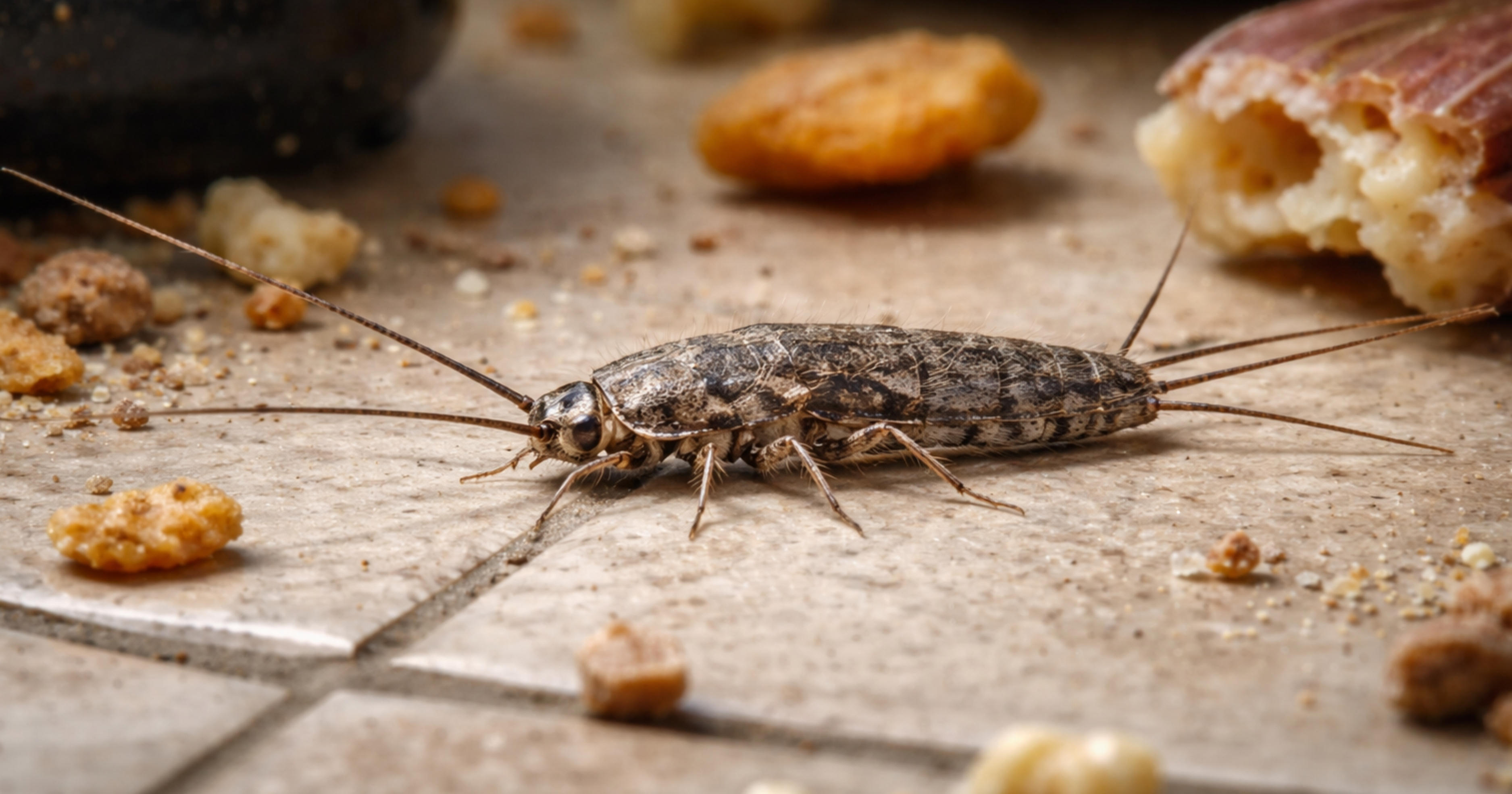

Common Silverfish (Fishmoth)
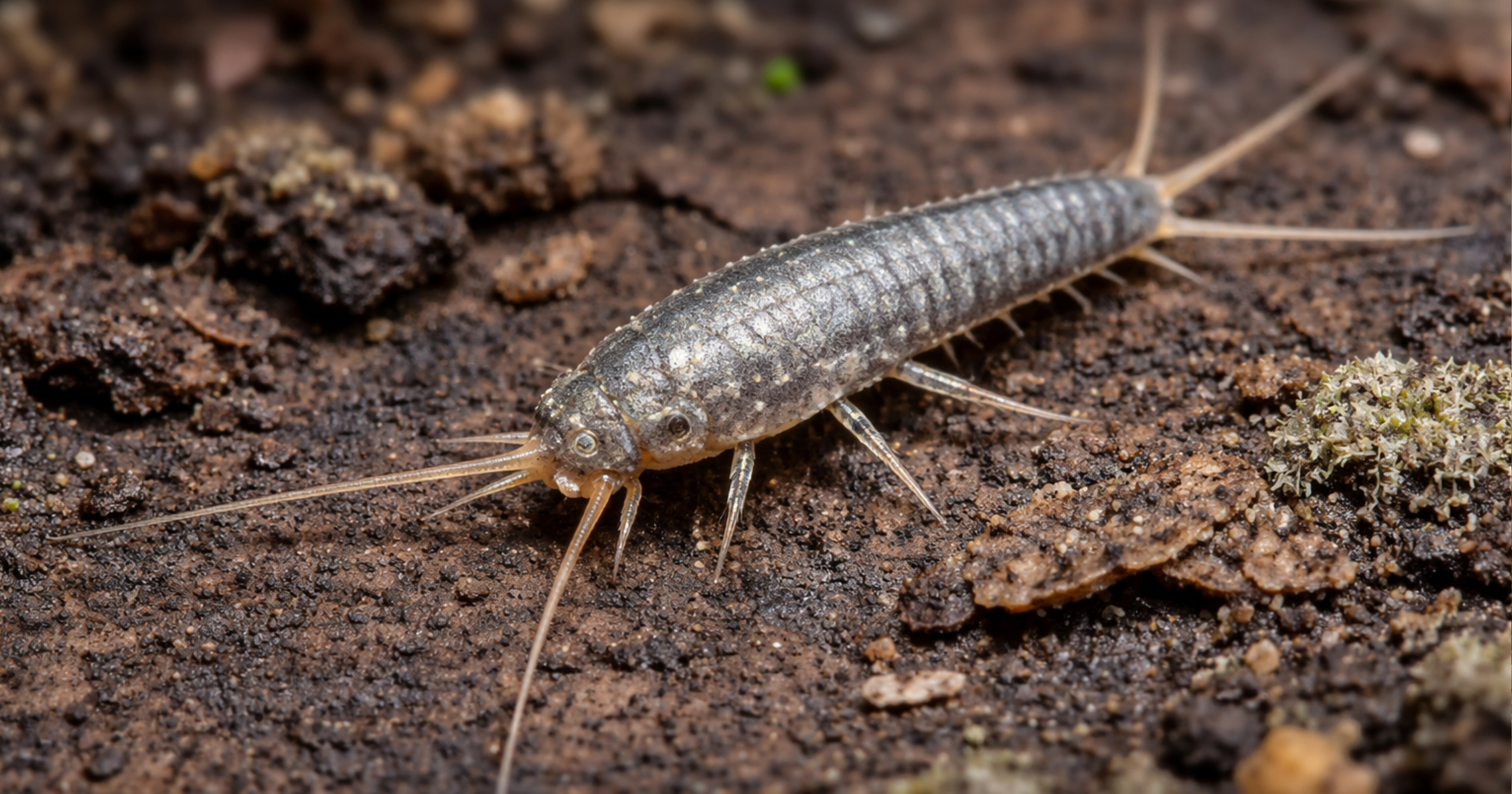
Lepisma saccharinum
Appearance
- Teardrop-shaped; flattened; silvery-grey with metallic sheen
- About 12–19 mm long; three long tail bristles at rear
- Two long antennae; no wings; covered in scales
- Moves with a fast, wriggling run
Commonly found
Behaviour
Nocturnal; prefers humidity (around 75% or higher) and temperatures from cool to warm. Feeds on starch, paper, glue, and natural fabrics. Can live several years. Leaves small faecal pellets and may shed scales. Does not bite; mainly a nuisance and damage to belongings.
Why you may be seeing them
High humidity, leaks, or poor ventilation; clutter and stored paper provide food and hiding places. Often seen when switching on a light at night or when moving stored items. Damage to books, wallpaper, or clothing indicates an established population.
Often confused with
Firebrat (firebrat is mottled brown/grey and prefers warm areas) · Earwig (earwigs have pincers at rear; different shape) · Booklouse (smaller; different body shape)
When to get help
Silverfish in multiple rooms; visible damage to books, documents, or fabrics; or repeated sightings after DIY measures. Professional treatment targets hiding places; reducing humidity is essential for long-term control.
In South Africa often called fishmoth. Reducing humidity (dehumidifier, ventilation) greatly helps.