
Common Bed Bug
Cimex lectularius
Appearance
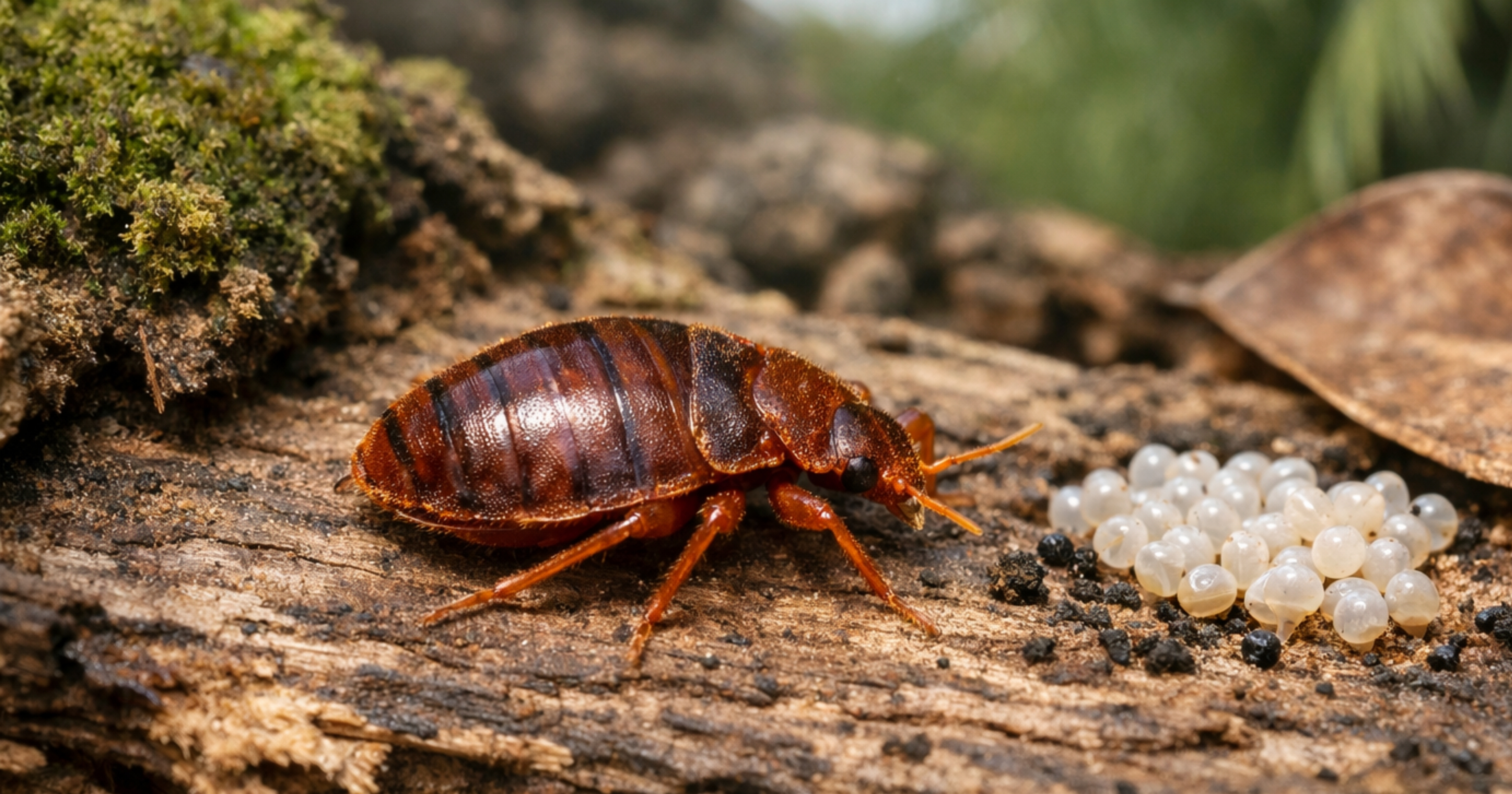
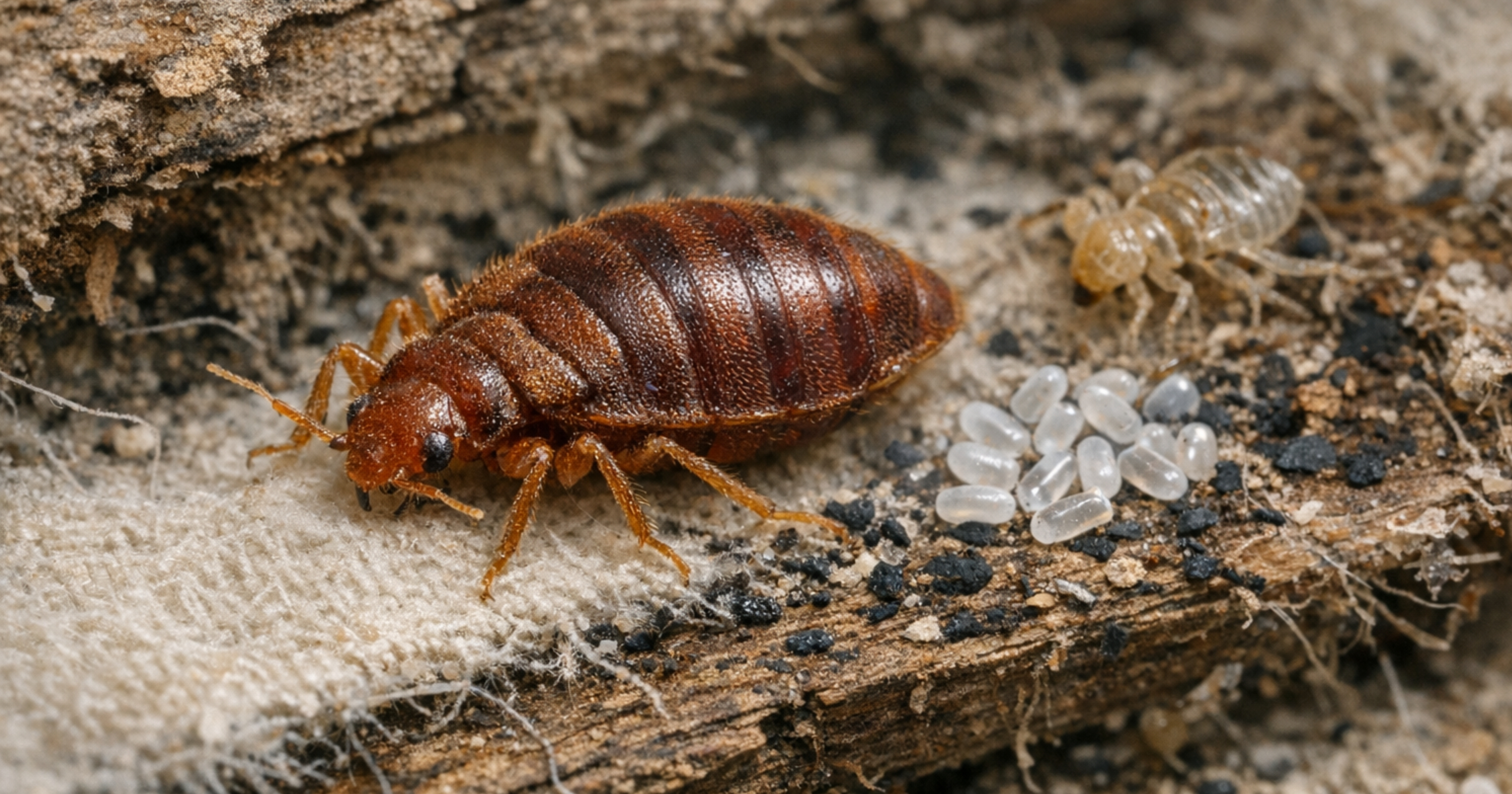
- Oval, flattened, wingless; rusty to mahogany brown; darker and more elongated after feeding
- Adult about 4–7 mm long; nymphs 1–4 mm, paler (cream to light brown)
- Short antennae; broad head; no wings; visible eyes
- Eggs: tiny (~1 mm), pearly white, in crevices and seams
- Shed skins (exuviae) pale and translucent where nymphs moulted
Commonly found
Behaviour
Nocturnal blood-feeders; hide in cracks and seams by day and come out to feed on sleeping humans. Can survive months without a meal. Spread by hitchhiking on luggage, clothing, and second-hand furniture. Eggs hatch in about 1–2 weeks; several nymphal stages. Bites often in rows or clusters; not always felt at the time. The main bed bug pest in South Africa and worldwide.
Why you may be seeing them
Introduced via travel, second-hand furniture, or from adjacent rooms. Once present, they establish in mattress seams, frames, and nearby harbourages. Faecal spots (dark, smears or dots), shed skins, and eggs are typical signs. Bites on arms, legs, or torso may prompt a search.
Often confused with
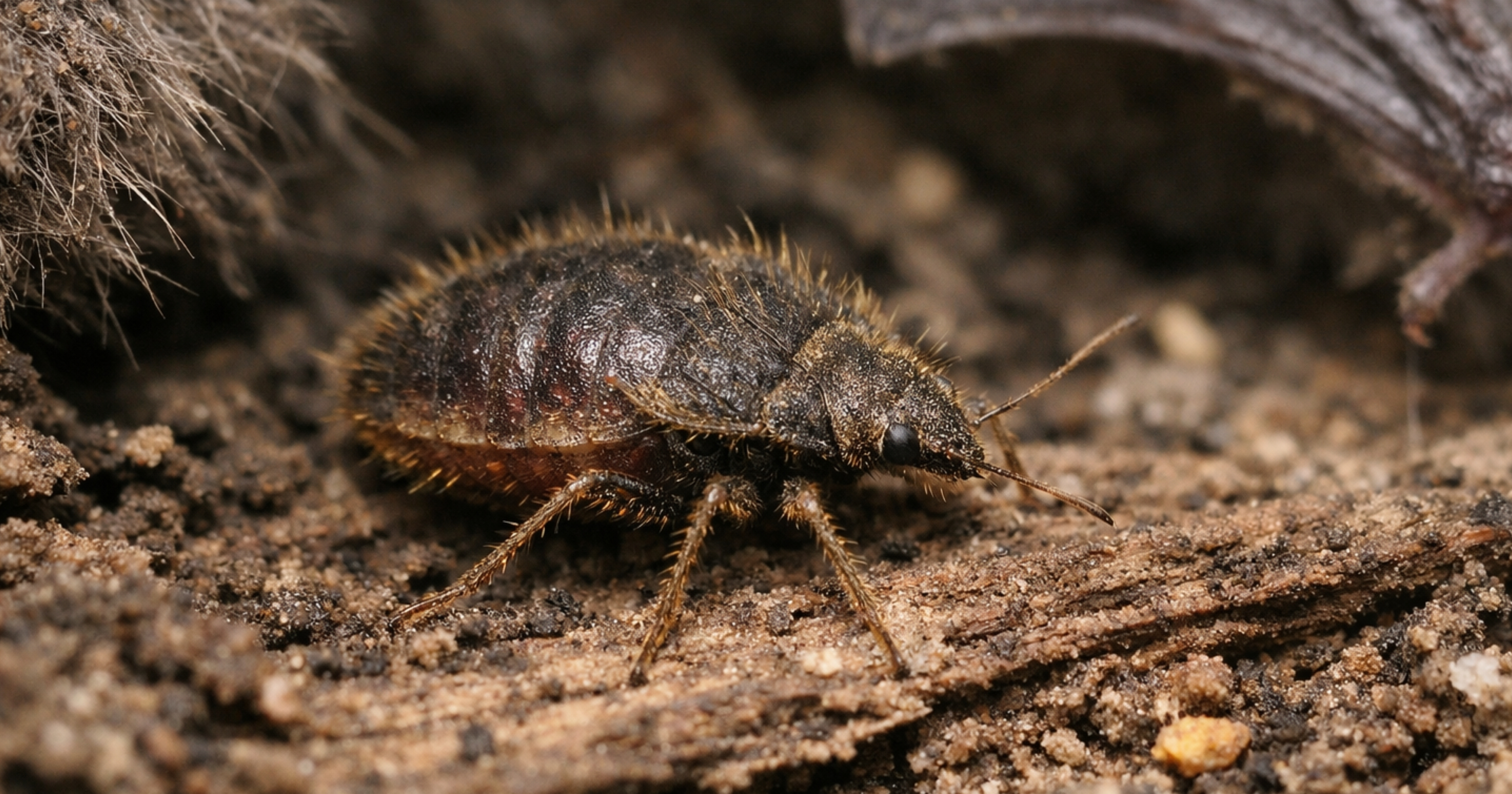
Tropical bed bug (very similar; slightly larger; more common in warmer regions) · Bat bug (similar appearance; longer hairs on thorax; associated with bats) · Carpet beetle (different shape; not a blood-feeder)
When to get help
Any confirmed or suspected bed bugs — get a professional inspection. DIY sprays rarely reach all harbourages; heat treatment or thorough insecticide treatment is usually needed. Do not delay; infestations grow quickly.
Common across South Africa. Correct ID avoids confusion with bat bugs or other insects; treatment is the same for common and tropical bed bugs.