Pest guide · bed bug family
Compare true human-infesting species on the common bed bug guide and tropical bed bug guide—bat bugs share the look but not the same host story.
Bat bugs are one of the most important bed bug lookalikes because they are extremely similar in shape, size, colour, and behaviour. They are close relatives in the cimicid family and may bite people when their normal hosts are unavailable, but they are usually associated with bats, not humans as their primary host. The biggest practical mistake is assuming every flat, brown, blood-feeding bug near a bed is automatically a bed bug.
“Bat bug” is a common name for cimicid bugs closely related to bed bugs, including species such as Cimex adjunctus and Cimex pilosellus in North America. They feed mainly on roosting bats, but humans can become incidental hosts, especially when bats are removed, excluded, or abandon a roost near living areas. CDC notes that while the main human bed bug species are Cimex lectularius and C. hemipterus, humans may also be incidental hosts of cimicids associated with bats and birds.
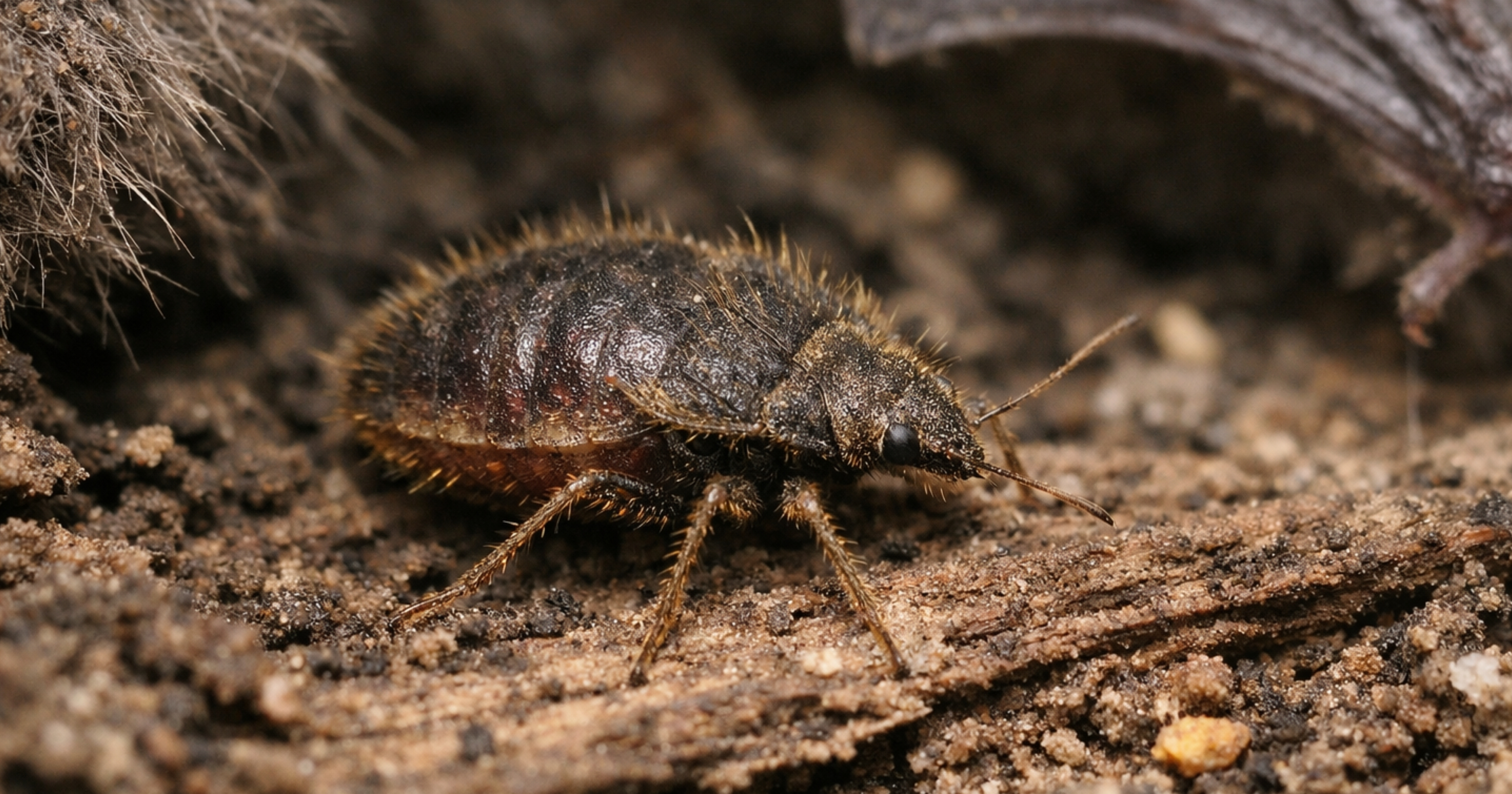
Bat bugs and bed bugs are so alike that casual visual inspection is often not enough. Extension and diagnostic sources repeatedly note that the most useful difference is the length of the hairs on the pronotum, the shield-like area just behind the head. In bat bugs, those hairs are as long as or longer than the width of the eye; in bed bugs, they are shorter than the eye width. This is usually a microscope or strong magnification feature, not something most people can judge with the naked eye.
A bat bug typically looks like a small, oval, flattened, reddish-brown bug, very much like a bed bug. Species accounts describe bat bugs as roughly 4 to 5 mm long, wingless, and darker after feeding. That is why location and context matter so much: if similar bugs are appearing near an attic, chimney, roof void, or wall void with bat activity, bat bugs move much higher up the suspect list.
What to look for
The special trait is not aggression or a worse bite. It is micro-hair camouflage in plain sight.
Bat bugs are separated from bed bugs by the length of the fringe hairs on the pronotum, yet that difference is so small that it often escapes normal inspection. In other words, their “superpower” is that the single best identification trait is a microscopic trait most people never check. That makes them supreme impostors in real-world pest diagnosis.
If a bat bug infestation is mistaken for a true bed bug infestation, treatment can miss the real source. Bat bugs are tied to bat roosts, so control is not just about treating the room. It also means finding and resolving the bat access or roosting site. Sources aimed at diagnosis and management stress that identification is crucial because bat bugs and bed bugs require different practical responses.
Bat bugs are part of a broader group of bird- and bat-associated cimicids that can all complicate diagnosis. Colorado State notes that bed bug lookalikes in homes can include eastern bat bugs, western bat bugs, swallow bugs, and other cimicids. That means “looks like a bed bug” is not, by itself, a species identification.
Its strength is diagnostic deception.
That combination makes bat bugs one of the most deceptive pests in bed-bug-style investigations.
Bat bugs are not famous because they are worse than bed bugs. They are famous because they are so easy to mistake for them. Their flattened body, blood-feeding behaviour, and indoor appearance make them convincing impostors, while the real clue sits in a tiny fringe of hairs behind the head. That is what makes accurate identification so important.
Next steps: bed bug identification guide, how we treat bed bugs. Bat roost access and exclusion must follow legal and humane wildlife rules—coordinate specialists alongside any premises treatment; do not DIY-close active bat roosts. Compare common and tropical bed bug guides. Book a get a quote. Read bed bug treatment safety.
Bat-roost context + pronotal hairs — not bedroom proximity alone.
Bats in the structure? Get professional ID and humane exclusion advice before assuming mattress-led bed bugs.
We confirm whether you are dealing with human bed bugs or bat-associated cimicids—then align treatment and referrals to the real source.