
Cat Flea
Ctenocephalides felis
Appearance
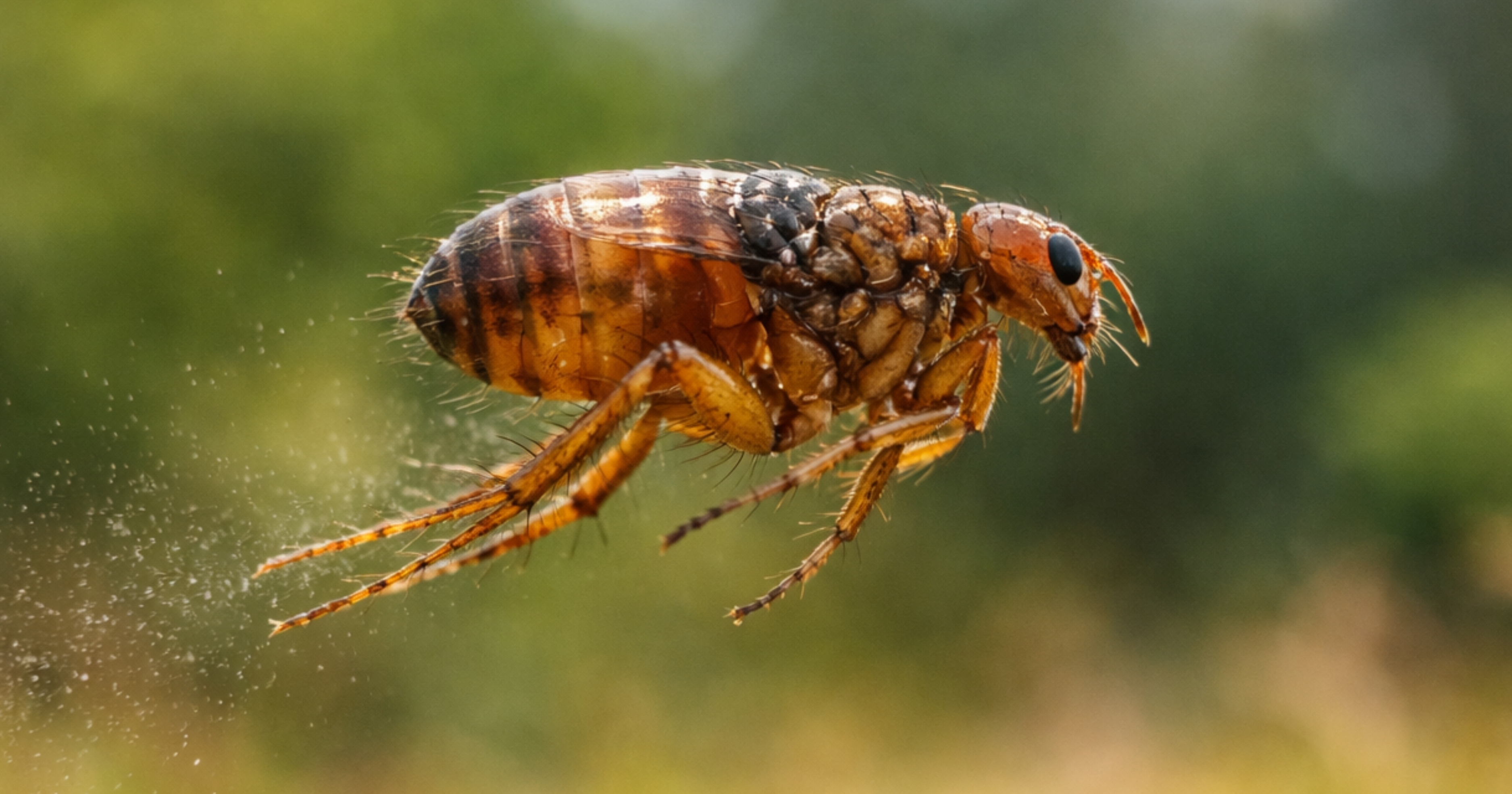
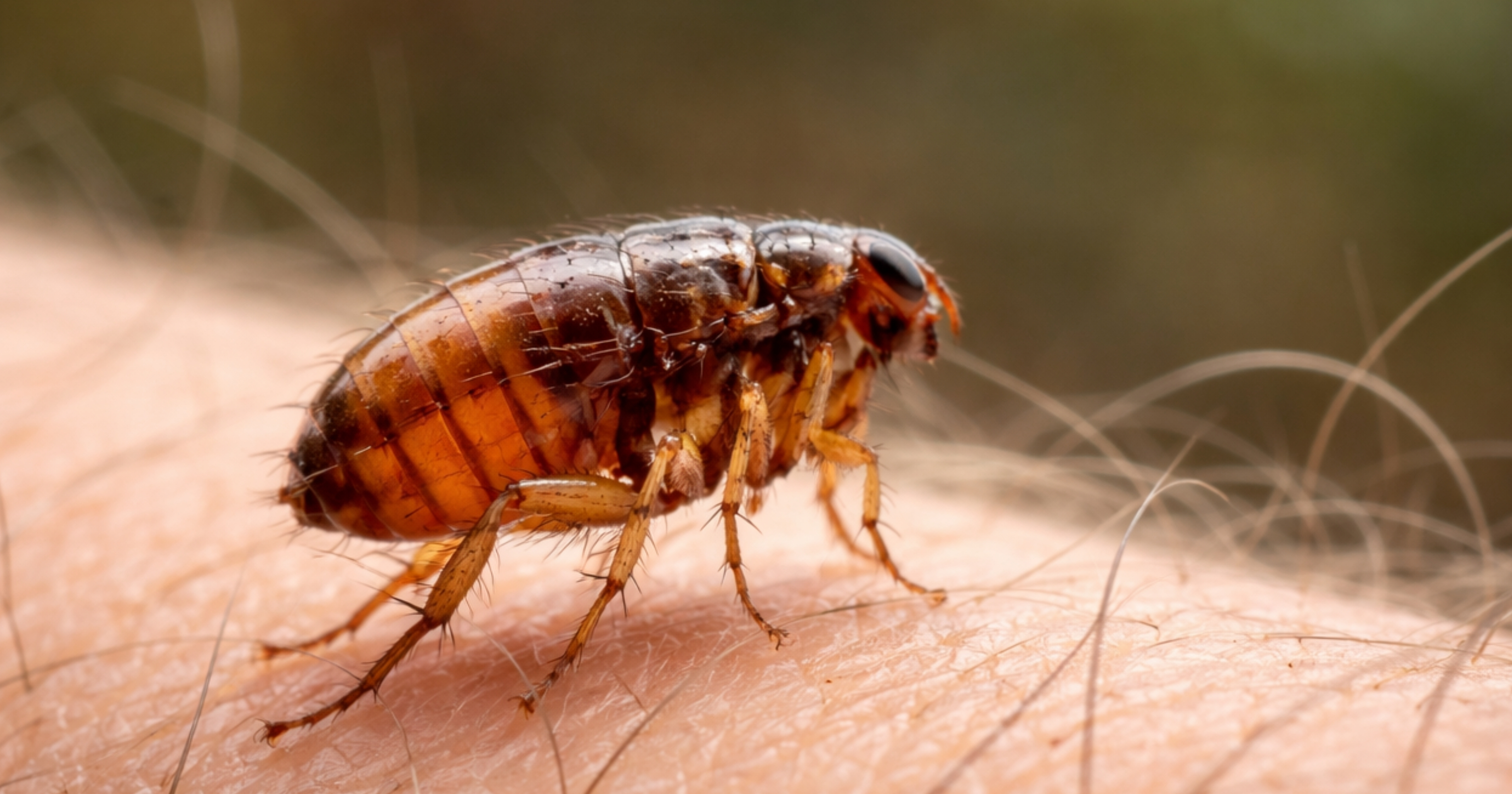
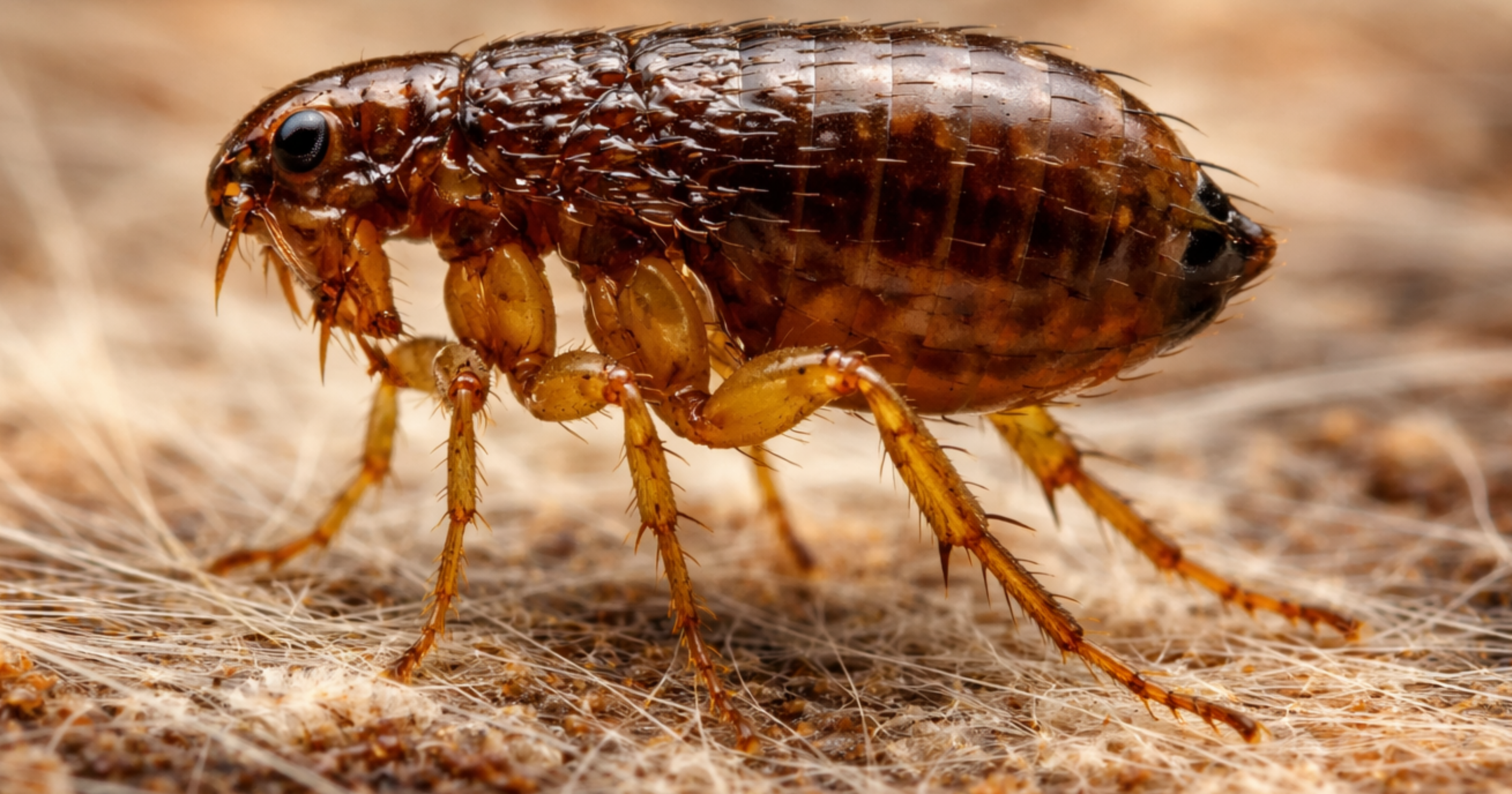
- Adult: small, flattened sideways, reddish-brown to black; about 2–3 mm
- No wings; long hind legs for jumping; genal and pronotal combs (ctenidia)
- Head profile gently sloping (distinguishes from dog flea under magnification)
- Eggs: tiny white ovals, often in fur and where pets rest
- Larvae: worm-like, pale, avoid light; in carpets, cracks, and bedding
- Pupae: in cocoons; can wait weeks to emerge as adults
Commonly found
Behaviour
The dominant flea in South African homes and on pets. Adults feed on blood; females lay eggs that fall off the host. Larvae feed on organic debris and flea dirt (faeces); pupae can remain dormant for weeks. Entire life cycle can complete in about two weeks in warm conditions. Cat fleas readily bite humans, especially on ankles and legs. Control requires treating both the pet (with vet-recommended products) and the environment.
Why you may be seeing them
Pets bring fleas indoors; eggs and larvae build up in carpets and resting areas. Warmth and humidity favour rapid development. Flea dirt (black specks that turn red when wet), pets scratching, and bites on people are common signs. Often worse in summer but can occur year-round in heated homes.
Often confused with
Dog flea (very similar; head shape differs under magnification; much rarer) · Human flea (no combs; different host preference) · Other small jumping insects (e.g. springtails — not blood-feeders)
When to get help
Heavy infestation; fleas or flea dirt in multiple rooms; bites on people; or when pet and home treatment together have not worked. Professional environmental treatment plus coordinated vet treatment breaks the cycle.
In southern Africa the cat flea is usually the species responsible for flea problems in homes. Both C. felis felis and C. felis strongylus occur in South Africa.