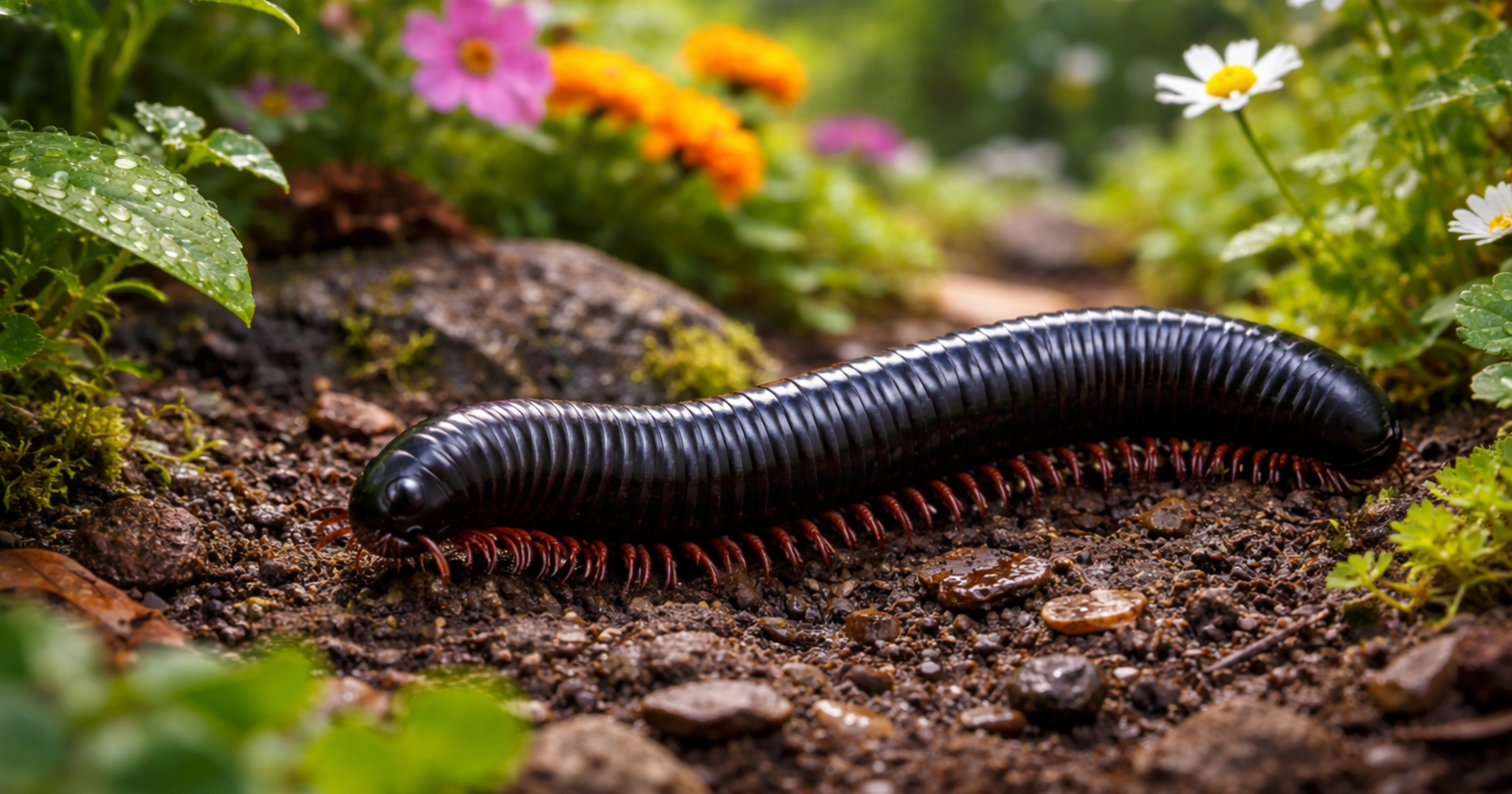

Garden / Black Millipede
Various (Diplopoda)
Appearance
- Long, cylindrical, segmented body; dark brown to black
- Two pairs of short legs per segment (under the body)
- Typically 20–40 mm or more; many species in South Africa
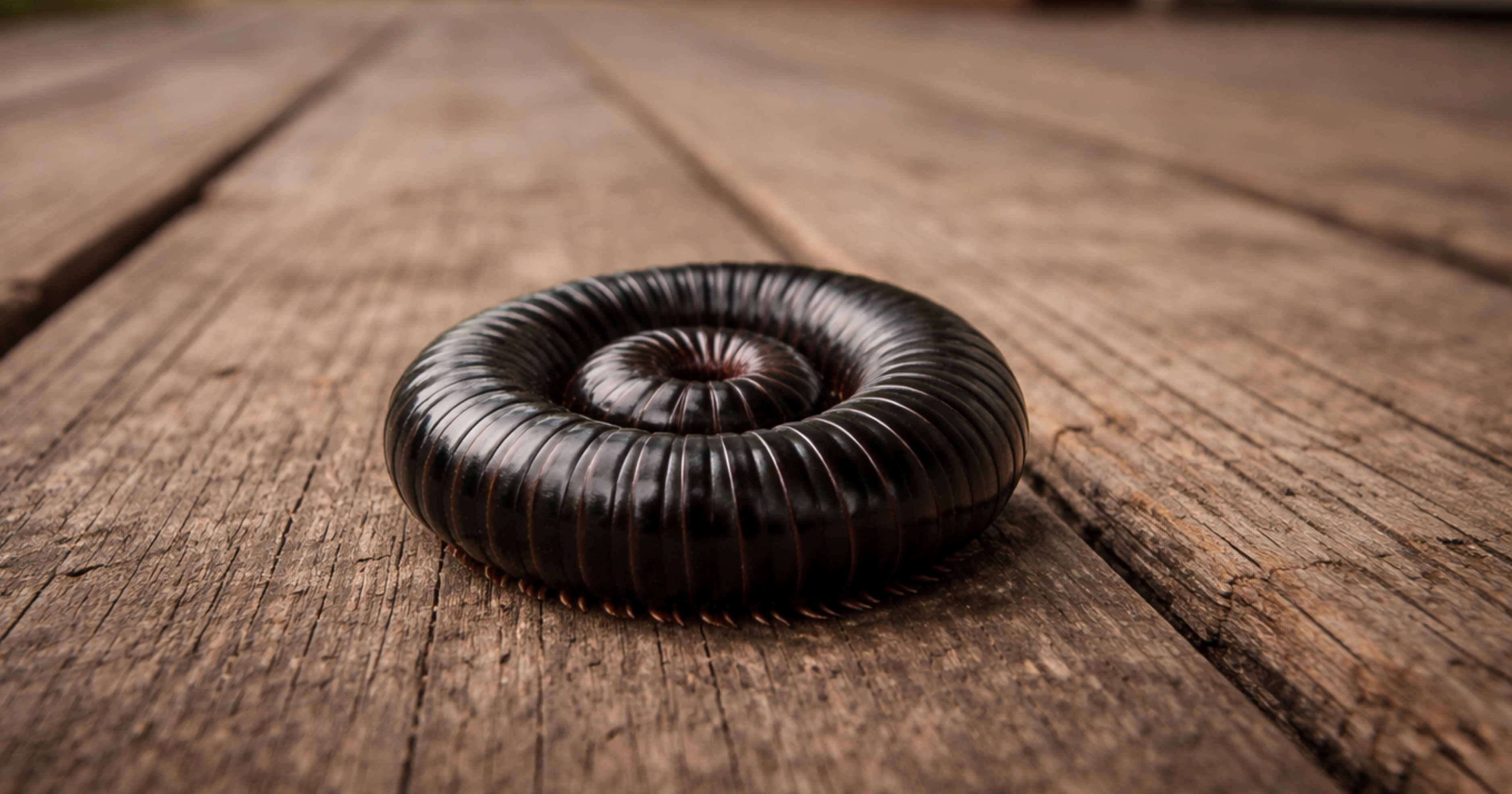
- Curls into a spiral or coil when disturbed
Commonly found
Behaviour
Millipedes are decomposers; they feed on decaying plant matter. They need moisture and migrate in large numbers after rain or when soil is saturated, often moving toward buildings. They do not bite or sting but some species can release a mild defensive secretion (can stain or irritate). They enter through gaps under doors, around pipes, and through cracks. Barrier treatment at the perimeter stops them at the boundary.
Why you may be seeing them
Rain or overwatering triggers mass movement. Mulch or compost against the house, poor drainage, or sealed soil drives them toward shelter. They are most visible when they have already entered or are massed at doors. Reducing moisture and pulling mulch back from the foundation helps long-term.
Often confused with
Centipede (centipedes have one pair of legs per segment, are flatter, and move fast; can bite) · Wireworm (beetle larvae; fewer legs; different shape)
When to get help
Repeated invasions after rain; large numbers indoors or at doors. Barrier treatment at foundations and entry points, plus sealing gaps and moisture advice, stops invasions. We do not treat harmless millipedes in the garden; we stop them from entering.
Often called shongololo in South Africa (from the word for “train” — they look like a long train).