Pest guide · pantry pests
National pantry methodology: pantry pest hub, how we treat pantry pests, pantry guarantees, pantry pest control by area. Identification: pantry pest identification.
Sitophilus oryzae (rice weevil) — internal kernel development; compare granary / maize weevils (UF/IFAS, USDA)
Stored grains can look perfectly normal on the outside while a rice weevil infestation is already developing within. That is what makes this insect such a serious pantry and storage pest. The female places an egg into a grain kernel, seals the opening, and the larva develops hidden inside, feeding from within until the adult emerges. USDA identifies the rice weevil as a major pest of stored grain, and this concealed life cycle is the main reason infestations are often discovered late.
The rice weevil is Sitophilus oryzae, a small beetle in the weevil family. It closely resembles other stored-grain weevils, especially the granary weevil and maize weevil, so common names like “grain weevil” can be a bit loose in everyday use. UF/IFAS lists rice weevil, maize weevil, and granary weevil separately, which is a good reminder that not every “grain weevil” is the same insect.
For a pest guide page, the best approach is to say clearly:
This page focuses on the rice weevil, Sitophilus oryzae, one of the main true internal feeders of stored grain.
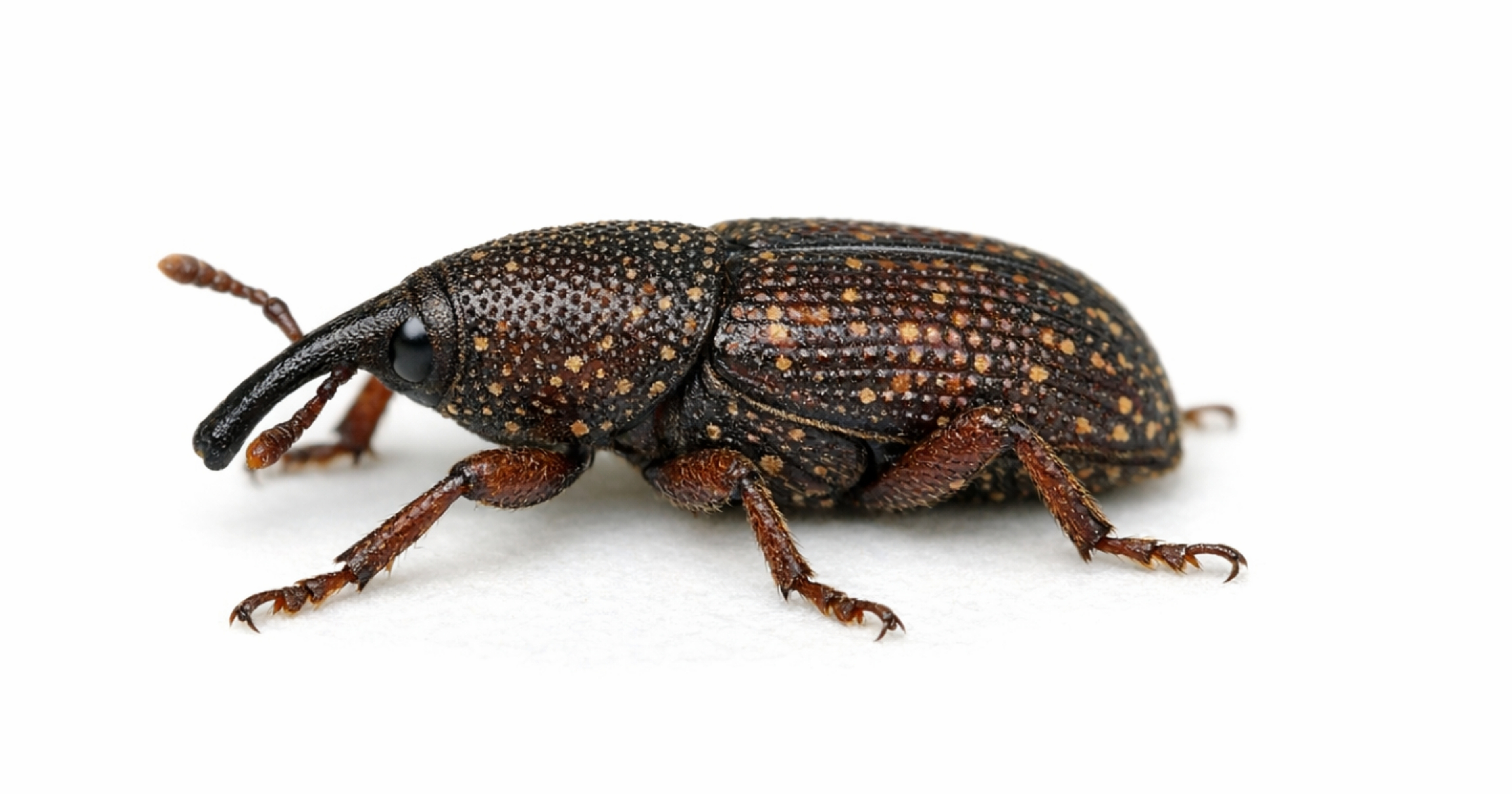
USDA describes the rice weevil as a small snout beetle, usually about 3 mm long, varying from reddish-brown to nearly black, often with four lighter reddish or yellowish spots on the wing covers. It resembles the granary weevil, but one important difference is that the rice weevil has fully developed wings beneath the wing covers.
What to look for
Rice weevils are serious because they are primary pests of stored grain. That means they can attack whole, sound kernels, not just broken material. USDA contrasts this with pests that lay eggs outside the grain and whose larvae feed externally; in rice weevils, the damaging stage develops inside the kernel itself.
This hidden development has three consequences:
The rice weevil's real “special power” is not just that it eats grain. Many insects do that.
Its real advantage is this:
It turns the grain kernel into a nursery, food source, and shelter all at once.
The female bores into a kernel, lays an egg, and seals the opening. The larva then develops concealed inside the grain. That means the most vulnerable stage is hidden inside the commodity it is feeding on. This is what makes the rice weevil superior to many other pantry pests that must rely on exposed food particles or damaged product.
Because the grain does three jobs for the insect:
That is the trait most people underestimate.
This is one of the big differences between rice weevil and granary weevil. USDA notes that the rice weevil has fully developed wings, and CABI notes that closely related grain weevils such as Sitophilus zeamais are especially capable fliers. The practical point for a webpage is simple: rice weevils are not just passive hitchhikers in a packet. Compared with wingless stored-grain weevils, they have better dispersal potential.
So a half-truth people often believe is that pantry weevils only spread when humans move infested grain. Human transport is a major route, but in the right conditions rice weevils also have their own dispersal capacity.
Rice weevils are hidden pests by design. The grain kernel conceals the larva, and the first obvious sign may only come when adults emerge or when grain quality starts to decline. This makes them very different from pests that leave obvious webbing or visible larvae on the food surface. USDA's visual references and insect guide both emphasise the concealed nature of internal grain feeders like the rice weevil.
That is why a bag of grain, pet food, bird seed, or rice can look fine at first glance and still already be infested.
Rice weevils are classic stored-product pests. USDA and ARS literature place them among the important insects of durable stored commodities. Their success comes from a combination of:
A 2004 USDA ARS paper also describes the rice weevil as a long-lived pest of stored cereals in warm and tropical regions as well as in the United States. That longevity helps colonies persist once infestations become established.
Rice weevil activity can sometimes be detected acoustically because feeding inside grain produces detectable sounds. USDA-linked research on low-cost acoustic detection includes Sitophilus oryzae in stored grain, which highlights just how hidden this insect can be: sometimes the infestation is easier to detect by sound technology than by casual visual inspection.
That tells you something important about this insect's biology: it is a concealed feeder first, visible pest second.
The rice weevil is one of the most effective pantry and stored-grain pests because it does not just feed on grain — it uses the grain itself as a protected nursery. That concealed life cycle, combined with its status as a true primary pest of whole kernels, is what makes it so difficult to detect early and so important in stored-food protection.
Next: how we treat pantry pests, pantry guarantees, pantry pest identification guide. Book pantry pest control in Cape Town · Pantry pests Cape Town hub. Read pantry pest treatment safety.
Sitophilus oryzae — discard infested product, seal new stock, and treat cupboards on your quoted pantry footprint; Super 15 weevil terms when that product is purchased.
Exit holes or live weevils in grain? Use get a quote for assessment-led control.
We treat cupboards and cracks on your quoted scope, with discard-and-seal cooperation—national pantry methodology; your agreement prevails.
How we treat pantry pests, Pantry guarantees, Pantry pest control by area, Pantry pest identification guide. Hub: pantry pests.