Pest guide · learn more from the tick family
In South Africa, the common name blue tick usually refers to Rhipicephalus (Boophilus) decoloratus, often written simply as Rhipicephalus decoloratus. South African veterinary sources also distinguish it from the Asiatic blue tick, R. microplus, which is a different species.
The blue tick is a hard tick of cattle and other large hosts and is one of the important one-host ticks in South Africa. ARC's vaccine FAQ states that the two one-host blue tick species present in South Africa are Rhipicephalus (Boophilus) decoloratus and Rhipicephalus (Boophilus) microplus, with R. decoloratus being the more widespread of the two.
That matters, because people often treat “blue tick” as one vague category. For a South African pest guide, the safest main focus is the African blue tick, R. decoloratus.
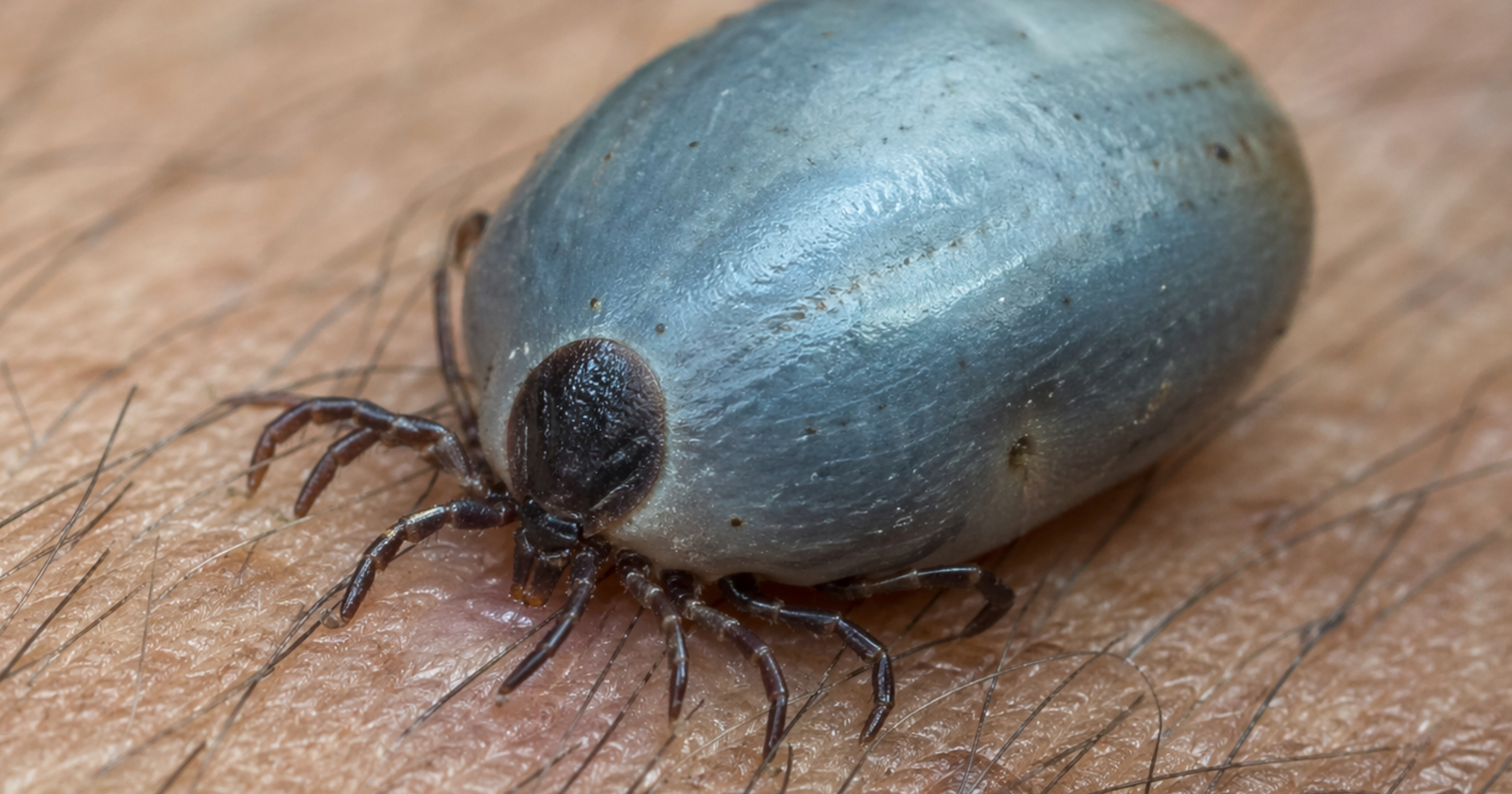
The blue tick is best recognised not by dramatic mouthparts or ornate markings, but by its smooth, rounded, bluish-grey engorged females on cattle. In field and industry material from South Africa, attached females are often shown as pale blue-grey ticks on the hide, which is one reason the common name stuck. Preferred attachment zones are shown over much of the lower body, flanks, dewlap, legs, udder region, and tail area.
South African sources describe the African blue tick as widespread, and ARC notes specifically that R. decoloratus is more widespread than R. microplus in South Africa. Broader southern African livestock literature also treats blue ticks as major cattle parasites in the region.
Blue ticks matter because they are not just irritating parasites. They also transmit disease. ARC states that the African form of babesiosis, or redwater caused by Babesia bigemina, is transmitted by both South African one-host blue tick species, including R. decoloratus. FAO also notes that tick infestations cause direct production losses through blood loss, irritation, hide damage, secondary infection, and reduced performance.
So the blue tick is important for two reasons at once: it is a feeding parasite, and it is also a disease vector.
Most people think the blue tick's main strength is simply that there are many of them. That is not the deepest truth.
This gives the blue tick an enormous practical advantage:
This is the real “special power”: its hidden supremacy is host efficiency. Many ticks lose time and risk each time they must find a new host. The blue tick reduces that problem by doing almost the whole feeding cycle on one animal. That is what makes it so effective in cattle systems.
Even though the feeding stages remain on one animal, the system is still brilliant from the tick's point of view. Historical South African veterinary writing notes that each infected animal can scatter thousands of infective larvae onto pasture. In other words, one-host feeding does not make the tick locally contained. It can still seed the environment heavily once engorged females drop off and reproduction follows.
That is one reason herd problems can escalate fast if they are not managed well.
Blue ticks succeed because they combine:
That combination makes them especially effective in cattle systems where host availability is stable.
One of the most overlooked facts about the blue tick is that the common name hides a major taxonomic change. South African tick-taxonomy literature notes that the old name Boophilus decoloratus was moved to Rhipicephalus (Boophilus) decoloratus, which is why older farming material and newer veterinary literature may use slightly different scientific names for the same tick.
Verminator can advise on defined outdoor or farm-adjacent tick zones as part of a broader programme; livestock disease control belongs with your veterinarian and registered animal remedies. This guide is educational context—not a substitute for veterinary diagnosis, tickicide choices, or vaccine strategy.
The blue tick is one of the most efficient livestock parasites in southern Africa. It is not supreme because it looks dramatic. It is supreme because it is biologically efficient. By completing its parasitic cycle on one host and still seeding the environment effectively, it becomes a highly successful cattle tick and an important disease vector.
Short answers tied to cattle parasitology and South African veterinary framing—not slogans.
Need property or perimeter tick advice alongside your vet? Get a fast quote when you're ready.
We treat agreed outdoor zones and align advice with your livestock vet. Fast quote.
For ornate three-host ticks and heartwater context, see the bont tick pest guide. For kennel and indoor dog ticks, see the brown dog tick pest guide. For species comparison, see our tick identification guide. For methodology, see how we treat ticks and tick guarantees. For product safety context, see tick treatment safety.