Pest guide · learn more from the tick family
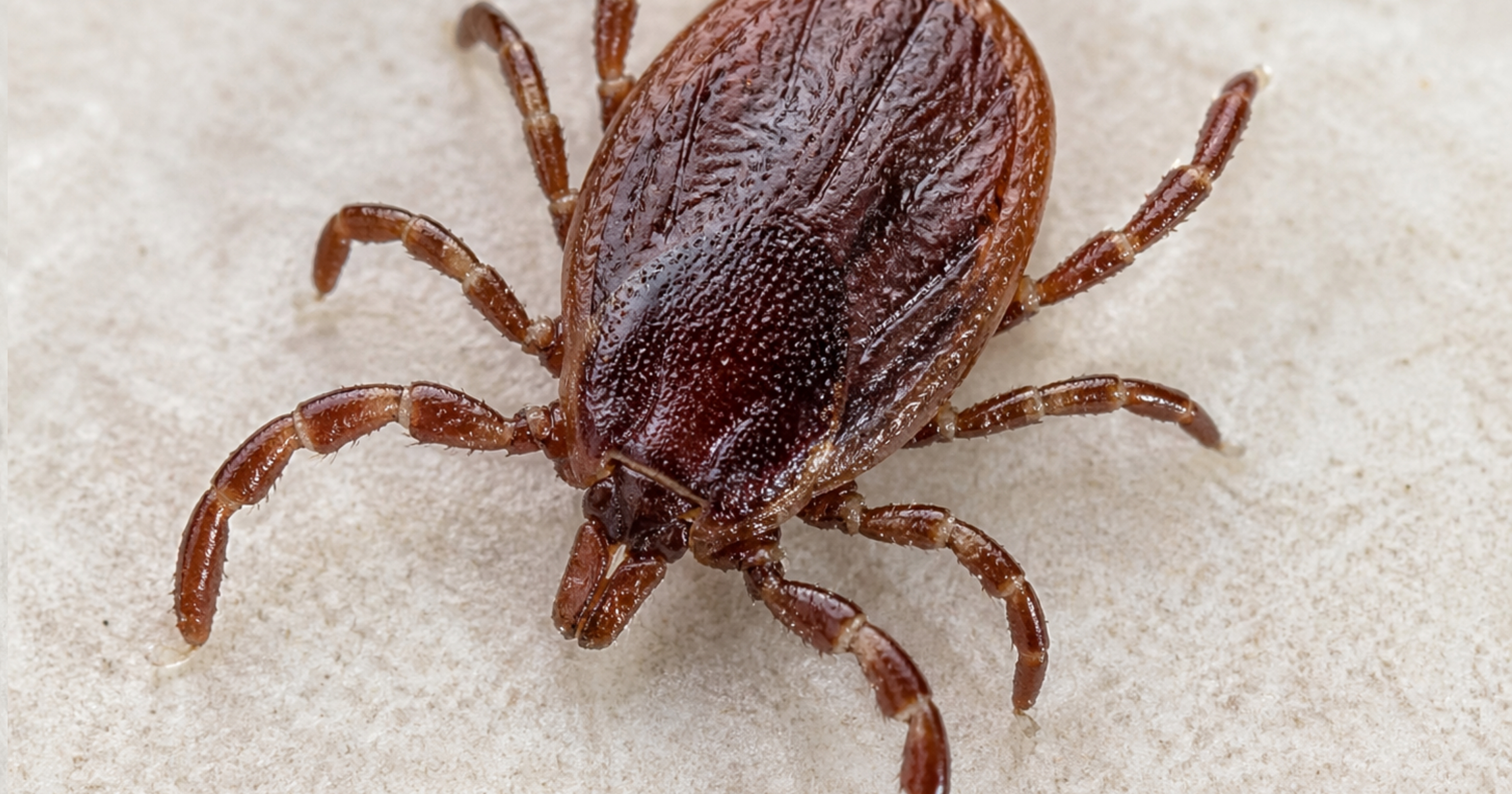
The brown dog tick is Rhipicephalus sanguineus. It is one of the most important tick pests of dogs in the world and is especially successful because it is highly adapted to living with dogs in kennels, yards, and even human dwellings. Unlike many other ticks, it can build up large infestations in and around buildings rather than depending only on wild outdoor habitats.
The brown dog tick is a three-host tick that feeds mainly on dogs through its larval, nymphal, and adult stages, though it may also feed on other hosts, including humans on occasion. It is widely regarded as the most widespread tick associated with domestic dogs and is well adapted to kennel and household environments.
For a South African pest guide, that matters a lot. Research from South Africa notes that Rhipicephalus sanguineus is one of the most prevalent ticks found on dogs in some communities, and older Onderstepoort work documented its seasonal prevalence on kennelled dogs in Pretoria North.
The brown dog tick is usually described as yellowish-brown to reddish-brown, with a dark, plain scutum and a fairly uniform, unornamented appearance. University of Saskatchewan veterinary parasitology material describes unfed adult females as about 4 to 5 mm long, with festoons, eyes, and a hexagonal basis capituli.
The brown dog tick is found worldwide and is especially common in warmer climates. It is strongly associated with dogs, kennels, residences, and enclosed places where dogs rest. South African material also confirms its importance on dogs locally.
This tick matters because it is not just an occasional outdoor parasite. It can become a full environmental infestation in dog spaces. UF/IFAS notes that many ticks can be carried indoors on animals, but the brown dog tick is unusual because it can complete its entire life cycle both indoors and outdoors. That makes homes, kennels, and dog facilities genuine infestation sites rather than just places where ticks are dropped temporarily.
It is also medically important because it is known to transmit several pathogens affecting dogs and, in some settings, humans. The University of Pretoria repository summary states that it is known to transmit various tick-borne diseases and may also bite people in their own homes.
Most people think the brown dog tick's biggest strength is that it feeds on dogs. That is true, but it is not the real reason this tick becomes such a stubborn pest.
This gives the species a huge edge:
This is the real “special power”: its hidden power is domestic colonisation. The brown dog tick is supreme not because it is the biggest tick, but because it can turn dog environments into permanent breeding territory. That is what makes it so different from many other ticks.
This tick is especially well adapted to dogs. The University of Pretoria repository summary states that it is almost exclusively a parasite of domestic dogs and is well adapted to living with its canine host in kennels or human dwellings. That level of dog association is one of the reasons infestations can become so concentrated in dog-heavy environments.
In practical terms, this means the brown dog tick is not just visiting dogs. It is biologically tuned to follow dogs, wait near dogs, and persist where dogs live. That makes it very different from broad-host-range ticks that depend more heavily on wildlife turnover.
Brown dog ticks are hard to eliminate because they combine:
That means the problem is often bigger than the ticks visible on the dog. The true infestation may include eggs, larvae, nymphs, and adults hidden in the surrounding environment—an inference directly supported by the documented full indoor life cycle.
One of the most overlooked truths about the brown dog tick is that it may bite people inside their own homes when infestations are established. The University of Pretoria repository summary says exactly that, which shows how closely this tick can adapt to domestic environments when dog infestations become severe.
Verminator treats outdoor and perimeter tick zones and advises coordination with your veterinarian for on-dog products and repeat checks. This guide is educational context—not a substitute for veterinary diagnosis or medical care after bites.
The brown dog tick is one of the most specialised and troublesome tick pests associated with domestic animals. It is not supreme because it is flashy or unusually large. It is supreme because it is dog-adapted, shelter-adapted, and home-adapted. Its real strength lies in its ability to turn everyday dog spaces into complete living systems for the next generation.
Short answers tied to real biology and building science—not slogans.
Need property tick reduction plus dog-area advice? Get a fast quote when you're ready.
We treat defined outdoor zones and advise on the dog-and-environment picture with your vet. Fast quote.
For ornate rural/game ticks and heartwater context, see the bont tick pest guide. For cattle one-host blue ticks and babesiosis context, see the blue tick pest guide. For species comparison, see our tick identification guide. For methodology, see how we treat ticks and tick guarantees. For product safety context, see tick treatment safety.