Pest guide · learn more from the tick family
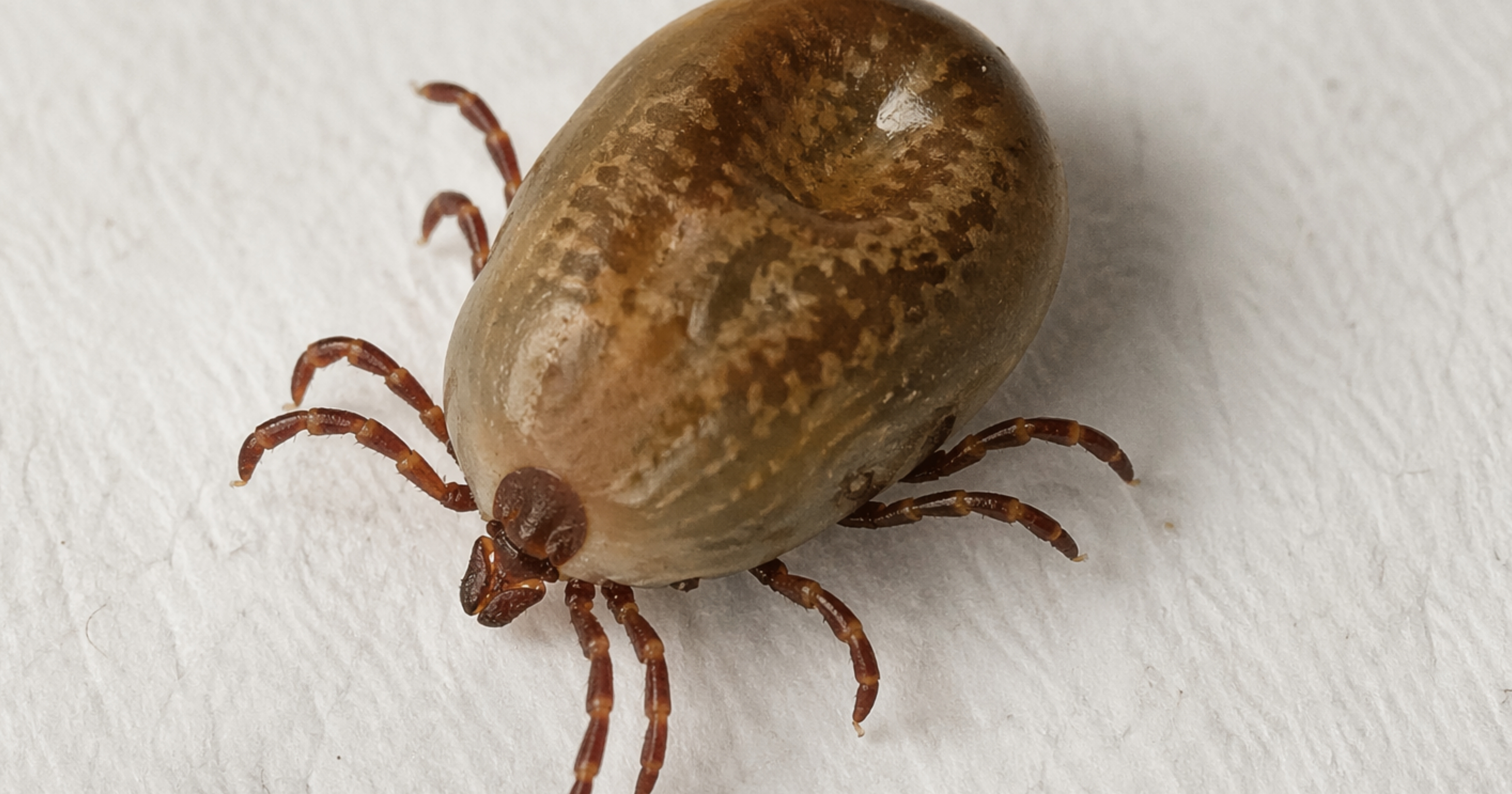
The bont tick in South Africa is Amblyomma hebraeum, also called the South African bont tick. It is a hard tick with striking markings, banded legs, and long mouthparts, and it is one of the most important ticks in southern African veterinary medicine because it transmits Ehrlichia ruminantium, the cause of heartwater in domestic and wild ruminants. It can also carry Rickettsia africae, the cause of African tick-bite fever in humans.
The South African bont tick is Amblyomma hebraeum, a species native to southern Africa and especially important in livestock systems. Official and veterinary sources describe it as a large, ornate tick with long mouthparts, a patterned scutum, and banded legs. Its common name comes from its variegated, “decorated” look.
This matters because “bont tick” is sometimes used loosely, but for a South African pest guide the correct focus is Amblyomma hebraeum, not the tropical bont tick Amblyomma variegatum, which is a different species.
The bont tick is one of the easier ticks to recognise once you know what to look for.
The bont tick is established in parts of South Africa and southern Africa more broadly. Research and veterinary sources place it especially in the warmer eastern and north-eastern parts of South Africa, including areas associated with heartwater risk. A 2024 study and South African veterinary sources note occurrence in provinces including Limpopo, Mpumalanga, KwaZulu-Natal, the Eastern Cape, and parts of adjacent regions where conditions suit the tick.
The bont tick is not just another irritating tick. It matters because it is a major disease vector. The most important fact is that Amblyomma hebraeum transmits heartwater, a serious disease of cattle, sheep, goats, and other ruminants caused by Ehrlichia ruminantium. South African veterinary references describe heartwater as one of the most economically important tick-borne diseases of livestock in the region. In people, the bont tick is also linked to African tick-bite fever through Rickettsia africae.
Most people think the bont tick's strength is just that it bites hard. That is true, but the deeper advantage is attachment efficiency.
A tick that feeds briefly is one thing. A tick that can secure itself deeply and stay in place is much more formidable.
That gives the bont tick several advantages:
This is the real “special power”: its hidden strength is mechanical feeding security. The bont tick is not supreme because it is fast or because it jumps. It is supreme because it is built to lock onto a host effectively and remain there.
The bont tick is a three-host tick, meaning its larva, nymph, and adult feed on separate hosts across the life cycle. Veterinary diagrams and references show that each active stage feeds, drops off, moults, and then seeks another host. This gives the species a major ecological advantage: it can move pathogens across different animals and different points in the landscape instead of being tied to only one host individual for development.
That multi-host strategy is one of the main reasons it is such an effective vector species—an inference supported by its documented three-host life cycle and disease importance.
The bont tick succeeds because it combines:
That makes it much more than just a nuisance ectoparasite. It is a mobile disease bridge between hosts—an inference grounded in its established vector status.
One lesser-known but important fact is that the larvae of Amblyomma hebraeum may be especially important in human tick bites. A veterinary identification reference states that the larvae are probably more responsible than any other tick for tick bites in humans in the regions where this species occurs. That helps explain why the bont tick matters beyond livestock.
Verminator treats outdoor tick habitat and advises coordination with your veterinarian for livestock and pets. This guide is educational context—not a substitute for veterinary diagnosis, livestock disease programmes, or medical care after a tick bite.
The bont tick is one of southern Africa's most important ticks. It is not formidable because it is large or fast. It is formidable because it is beautifully built for attachment, flexible across hosts, and highly effective as a disease vector. That combination is what makes it such a serious parasite in both veterinary and human health.
Short answers tied to real biology and veterinary context—not slogans.
Need property tick reduction? Get a fast quote when you're ready.
We treat outdoor zones and advise vegetation and pet coordination with your vet. Fast quote.
For species comparison and signs across South African ticks, start with our tick identification guide. For kennel and indoor dog-tick infestations, see the brown dog tick pest guide. For one-host cattle blue ticks and redwater context, see the blue tick pest guide. For methodology and timelines, see how we treat ticks and tick guarantees. For product safety context, see tick treatment safety.