Pest guide · lice family
National lice methodology: lice control hub, how we treat and advise on lice, lice guarantees, lice control by area. Identification: lice identification. Head louse guide · Body louse guide.
Verminator treats premises for bird-associated parasites after nest context—nest removal or proofing and environmental scope must match your quote; we do not treat people for bites.
Chewing lice on birds vs nest-linked mites (e.g. Dermanyssus, Ornithonyssus)
People often use these names as if they mean the same thing, but they do not. Bird lice are chewing insects that live on birds and feed mainly on feathers, skin debris, and related material. Bird mites are tiny arachnids associated with birds and nests, and some species can wander into buildings and bite people temporarily when birds leave the nest. If you are dealing with irritation in a room, roof void, window ledge, or around an abandoned nest, bird mites are usually the real concern, not bird lice.
Bird lice are chewing lice in groups such as Amblycera and Ischnocera. Britannica notes that they live on birds, feed on feathers, skin, and sometimes blood, and are typically host-specific. Chewing lice are not human parasites.
Bird mites are mites, not insects. Common pest species associated with nuisance problems include the northern fowl mite (Ornithonyssus sylviarum), the chicken mite / red poultry mite (Dermanyssus gallinae), and in some situations the tropical fowl mite (Ornithonyssus bursa). Bird mites normally live on birds or in their nests, but when nests are abandoned or chicks fledge, they may move indoors in search of another blood meal.
Bird lice stay with the bird. Bird mites can leave the nest and trouble people. Chewing lice are generally bird-bound and are not human parasites, while bird mites are well documented as causing avian-mite dermatitis or gamasoidosis in humans after moving from nests near windows, roofs, air-conditioners, or wall voids.
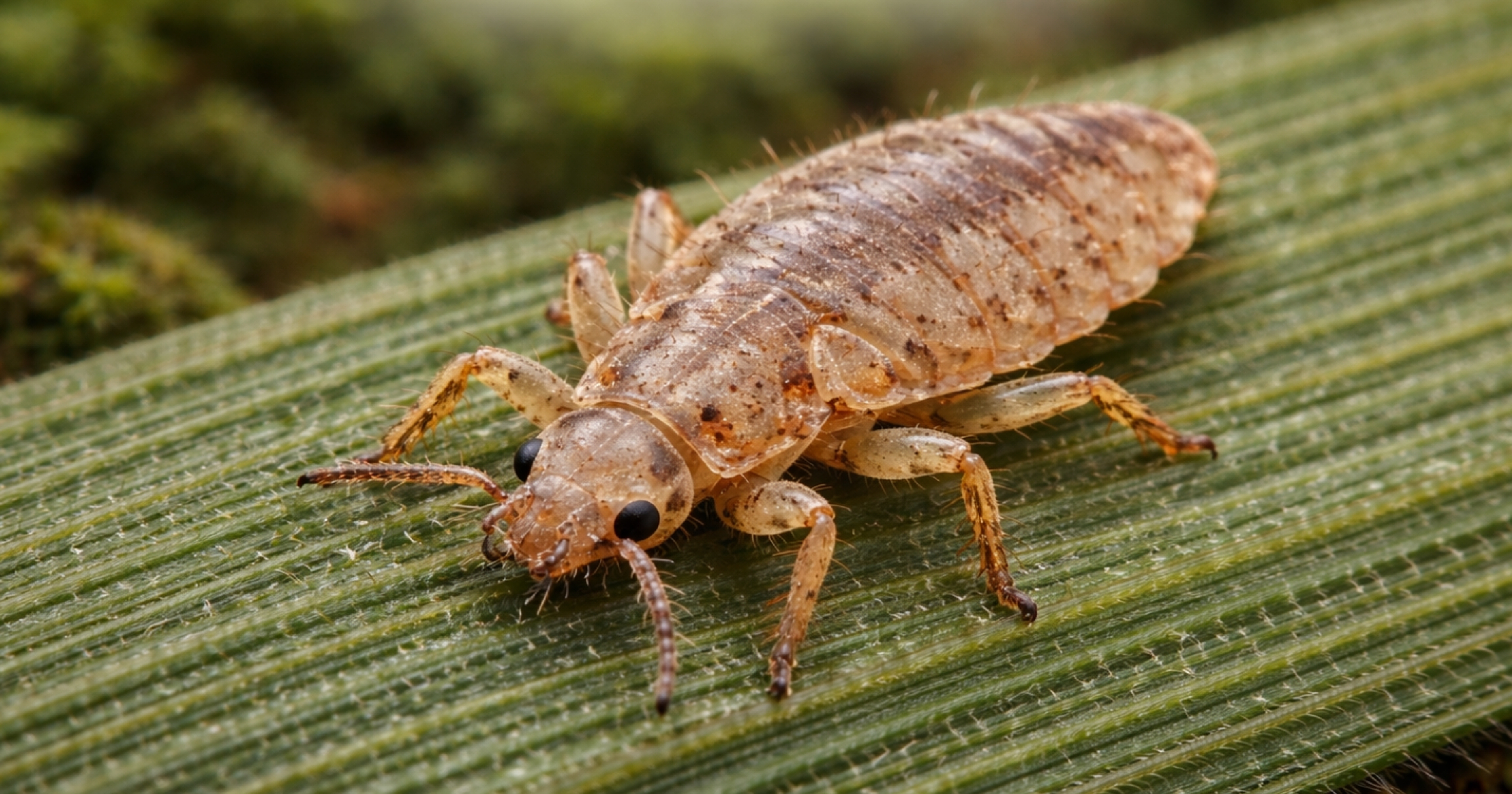
Bird lice are small, flattened, wingless insects adapted to cling to feathers. They are usually found on the bird itself, not crawling out of nests into living areas. Their biology is tied to feathers and close host contact.
Bird mites are tiny and often hard to identify without magnification. University of Minnesota Extension notes that they live on a wide range of birds, including poultry, pigeons, starlings, sparrows and robins, and that eggs may be laid in nests or on feathers. When bird hosts disappear, mites may wander into rooms and onto people.
Bird lice are chiefly a bird problem. They matter on poultry, pet birds, and wild birds because heavy infestations can irritate the bird, trigger scratching, and affect condition or productivity in poultry.
Bird mites are the ones that turn into a building nuisance. They are commonly associated with:
Bird lice matter because they stress birds. On birds, especially poultry, large numbers can cause irritation and self-damage from scratching. But they are not the classic culprit behind mysterious itching in a room after birds have nested nearby.
Bird mites matter because they are temporary human biters and can produce intense nuisance outbreaks indoors. Reviews of avian mite dermatitis describe people developing itchy papules after mites move from abandoned nests close to homes, dormitories, apartments, and window ledges. The mites do not establish a true long-term human infestation the way human lice do, but they can cause very real irritation until the bird source is removed.
Most people think the bird mite's power is simply that it bites.
That is not the real advantage.
Its deeper advantage is nest-to-host flexibility. Bird mites are built to survive in the bird-and-nest system, not only on the bird itself. That means when the host disappears, they can continue searching outward from the nest into surrounding cracks, walls, ceilings, beds, curtains, and nearby rooms. That is exactly why infestations linked to abandoned nests can seem sudden and baffling.
A parasite that must remain glued to the host is easier to contain. A parasite that can exploit the nest environment as well as the bird has a built-in bridge into human structures. That makes bird mites much more relevant to pest control than bird lice in homes and buildings. This is an inference, but it is strongly supported by extension guidance and clinical reports describing mites moving from nests into occupied rooms.
University of Minnesota Extension notes that bird mite eggs hatch in about two to three days, and adults may be seen in about five days if birds are present. That fast development helps explain why a nest can go from unnoticed to heavily infested quickly, especially during active nesting.
If you want one accurate answer, it is this:
Bird mites can turn a bird nest into a building infestation pathway.
Bird lice are good at staying with birds. Bird mites are good at surviving in the bird-nest system and then dispersing when the host is gone.
That is what makes bird mites the more important structural nuisance pest.
Bird lice and bird mites should never be treated as the same pest. Bird lice are mostly a bird problem. Bird mites are the real building nuisance. If itching, crawling sensations, or tiny moving specks start shortly after birds have nested and then left, the problem is far more likely to be bird mites moving from the nest than bird lice.
Next: how we treat and advise on lice, lice guarantees, head louse guide, body louse guide, lice identification guide. Book a get a quote. Read lice treatment safety. For proofing context, see bird proofing.
Chewing lice vs nest-dispersing mites—avian-mite dermatitis framing, premises and proofing scope vs person treatment.
Use our quote flow when you need premises treatment named in your agreement; medical questions stay with your clinician.
We separate bird-associated premises work from human lice advice—nest source, quoted footprint, and proofing cooperation must match your paperwork.
How we treat lice, Lice guarantees, Lice control by area, Head louse guide, Body louse guide, Lice identification guide. Hub: lice control.