Pest guide · lice family
National lice methodology: lice control hub, how we treat and advise on lice, lice guarantees, lice control by area. Identification: lice identification. Head louse guide · Bird louse vs bird mite guide.
Verminator does not treat people for body lice—high-heat laundering, hygiene, and medical advice lead person recovery; we may advise or quote environmental scope when relevant.
Pediculus humanus humanus
The body louse is not just another kind of “lice.” It is the only human louse clearly linked to disease transmission, and it survives in a very unusual way: not mainly in hair, but in clothing and seams close to the skin. Its real strength is not speed or size. It is a combination of clothing-based living, repeated blood-feeding, and close adaptation to human crowding and poor laundering conditions.
The body louse is a blood-feeding human ectoparasite in the Pediculus humanus group. CDC DPDx notes that the head louse and body louse are two subspecies or ecotypes within the same human louse complex, and recent molecular work suggests they are extremely closely related. The key practical difference is not simply anatomy, but where they live: body lice are associated mainly with garments, while head lice live on scalp hair.
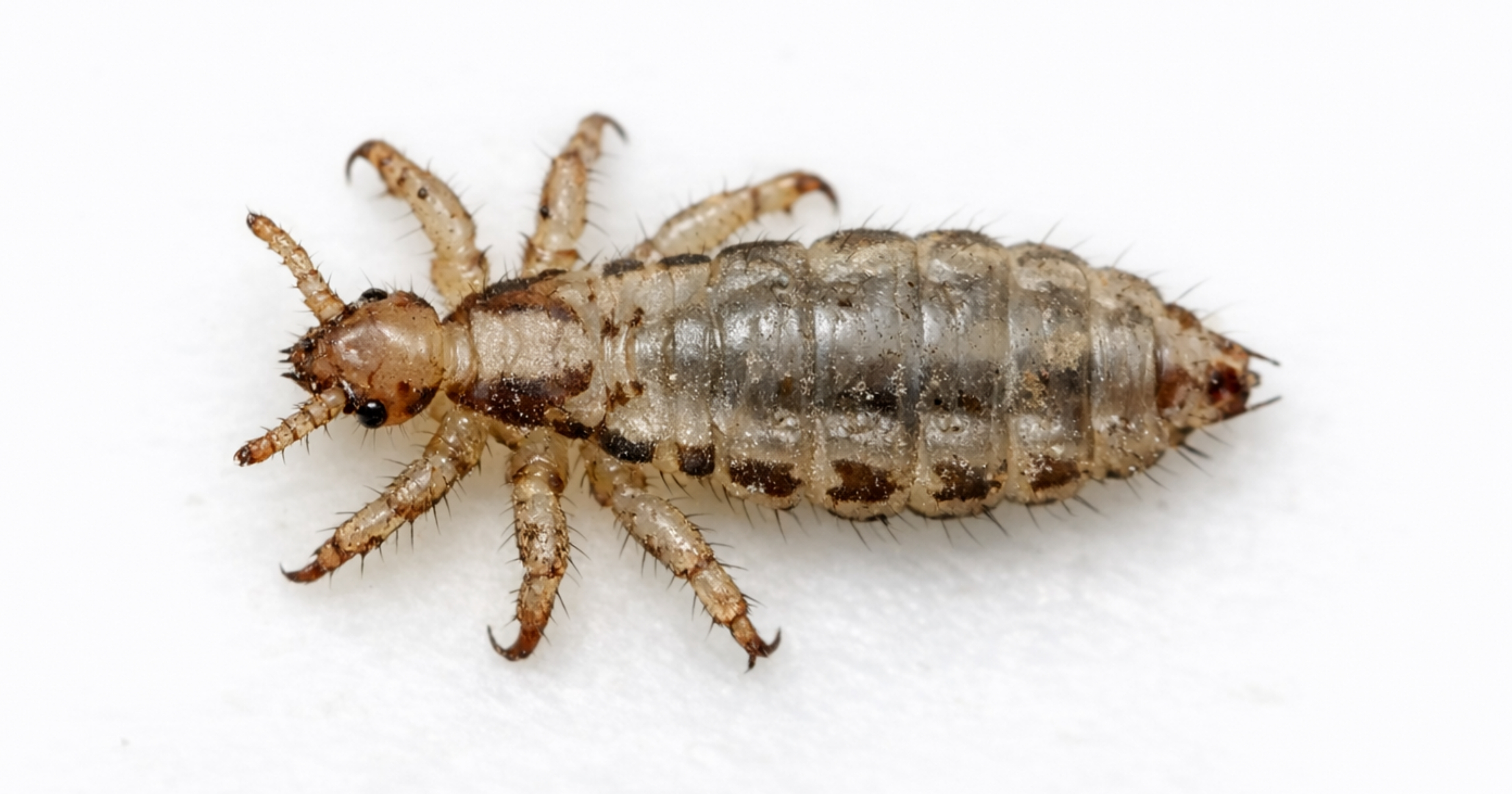
Body lice are small, wingless, blood-sucking insects. MSD Manual notes that lice are wingless and blood-feeding, and Medscape describes body lice as generally around 2–4 mm long. They are pale to grayish and flattened, with six legs adapted for clinging.
What to look for
This is the single biggest misunderstanding.
CDC states that body lice live and lay eggs on clothing and only move to the skin to feed. MSD Manual says the same thing in practical terms: unlike head lice and pubic lice, body lice live in garments. That makes body lice biologically unusual among human lice and explains why hygiene and laundering matter so much.
CDC states clearly that only the body louse can spread disease among the human lice. This is what makes the species so medically important. Body lice are known vectors of:
Body lice are strongly associated with overcrowding, infrequent changing or washing of clothes, and limited access to hygiene. CDC says improving hygiene and access to clean clothes is the core treatment measure, and public-health sources describe body louse outbreaks as most likely where many people live in crowded conditions with poor sanitation.
That means this is not mainly a “dirty skin” problem. It is far more a clothing and living-conditions problem. The louse is adapted to fabrics worn close to the body for long periods.
Most people think the body louse's main power is simply that it bites.
That misses the remarkable part.
Its deeper biological advantage is external living in the human microclimate created by clothing. Unlike head lice, which stay on hair, body lice exploit the warm, protected environment of garments and seams, returning to the skin only to feed. That lets them stay close to the host while also using clothing as a shelter and breeding substrate. This is directly supported by CDC and MSD's description of body lice living in garments rather than on the body itself.
That strategy is unusually effective. A parasite that can live in clothing:
The body louse's hidden strength is not brute force.
It is its ability to turn human clothing into habitat.
That makes it more than a skin pest. It is a wearable-environment parasite.
One of the most important half-truths people repeat is that all lice spread dangerous disease. CDC says that is not correct: only the body louse is clearly responsible for transmitting the major louse-borne bacterial diseases. That makes body lice biologically and medically distinct from head lice in a very important way.
Body lice are difficult because the infestation is tied to the human-clothing system, not just the skin. If clothing, bedding, and living conditions do not improve, the infestation can persist even when some lice are removed from the body. That is why CDC says the essential treatment is improved hygiene and clean clothes.
One of the least appreciated facts about the body louse is that it is not just a pest of the body — it is really a pest of worn fabric close to the body. That makes it biologically unusual and explains why it has been so historically linked to war, displacement, imprisonment, and refugee settings, where laundering and clothing changes may be limited. Public-health teaching materials and reviews repeatedly connect body-louse disease with exactly those conditions.
If you want one accurate answer, it is this:
It turned clothing into habitat.
Many parasites bite. Many parasites live on skin or hair. Many parasites need close contact. But the body louse stands out because it combines:
That is what makes it so historically significant.
The body louse is one of the clearest examples of a parasite succeeding not just by biting people, but by adapting to the environment people wear. Pediculus humanus humanus is powerful because it transformed clothing into shelter, breeding ground, and transport system all at once. That is what makes it medically important, historically notorious, and biologically extraordinary.
Next: how we treat and advise on lice, lice guarantees, head louse guide, bird louse vs bird mite guide, lice identification guide. Book a get a quote. Read lice treatment safety.
Pediculus humanus humanus — clothing habitat, CDC disease trio vs head lice, laundering-first control context.
Environmental work only when quoted; person treatment stays medical and hygiene-led—use our quote flow for premises scope questions.
We separate bird-lice premises work from human lice advice: body lice need clean clothes and heat-treated textiles first—your quote names any environmental scope.
How we treat lice, Lice guarantees, Lice control by area, Head louse guide, Bird louse vs bird mite guide, Lice identification guide. Hub: lice control.