Pest guide · lice family
National lice methodology: lice control hub, how we treat and advise on lice, lice guarantees, lice control by area. Identification: lice identification. Body louse guide · Bird louse vs bird mite guide.
Verminator does not treat people for head lice—pharmacy or medical care and hygiene lead person treatment; we advise and may quote environmental scope when relevant.
Pediculus humanus capitis
The head louse is not a sign of dirt, neglect, or bad parenting. Pediculus humanus capitis is a highly specialized human parasite built to live on the scalp, feed on blood, and cling tightly to hair. Its real strength is not speed or jumping power. It is host specialization, hair-gripping anatomy, and eggs designed to stay attached close to the scalp.
The head louse, Pediculus humanus capitis, is the form of human louse adapted to live on the scalp and hair. It feeds on human blood and spends its life cycle on the head unless displaced. CDC identifies head lice and body lice as forms of Pediculus humanus, with head lice being P. h. capitis.
This matters because many people talk about “lice” as though all lice are the same. They are not. Head lice are different from body lice and pubic lice, and the head louse is specifically adapted to scalp hair.
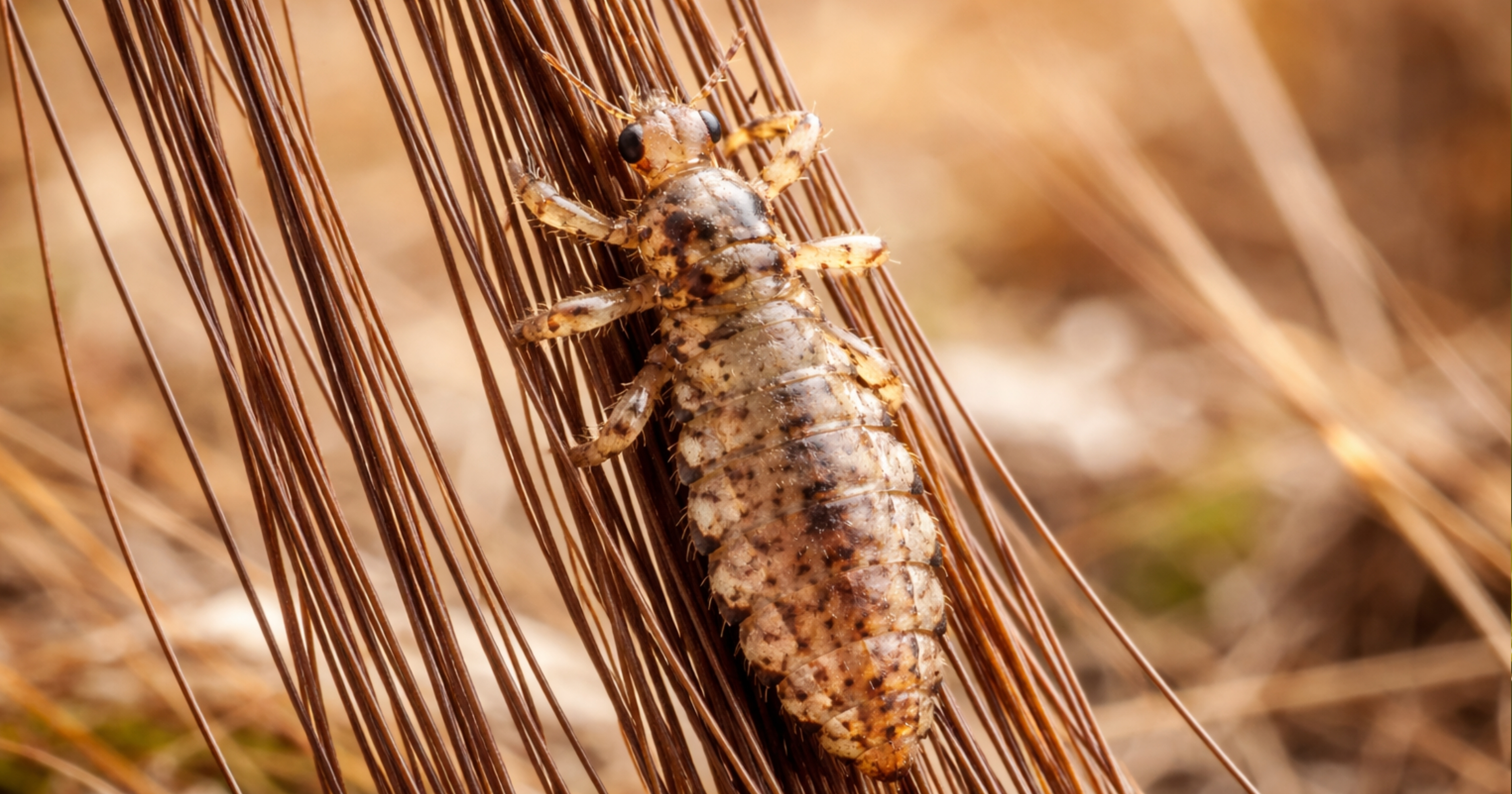
Adult head lice are small, wingless insects. They crawl; they do not hop or fly. Fully grown adults are around 2–3 mm long, and their eggs, called nits, are attached firmly to hair shafts. Mayo Clinic and NHS sources both describe nits as eggs stuck to the hair, often near the scalp.
What to look for
Head lice mainly spread by direct hair-to-hair or head-to-head contact. CDC says this is the main route of spread, and NHS guidance matches that. Shared items like hats, brushes, or bedding can sometimes play a role, but they are not the main route.
That point is important because a lot of panic around lice comes from exaggerated ideas about furniture, carpets, and whole-house contamination. Head lice are much better at moving from head to head than they are at living away from a person. CDC says adult head lice usually die within about two days off the host, and nits usually do not hatch if they are not kept at scalp temperature.
Most people think the head louse's main strength is that it spreads easily.
That is only part of the story.
Its deeper advantage is anatomical specialization for gripping hair shafts. Laboratory identification references describe head lice as having legs adapted for grasping hair, and microscopy work specifically notes their claws as key features.
A parasite that falls off easily would fail quickly. Head lice succeed because their body is built for one job: staying attached to human hair while moving, feeding, and laying eggs close to the scalp. Their legs and claws are not generic insect legs. They are hair-gripping tools.
The hidden strength of the head louse is not jumping, flying, or burrowing.
It is precision grip:
That is what makes the head louse so effective at staying where it needs to be.
Female head lice lay about six eggs a day, according to CDC, and those eggs are attached to hair shafts where the temperature is suitable for development. CDC also notes that nits away from scalp temperature usually do not hatch.
This is a major biological advantage. The eggs are not loosely dropped into the hair. They are placed and fixed where warmth is most reliable. That is one reason empty egg cases can remain on hair even after the lice are gone, while viable eggs are usually found close to the scalp. This last point is an inference based on CDC's temperature note and clinical guidance distinguishing live lice from old egg cases.
Head lice are difficult because they are well matched to the scalp environment. They live close to their food source, hold tightly to hair, and lay eggs where scalp warmth supports development. They also spread in exactly the kind of close contact that happens naturally among children and families.
This is why reinfestation is often confused with treatment failure. Some clinical guidance notes that reinfection is often more likely than true product failure.
One of the most overlooked facts about head lice is that their success depends less on dirt or clutter than on human behaviour and scalp biology. They need close contact, scalp warmth, and hair they can grip. That is why a very clean child can get lice just as easily as anyone else.
If you want one accurate answer, it is this:
It is built specifically for life on human hair.
Many parasites feed on blood. Many insects lay eggs. Many pests spread through contact. But the head louse stands out because it combines:
That is what makes it such an effective scalp parasite.
The head louse is one of the clearest examples of a parasite succeeding through specialization rather than power. Pediculus humanus capitis does not jump, fly, or survive well away from people. Instead, it wins by being exquisitely adapted to one place: the human scalp. That is what makes it so persistent, so misunderstood, and so hard to ignore.
Next: how we treat and advise on lice, lice guarantees, body louse guide, bird louse vs bird mite guide, lice identification guide. Book a get a quote. Read lice treatment safety.
Pediculus humanus capitis — crawl-only spread, nit vs active infestation, pharmacy-led person treatment vs our premises scope.
Need environmental or bird-lice premises support quoted separately? Use our quote flow—person treatment stays pharmacy or medical.
We keep bird lice on premises and proofing; head and body lice stay with pharmacy, hygiene, and any environmental scope explicitly named in your agreement.
How we treat lice, Lice guarantees, Lice control by area, Body louse guide, Bird louse vs bird mite guide, Lice identification guide. Hub: lice control.