Pest guide · rodents
National rodent methodology: rodent control hub, how we treat rodents, rodent guarantees, rodent control by area, entry points & exclusion. Identification: rodent identification.
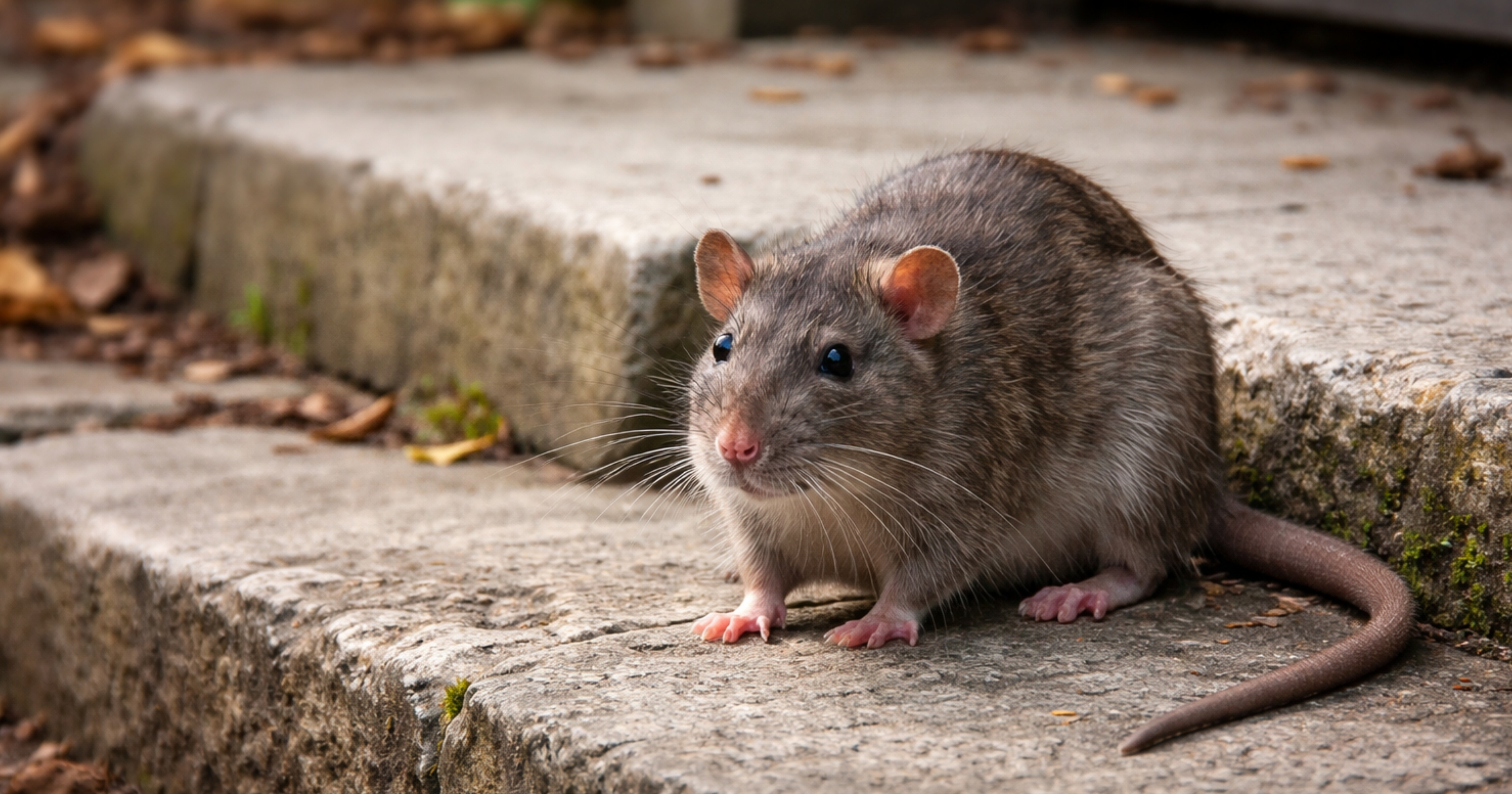
Rattus norvegicus
The Norway rat is Rattus norvegicus, also called the brown rat, sewer rat, barn rat, or wharf rat. Despite the name, it did not originate in Norway; Britannica notes the name came from an old mistaken belief, and the species is now understood to have originated in Asia. It is now found on every continent except Antarctica and is one of the world's most important urban pest mammals.
The Norway rat is a large, stocky, ground-oriented rat strongly associated with human settlements. UC IPM describes it as generally larger and heavier than the roof rat, with a blunt nose, small ears, and a tail shorter than the head-and-body length. It is especially linked to burrows, foundations, rubbish piles, gardens, sewers, lower building levels, and other ground-level harbourage.
A Norway rat usually looks:
This species is primarily a burrowing rat. UC IPM notes that its burrows are commonly found around building foundations, gardens, and rubbish-strewn areas. Compared with roof rats, Norway rats are much more closely tied to the ground, lower levels of structures, and sheltered soil or debris. That is one of the most useful real-world distinctions between the two major pest rats.
Norway rats are a major pest because they combine:
Most people think the brown rat's greatest strength is size.
That matters, but the deeper advantage is caution.
Norway rats are widely known in pest management for neophobia: caution or avoidance toward new objects, new foods, and sudden changes in their environment. This trait is one of the biggest reasons control can fail. A rat may avoid a newly placed trap, bait station, or altered route simply because it is unfamiliar. That makes the species far harder to outwit than people assume.
A Norway rat does not survive mainly by fighting. It survives by being:
That means poor control programmes often fail not because the product is weak, but because the rat is behaviourally defensive. This is one of the most important truths about the species.
UC IPM identifies the Norway rat as the burrowing rodent among the common commensal rats. This is a major ecological advantage. Burrowing gives the animal:
That is one reason this rat is so successful in urban edges, gardens, drainage areas, and under structures. It is not just using buildings; it is often engineering hidden space around them.
They are difficult because they combine:
Britannica notes that rats generally have keen senses and can climb, jump, burrow, or gnaw into places people think are inaccessible.
So the Norway rat is not “supreme” because it is merely large. It is formidable because it combines muscle with caution. That is a much more dangerous combination in pest terms.
CDC describes the Norway rat as a pervasive urban rodent associated with disease risk and extensive property damage. That is one reason rat activity is never just a nuisance issue in dense residential or commercial settings. It can become a sanitation, safety, and public-health problem very quickly.
The Norway rat is one of the most formidable urban pests in the world. It is not just powerful because it is large and strong. It is powerful because it is cautious, adaptable, burrow-savvy, and deeply suited to human environments. That combination is what makes it such a stubborn and serious pest around homes, businesses, food sites, and urban infrastructure.
Next: how we treat rodents, rodent guarantees, rodent identification guide. Book rodent control in Cape Town · Rodents Cape Town hub. Read rodent treatment safety.
Rattus norvegicus — inspection-led programmes, tamper-resistant stations, proofing, and patience around neophobia; your quoted scope prevails.
Burrows, runs, or daytime rats? Use get a quote for species-aware control.
We map routes and harbourage first, then programme trapping and secured baiting with proofing on agreed scope — national rodent methodology; your quote prevails.
House mouse pest guide, How we treat rodents, Rodent guarantees, Rodent control by area, Entry points & exclusion, Rodent identification guide. Hub: rodent control.