Subterranean Termite
e.g. Coptotermes, Macrotermes (various SA species)
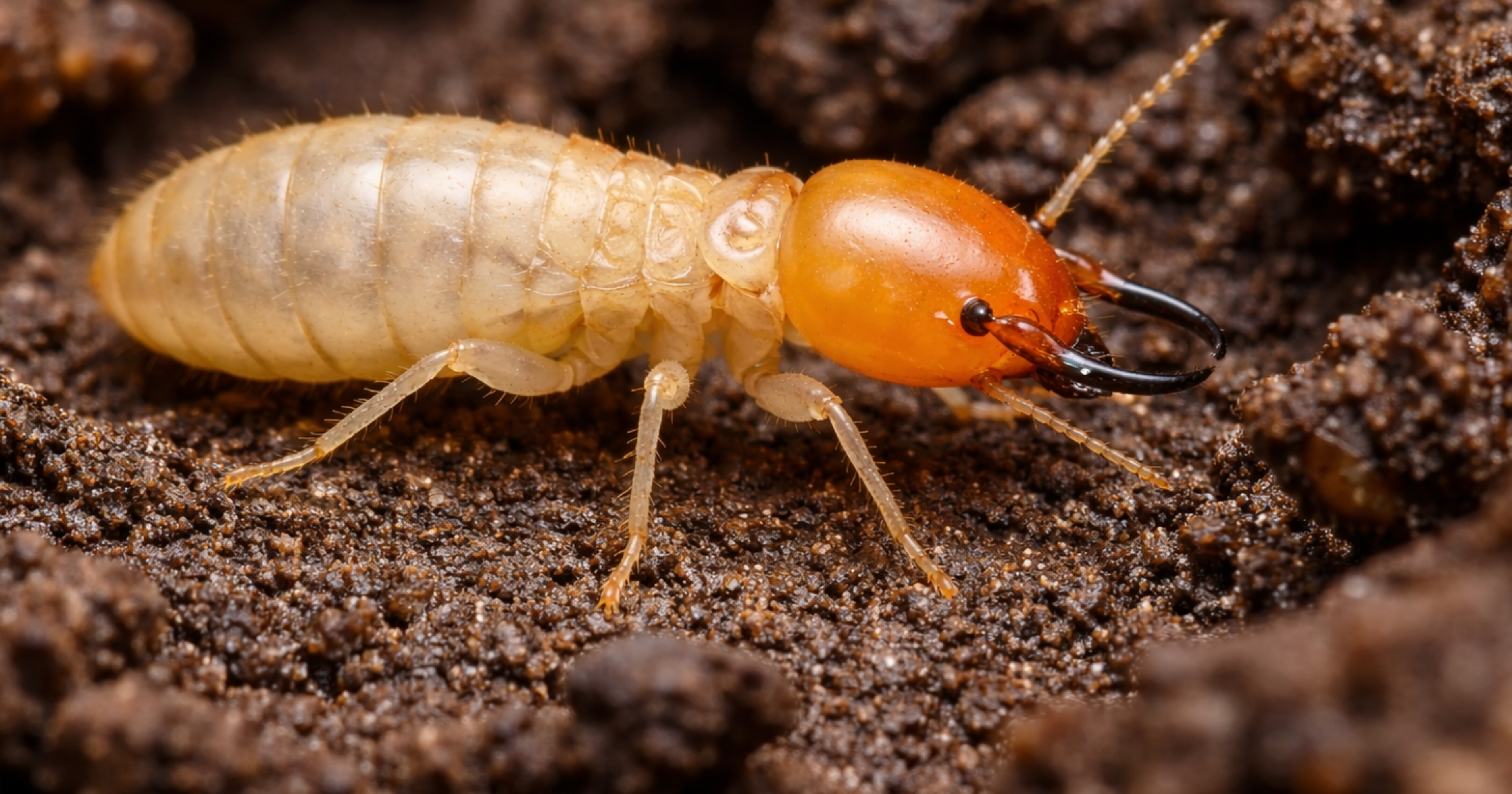
Appearance
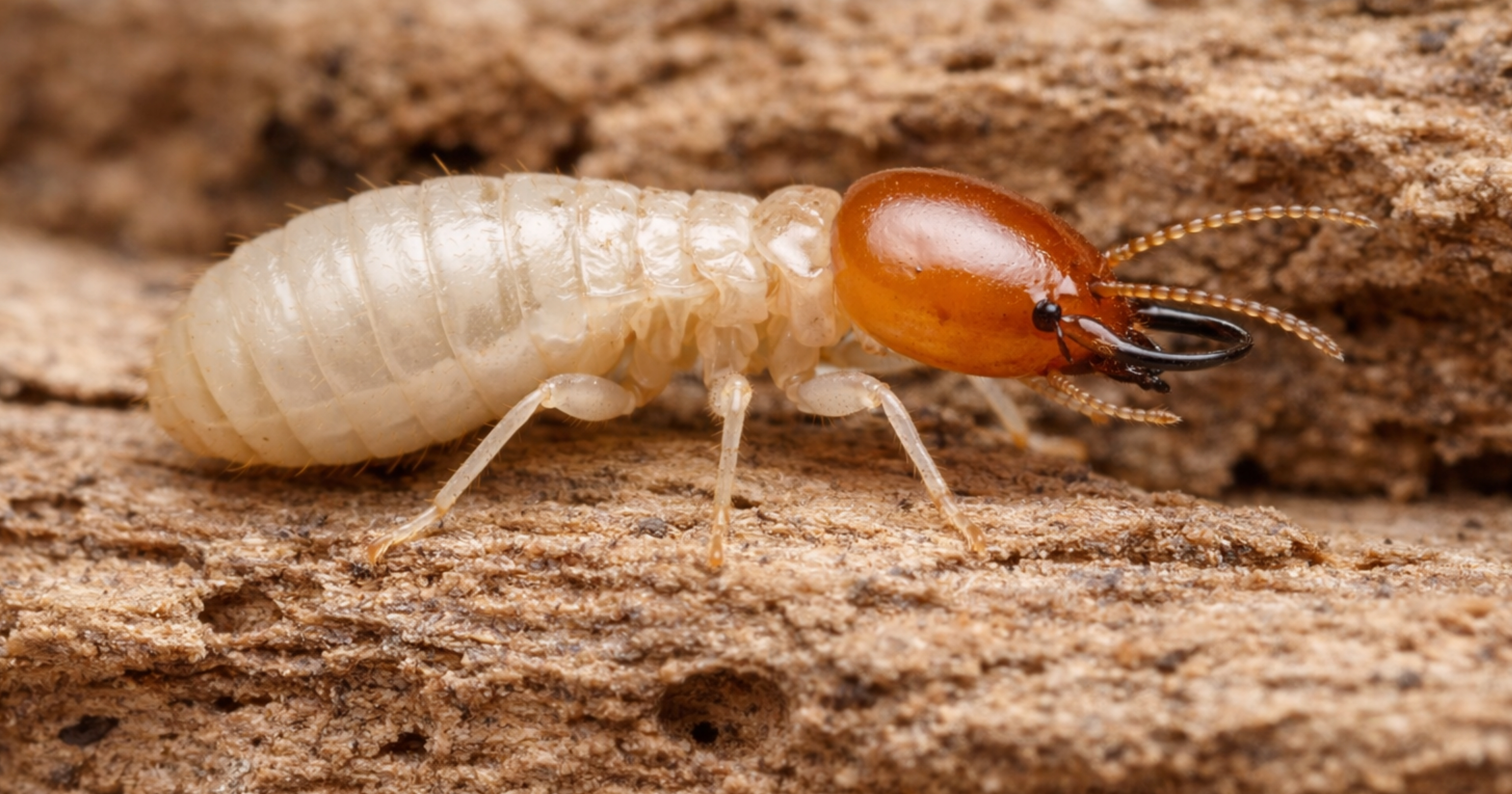
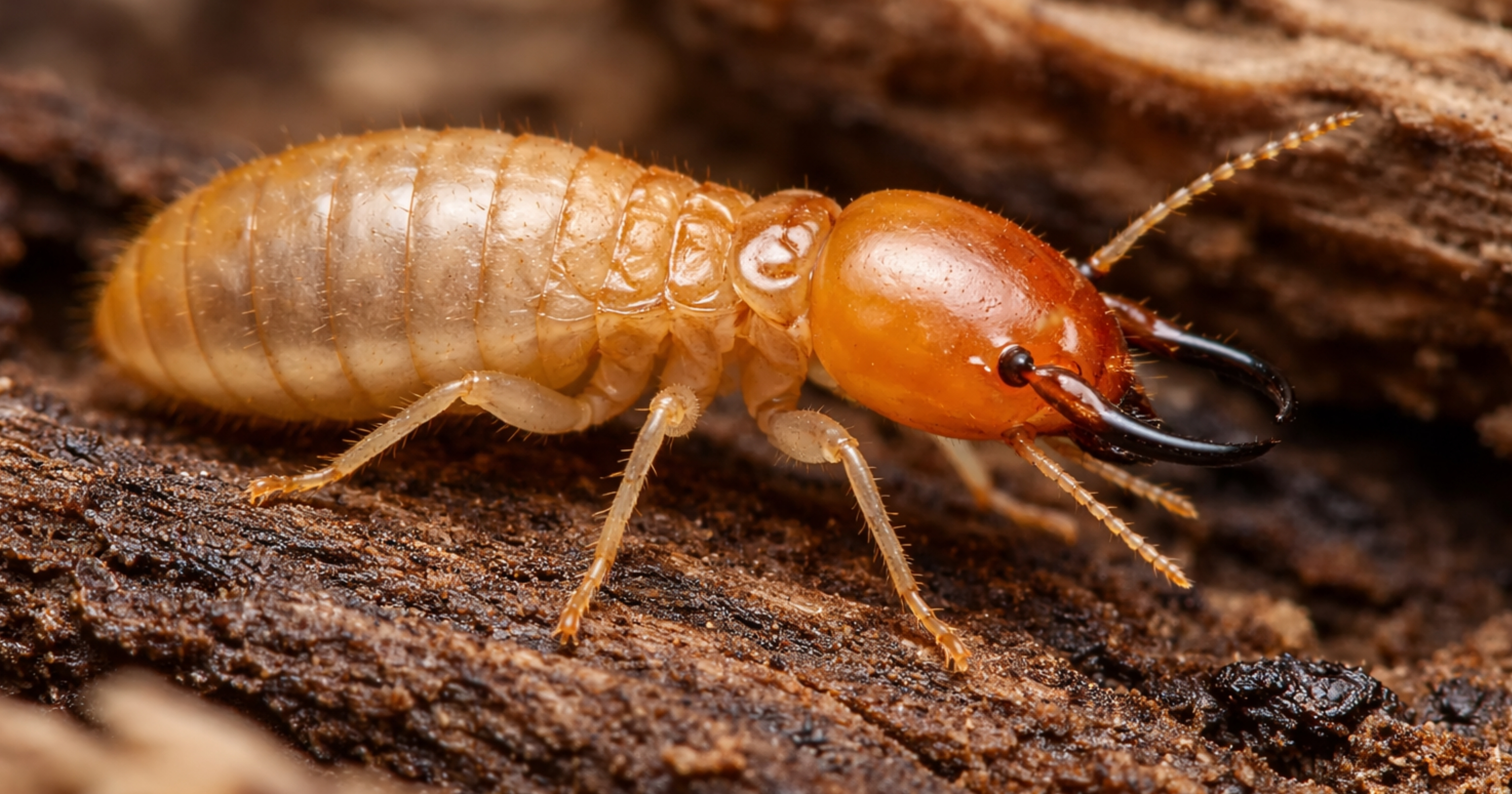
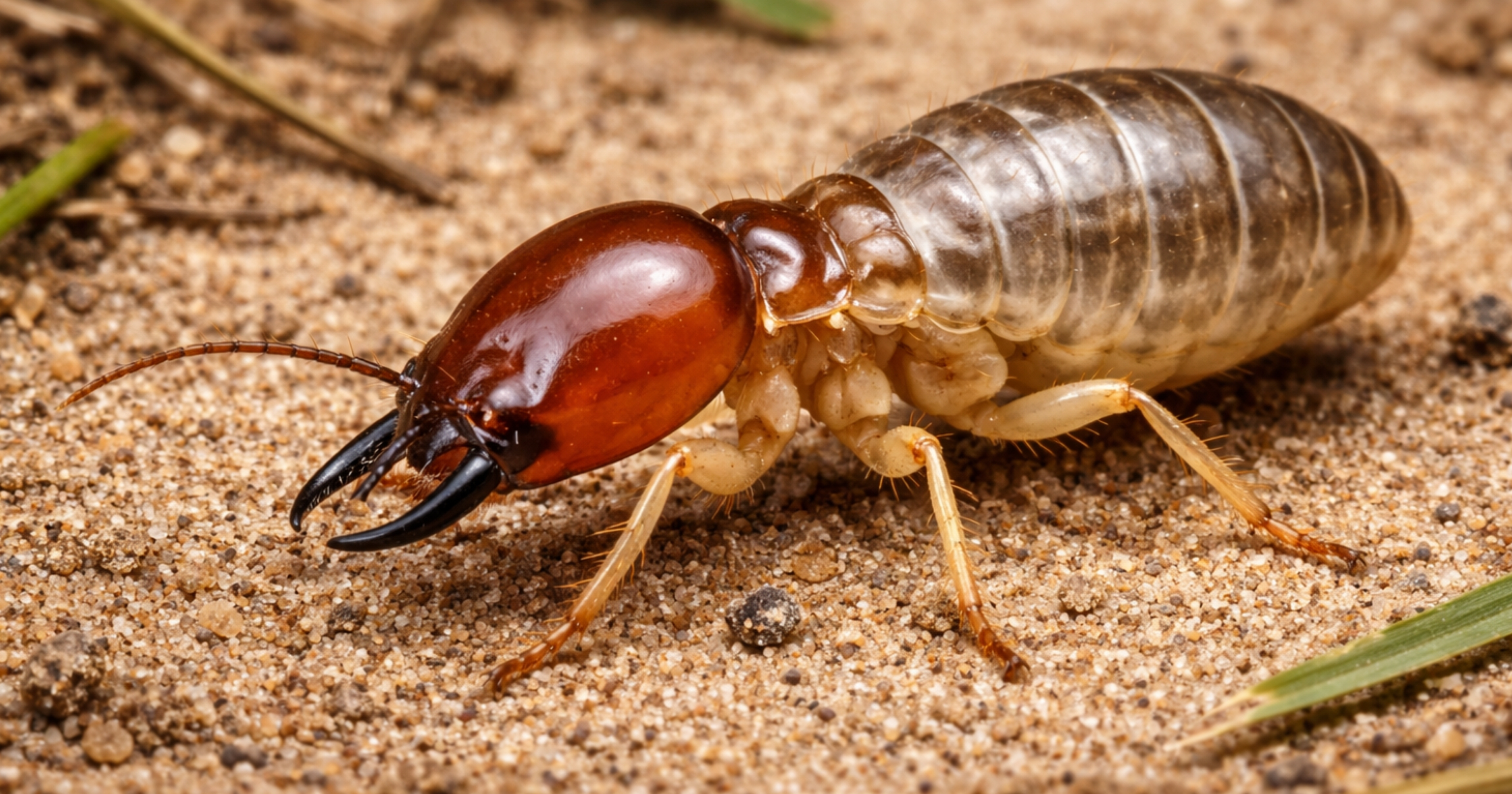
- Workers: cream to pale brown; soft-bodied; no wings
- Soldiers: larger head, mandibles; same colour range
- Swarmers (alates): dark brown or black; two pairs of equal-length wings; shed wings after mating
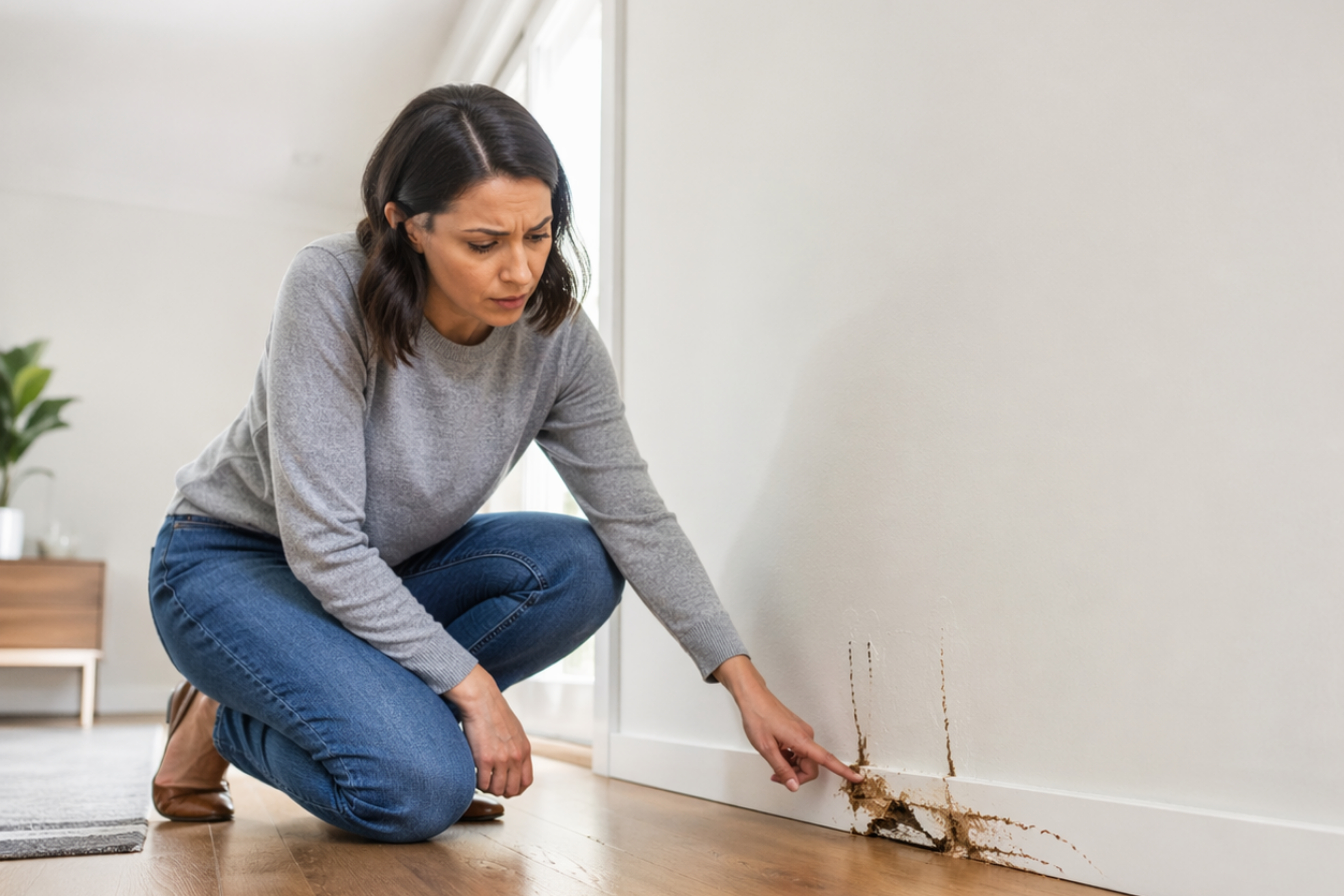
- Mud tubes: pencil-thick or wider; on foundations, walls, or timber
Commonly found
Behaviour
The most damaging termite type to buildings in South Africa. They need contact with soil or a constant moisture source. Build mud shelter tubes from ground to wood; tunnel inside timber, leaving a thin veneer. Damage can be extensive before it is visible. Swarm in warm, humid conditions (often after rain). Professional inspection and treatment (barriers, baiting) are usually required.
Why you may be seeing them
Mud tubes on walls or foundations; hollow-sounding timber; swarmers indoors or at lights; wings discarded on sills. Often found during renovations or when probing damaged wood.
Often confused with
Ant swarmers (ants have elbowed antennae, narrow waist); termites have straight antennae, thick waist · Drywood termites (no mud tubes; dry wood only)
When to get help
Mud tubes, swarmers indoors, or suspected damage — get a professional termite inspection. Do not disturb colonies; treatment must be targeted.
In South Africa, subterranean termites are the primary cause of structural termite damage. Common in older homes, timber-rich areas, and where moisture or wood-soil contact exists.