Pest guide · termites
National termite methodology: termite hub, how we treat termites, termite guarantees, termite control by area. Identification: termite identification. Compare: subterranean termite guide, drywood termite guide, harvester termite guide.
Very moist wood · open galleries · moisture as the real driver
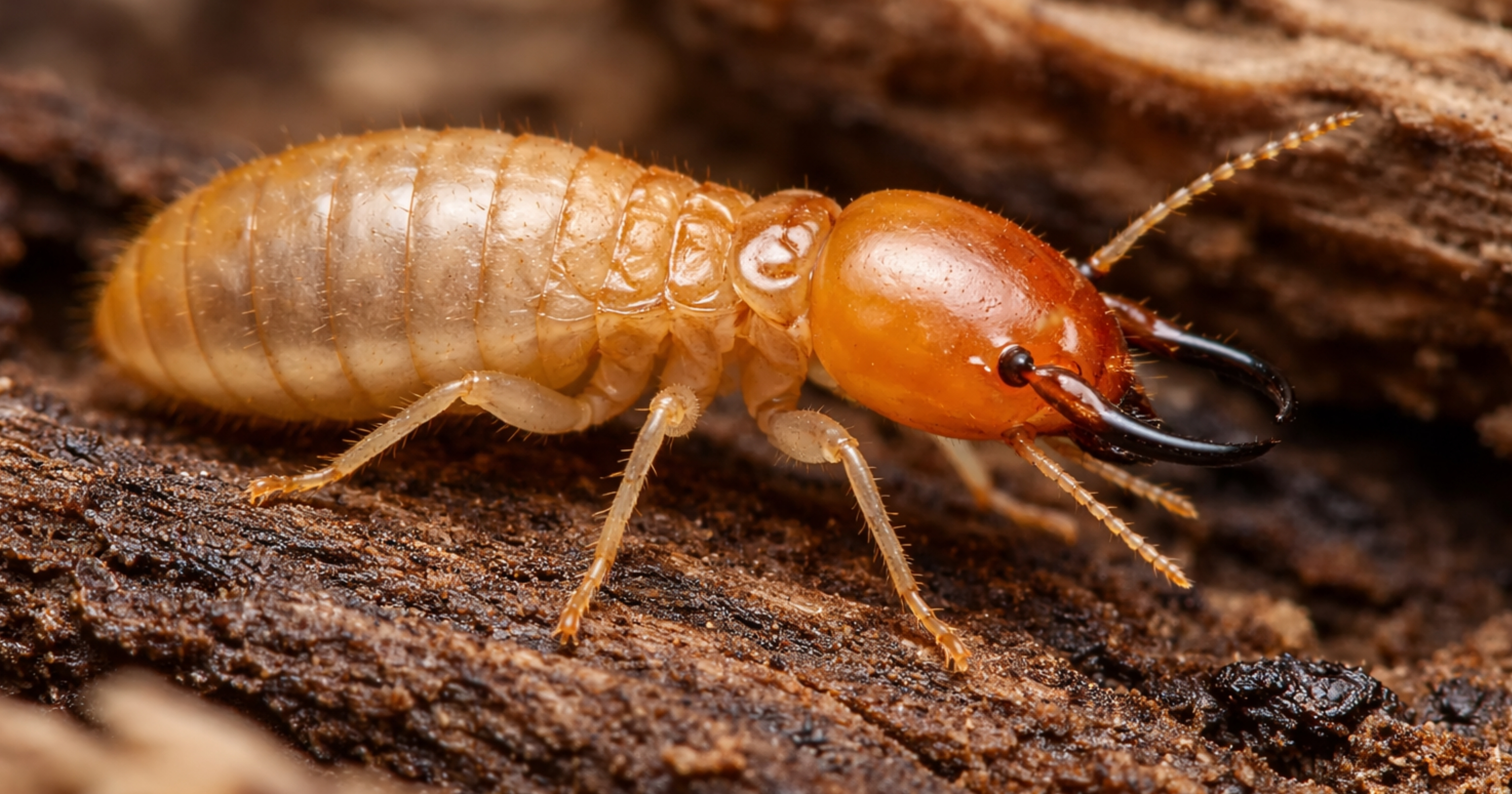
Dampwood termites are wood-nesting termites that need very moist wood to survive. They are different from subterranean termites because they do not depend on soil contact in the same way, and they are different from drywood termites because they need far more moisture in the timber they attack. Their presence is often as much a warning about a moisture problem as it is about termites themselves.
“Dampwood termite” is not one single species name. It refers to wood-nesting termites that infest timber with high moisture content, often wood affected by leaks, soil contact, rot, flooding, constant shade, or persistent dampness. UC IPM says dampwood termites nest in wood rather than soil, but unlike drywood termites they require wood that is high in moisture content.
For a South African pest page, that is the key educational point: dampwood termites are not “normal termites that happen to like wet wood a bit more.” Moisture is central to their biology. When they are present in a structure, the infestation often points to a water leak, long-term dampness, timber decay, or wood in contact with moist soil.
Dampwood termites are often identified by the condition of the wood and by the way the galleries look inside it. UC IPM notes that they create large, open galleries within the wood where they live and feed. They are usually found in timber that is obviously damp, decayed, leak-affected, or persistently humid.
Some educational materials also note that dampwood termites can produce pellets, but the main field clue is still the strong association with very moist wood and the open, roomy galleries inside it.
Dampwood termites are important not because they are usually the most aggressive structural termites in every setting, but because they exploit a building condition that is already serious: chronic moisture. UC IPM specifically says their presence is significant as an indicator of a moisture problem or wood decay in wooden structures.
That makes them doubly important. They damage wood, but they also reveal that the property may already have hidden water issues such as leaking roofs, leaking pipes, poor ventilation, condensation, timber in contact with wet ground, or persistently shaded, wet timber zones.
Most people think dampwood termites are simply “termites that live in wet wood.”
That is true, but the deeper advantage is this:
Dampwood termites are specially suited to operate inside wood that stays wet enough to support them directly. They do not need to engineer long mud-tube logistics like subterranean termites, and they do not need the low-moisture tolerance of drywood termites. Instead, they specialise in timber environments where water has already weakened the wood and created the humid conditions they need.
A piece of wood that stays wet becomes more than just food.
It becomes:
This is the real “special power”: the hidden advantage of the dampwood termite is that it can turn water-damaged timber into a ready-made habitat. That makes it especially effective wherever moisture problems are ignored. This is an inference grounded directly in the sources describing their high-moisture requirement and association with decayed or leak-affected wood.
Educational and extension sources repeatedly tie dampwood termites to cool, humid areas, moist stumps, downed timber, leak-damaged structural wood, or wet wood in contact with soil. That suggests a niche advantage: they are especially good at exploiting timber conditions that are too wet and decayed for many people to think of as “normal structural wood,” but which still offer major termite opportunity.
In plain language, the dampwood termite is not just eating wood. It is taking advantage of a moisture niche. That is what makes it biologically distinct and why fixing the water problem is such an essential part of management. This is an inference based on the moisture-focused biology in the sources.
Dampwood termites succeed because they combine:
That makes them less like general-purpose termites and more like specialists in moisture-damaged timber systems. This is the real reason they can persist so effectively where dampness remains unresolved.
One of the most useful truths about dampwood termites is that they are often as much a diagnostic sign of building moisture failure as they are a pest in their own right. In other words, finding them should trigger questions not only about timber treatment, but about leaks, drainage, ventilation, and long-term dampness.
Wet timber, recurring leaks, or spongy wood mean fix the moisture path first, then book a professional inspection. For scope and programme choice, get a quote aligns with national termite methodology; your written quote prevails.
The dampwood termite is one of the most revealing timber pests because it usually points to a bigger problem than insects alone. Its real supremacy lies in moisture dependence turned into opportunity. Where wood stays wet, this termite can turn that damaged environment into a stable feeding and living zone — and that is what makes it so important to spot early.
Next: how we treat termites, termite guarantees, termite control by area, subterranean termite guide, drywood termite guide, harvester termite guide, termite identification guide. Book termite control in Cape Town. Read termite treatment safety.
Wet, decayed timber and large open galleries point to dampwood ecology; dry pellets and kick-out holes point to drywood; mud tubes point to subterranean; clipped grass on bare soil often points to harvesters. Your quote defines inspection and treatment scope.
Leaks plus termite signs? Use get a quote for inspection-led scheduling.
We inspect first, confirm dampwood versus drywood, subterranean, harvester, or decay-only contexts, then quote treatment plus moisture cooperation—national termite methodology; your quote prevails.
Drywood termite guide, Subterranean termite guide, Harvester termite guide, How we treat termites, Termite guarantees, Termite control by area, Termite identification guide. Hub: termite control.