Pest guide · termites
National termite methodology: termite hub, how we treat termites, termite guarantees, termite control by area. Identification: termite identification. Compare: drywood termite guide, dampwood termite guide, harvester termite guide.
Soil-linked colonies · shelter tubes · hidden cellulose damage
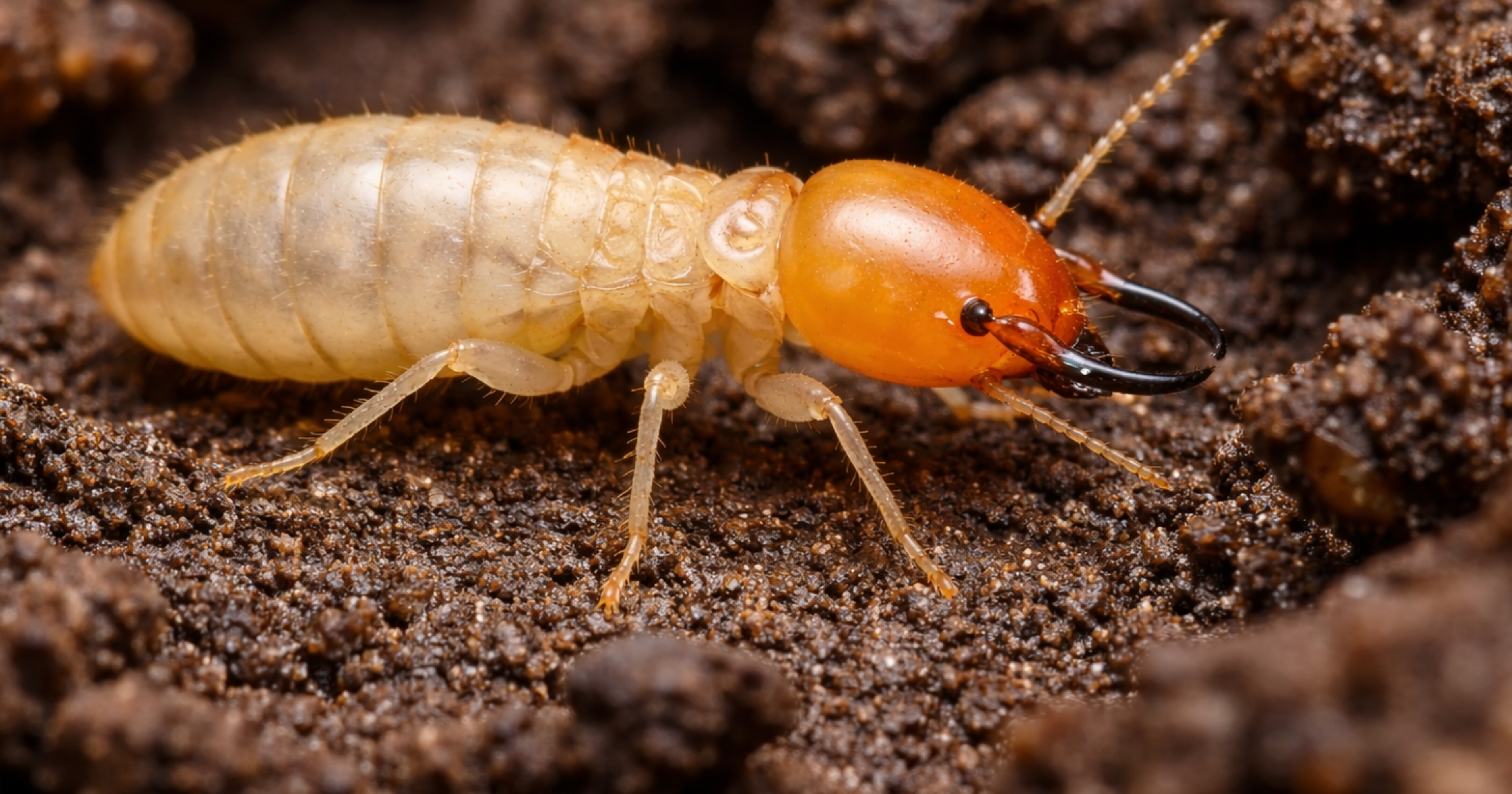
Subterranean termites are among the most destructive wood-feeding pests in the world. The name does not refer to one single species. It refers to termites that live primarily in the soil or in protected, moist underground systems and travel to food through hidden earthen shelter tubes. Their strength lies in secrecy, moisture control, and teamwork rather than in speed or size.
A subterranean termite is a termite that relies on soil contact or moisture-rich protected pathways to survive while foraging on wood and other cellulose-rich materials. Termite researchers note that many termite species are cryptic and subterranean, which is one reason they are so difficult to detect. Extension sources on subterranean termites also describe their characteristic mud tubes as structures that protect them from drying out while they move between the soil colony and above-ground food.
For a South African pest page, that distinction matters. “Subterranean termite” is a functional group, not a single brand-name insect. Different species may occur in different regions, but the core biology is the same: they must maintain moisture while exploiting hidden cellulose sources.
Subterranean termites are usually identified less by seeing the insects in the open and more by seeing their signs.
The mud tube is one of the most important clues. Extension sources describe these tubes as protective passageways that help retain the high humidity subterranean termites need.
Subterranean termites are serious structural pests because they can attack wood from hidden positions, often from below or behind, while remaining protected from dry air and open exposure. Damage can become extensive before people realise anything is wrong. Extension sources note that subterranean termite colonies can be very large, and that visible mud tubes on a structure are a classic warning sign of an active infestation.
Their importance is not just that they eat wood. It is that they can do so silently, often inside structures, flooring systems, lower wall cavities, or concealed timber interfaces while maintaining a protected link to the soil.
Most people think their biggest strength is just “eating wood.”
That is only part of the story.
The real advantage of subterranean termites is that they do not have to expose themselves to open air for long periods. Their soil contact and mud-tube engineering let them build protected highways between the colony and food while maintaining the humid microclimate their soft bodies need. This is exactly why mud tubes matter so much in termite biology and inspection.
A wood feeder that had to cross open, dry surfaces would be far easier to stop.
A subterranean termite colony solves that problem by building:
This is the real “special power”: its hidden advantage is not just digestion. It is the ability to turn the structure itself into a hidden supply network while staying moist and protected. That is what makes subterranean termites so formidable. This is an inference directly supported by the documented role of shelter tubes and subterranean behaviour.
Termites are extraordinary cellulose users. Research on African fungus-growing termites shows just how efficient termite systems can be at decomposing plant material through specialised biological partnerships and colony organisation. While not every subterranean structural termite is a fungus-growing termite, the broader termite story is the same: termites are among nature's most effective biomass-processing social insects.
That matters because a termite colony is not just a crowd of insects nibbling wood. It is a coordinated biological processing system built to exploit cellulose continuously and efficiently. This is an inference supported by termite biomass-degradation research and the social organisation evident in subterranean termites.
Subterranean termites succeed because they combine:
That combination makes them much more than “wood bugs.” They are infrastructure infiltrators that use soil, moisture, and group coordination to stay concealed while feeding. This is an inference from the core behavioural evidence.
Many people think termites are just destructive, but ecologically they are also major decomposers. South African and African termite research highlights their broad importance in ecosystems, from biomass breakdown to soil processes and large-scale ecological engineering. That does not make them welcome in buildings, but it does explain why they are such highly evolved and successful insects.
Mud tubes, hollow timber, or swarmers mean book a professional inspection—do not strip tubes or spray blindly before ID. For scope and programme choice, get a quote aligns with national termite methodology; your written quote prevails.
The subterranean termite is one of the most formidable structural pests because it does not need to be seen to be effective. Its real supremacy lies in concealment, humidity control, and collective engineering. By linking the soil to timber through protected shelter systems, it turns hidden space into a live feeding network — and that is what makes it so dangerous in buildings.
Next: how we treat termites, termite guarantees, termite control by area, drywood termite guide, dampwood termite guide, harvester termite guide, termite identification guide. Book termite control in Cape Town. Read termite treatment safety.
Shelter tubes and cryptic galleries define this group versus drywood frass and kick-out holes or dampwood wet-timber ecology. Your quote defines inspection and treatment scope.
Seeing tubes or swarmers? Use get a quote for inspection-led scheduling.
We inspect first, confirm subterranean versus drywood, dampwood, harvester, or other causes, then quote baiting, barrier, or wood treatment as appropriate—national termite methodology; your quote prevails.
How we treat termites, Termite guarantees, Termite control by area, Drywood termite guide, Dampwood termite guide, Harvester termite guide, Termite identification guide. Hub: termite control.