Pest guide · termites
National termite methodology: termite hub, how we treat termites, termite guarantees, termite control by area. Identification: termite identification. Compare: subterranean termite guide, drywood termite guide, dampwood termite guide.
Grass harvesting · visible foraging · diffuse underground nests
The harvester termite is one of southern Africa's most distinctive termites. Unlike wood-feeding termites that stay hidden inside timber, the African harvester termite is famous for cutting and collecting dry grass, carrying it underground, and operating in open country where its activity is often visible on the soil surface. SANBI describes Hodotermes mossambicus as a grass-harvesting termite of arid and semi-arid areas in southern Africa.
In South Africa, “harvester termite” usually refers to Hodotermes mossambicus. It belongs to the family Hodotermitidae, a group known for harvesting grasses rather than feeding mainly on structural timber. SANBI notes that this species occurs in dry, open habitats and is especially associated with grassland and semi-arid regions.
That matters because people often assume all termites behave like house-damaging wood termites. Harvester termites are different. Their biology is built around surface foraging for grass and plant litter, not just hidden feeding inside buildings.
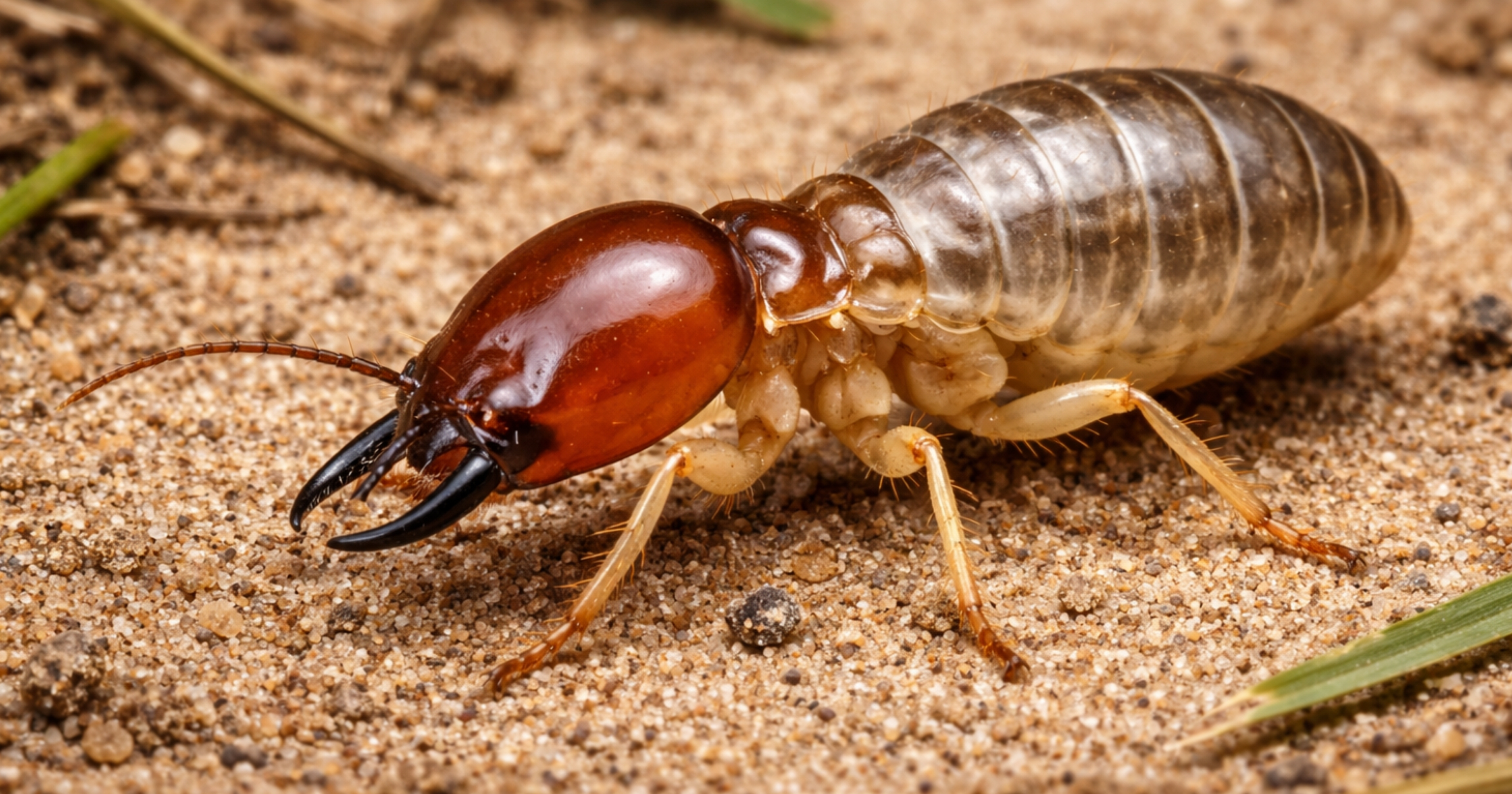
Harvester termites are usually noticed when workers are seen foraging on bare or sandy ground, especially around nest openings and scattered cut grass. The workers of Hodotermes mossambicus have a dark, shiny head and a banded-looking abdomen, which makes them more visually distinctive than many pale subterranean termites. This appearance is clear in SANBI's photographs and species page.
Harvester termites are strongly associated with southern African drylands, savannas, grasslands, and semi-arid habitats. SANBI describes H. mossambicus as widespread in the region, especially in drier open areas. They are ecologically important in these systems and are well known in places like the Kalahari and other dry grass-dominated landscapes.
This is one of the most important facts about them. Harvester termites build subterranean nest systems, not tall cathedral mounds like some other African termites. A South African field source describes the nest system as diffuse and deep underground, with tunnels leading to multiple spherical hive areas and surrounding grass-storage chambers. That means the visible surface activity is only a small part of a much larger underground system.
Harvester termites matter because they can remove large amounts of grass and other plant material from grazing land and open properties. In rangelands, that can affect forage availability. Their importance is not usually that they are major timber destroyers in homes, but that they are vegetation harvesters capable of stripping useful grass in the right conditions. SANBI specifically highlights their grass-harvesting behaviour, and South African field observations show them collecting and storing plant matter underground.
Most people think the harvester termite's strength is just that it cuts grass.
That is only the surface-level truth.
The lesser-known trait that makes this termite so formidable is its ability to run an underground storage-and-transport system. South African field notes describe tunnels leading from cut-grass areas to subterranean grass-storage shelves and chambers. In plain language, the colony is not merely eating what it finds on the spot. It is harvesting, transporting, storing, and buffering food supplies below ground.
That gives the colony a major advantage:
This is the real “special power”: its real supremacy is logistical power. The harvester termite is not just a grazer. It is a subterranean supply-chain engineer. That is what makes it so efficient in dry environments. This is an inference directly supported by descriptions of underground grass-storage chambers and transport tunnels.
A fact many people do not know is that Hodotermes mossambicus is so abundant and reliable as prey that some predators are strongly tied to it. Research has documented a specialist termite-eating spider, Ammoxenus amphalodes, that captures Hodotermes mossambicus, and ecological studies also note that harvester termites are a major food item for the bat-eared fox in southern Africa.
That tells you something important: this termite is not just another insect in the landscape. It is a foundation prey species in some ecosystems.
Harvester termites succeed because they combine:
That combination is especially powerful in harsh climates. Surface food is collected outside, but safety and storage remain underground.
One of the most interesting lesser-known facts about Hodotermes mossambicus is that it is important enough ecologically to have predators closely associated with it, including a spider studied as a possible monophagous specialist on this termite. That is rare and remarkable.
Ground-foraging termites with clipped grass are often harvesters, not structural wood termites—confirm ID before assuming roof or frame treatment. For grazing, lawn, or border programmes, get a quote aligns with national termite methodology; your written quote prevails.
The harvester termite is one of southern Africa's most remarkable termites. It is not supreme because it is aggressive or because it destroys houses in the usual termite way. It is supreme because it is a harvester, transporter, and underground storekeeper. Its real strength lies in turning dry grassland resources into a hidden food system that can support a powerful colony below the surface.
Next: how we treat termites, termite guarantees, termite control by area, subterranean termite guide, drywood termite guide, dampwood termite guide, termite identification guide. Book termite control in Cape Town. Read termite treatment safety.
Grass-clipping workers and bare patches point to harvester ecology; mud tubes and timber damage point to subterranean or other wood termites. Your quote defines inspection and programme scope.
Unsure what you are seeing? Use get a quote for inspection-led scheduling.
We inspect first, separate harvester pressure from structural termite risk, then quote the right programme for your property or rangeland context—national termite methodology; your quote prevails.
Subterranean termite guide, Drywood termite guide, Dampwood termite guide, How we treat termites, Termite guarantees, Termite control by area, Termite identification guide. Hub: termite control.