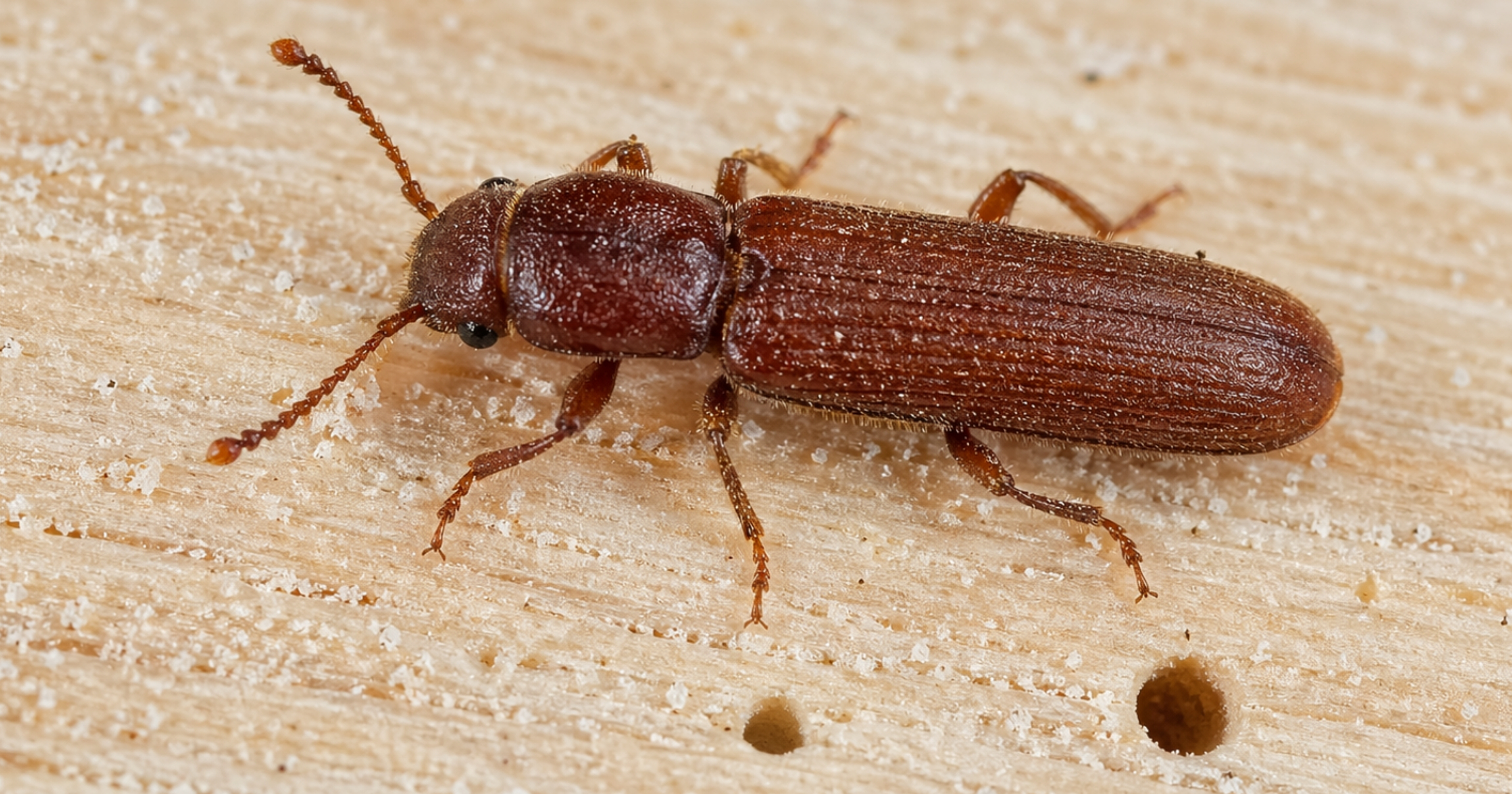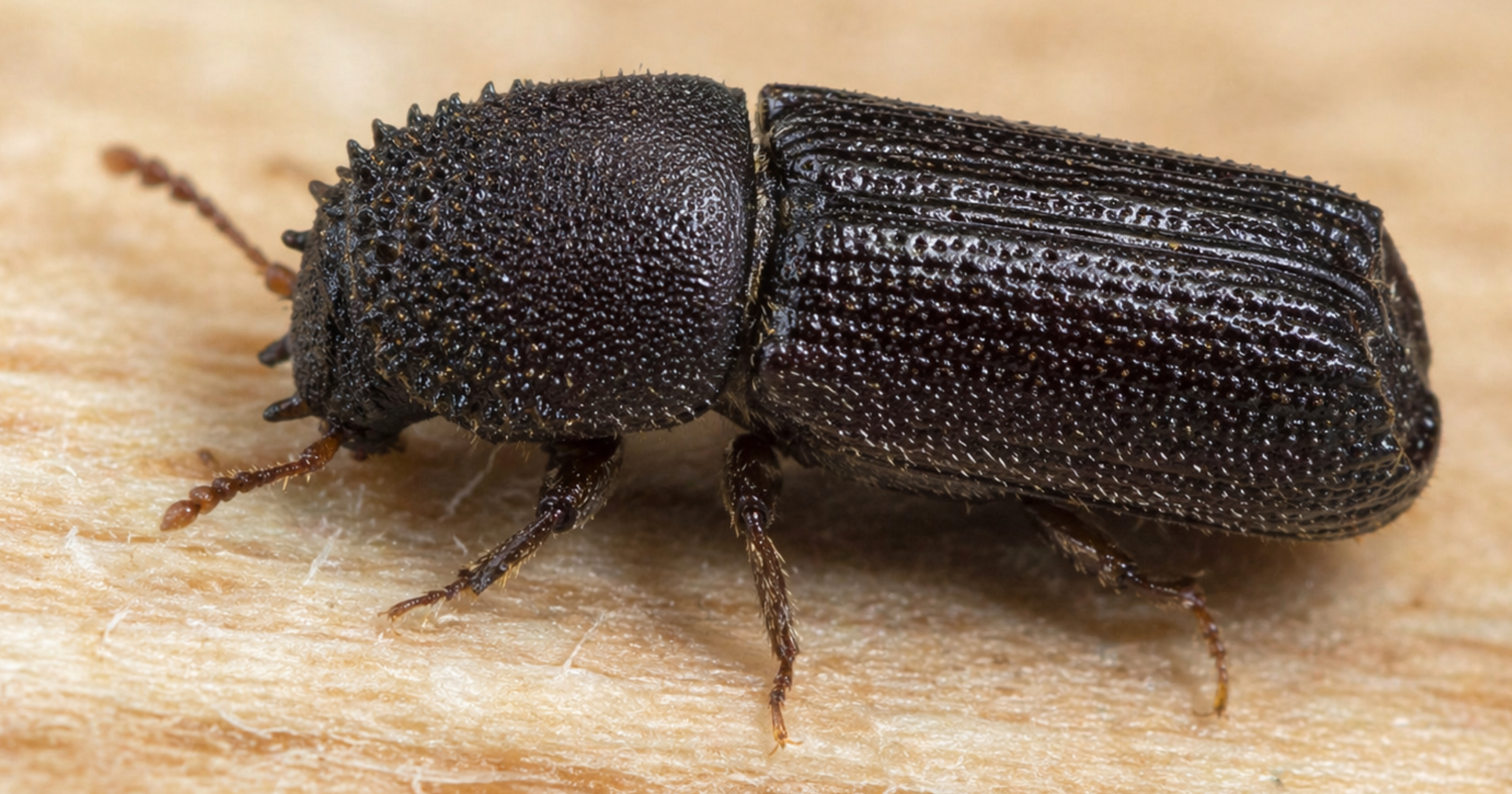

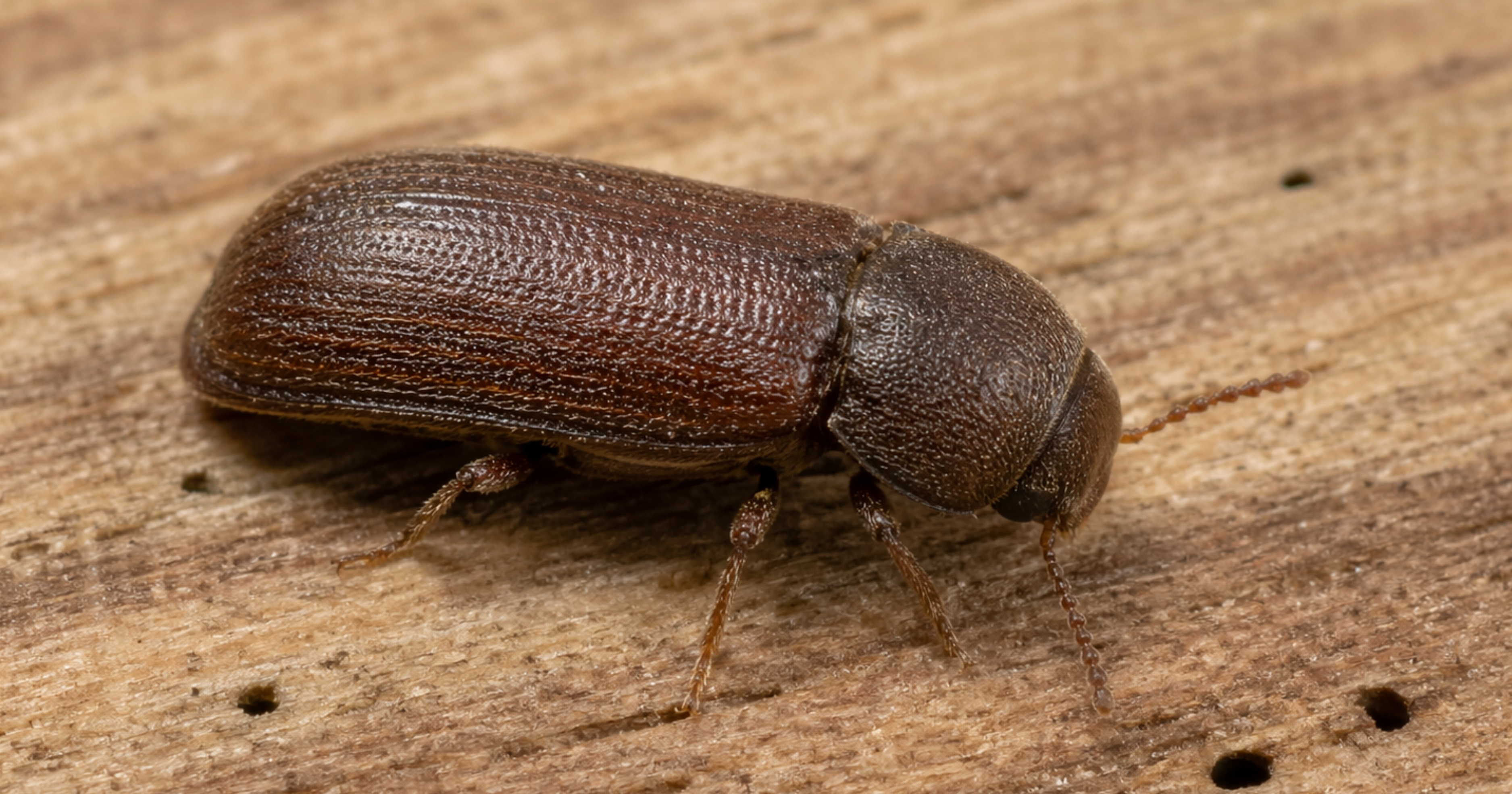
Common Furniture Beetle
Anobium punctatum
Appearance
- Adult: small brown beetle, ~3–4 mm long; oval, rounded shape
- Exit holes: round, ~1–2 mm diameter
- Frass: fine powdery dust; may include small pellets
- Larvae: cream-coloured, curved; live inside wood, not usually seen
Commonly found
Behaviour
Larvae tunnel inside wood for several years (often 3–5) before pupating and emerging as adults. Adults leave round exit holes and may be seen near windows in spring or summer. Damage can be extensive before it is noticed. Common in older buildings and untreated timber. Injection treatment targets structural timber; heat treatment can be used for furniture.
Why you may be seeing them
Infested timber or furniture brought into the property; or long-standing infestation in structural wood. High moisture in timber can increase risk. Exit holes and frass are the main signs; adults are short-lived and may be missed.
Often confused with
Powderpost beetle (powderpost prefers hardwoods; frass very fine, flour-like) · Termite (termites leave mud tubes and different frass; no round beetle exit holes) · Deathwatch beetle (similar family; less common in South Africa)
When to get help
Exit holes or frass in floorboards, furniture, or structural timber. Early inspection and treatment prevent spread. We offer injection for structural timber (with guarantee) and heat treatment for furniture.
Often called "woodworm". The beetle is the adult; the damaging stage is the larva inside the wood.