We start with inspection and species ID, then apply the right tool—baiting, soil barrier, wood treatment, or fumigation—with moisture and monitoring context. Your written quote and agreement always prevail.
National guarantees hub · Termite guarantee summary · Termite solutions service
Visual assessment plus tools where quoted—thermal, moisture, acoustic—to locate activity, map damage risk, and document conducive conditions. Findings drive the treatment plan.
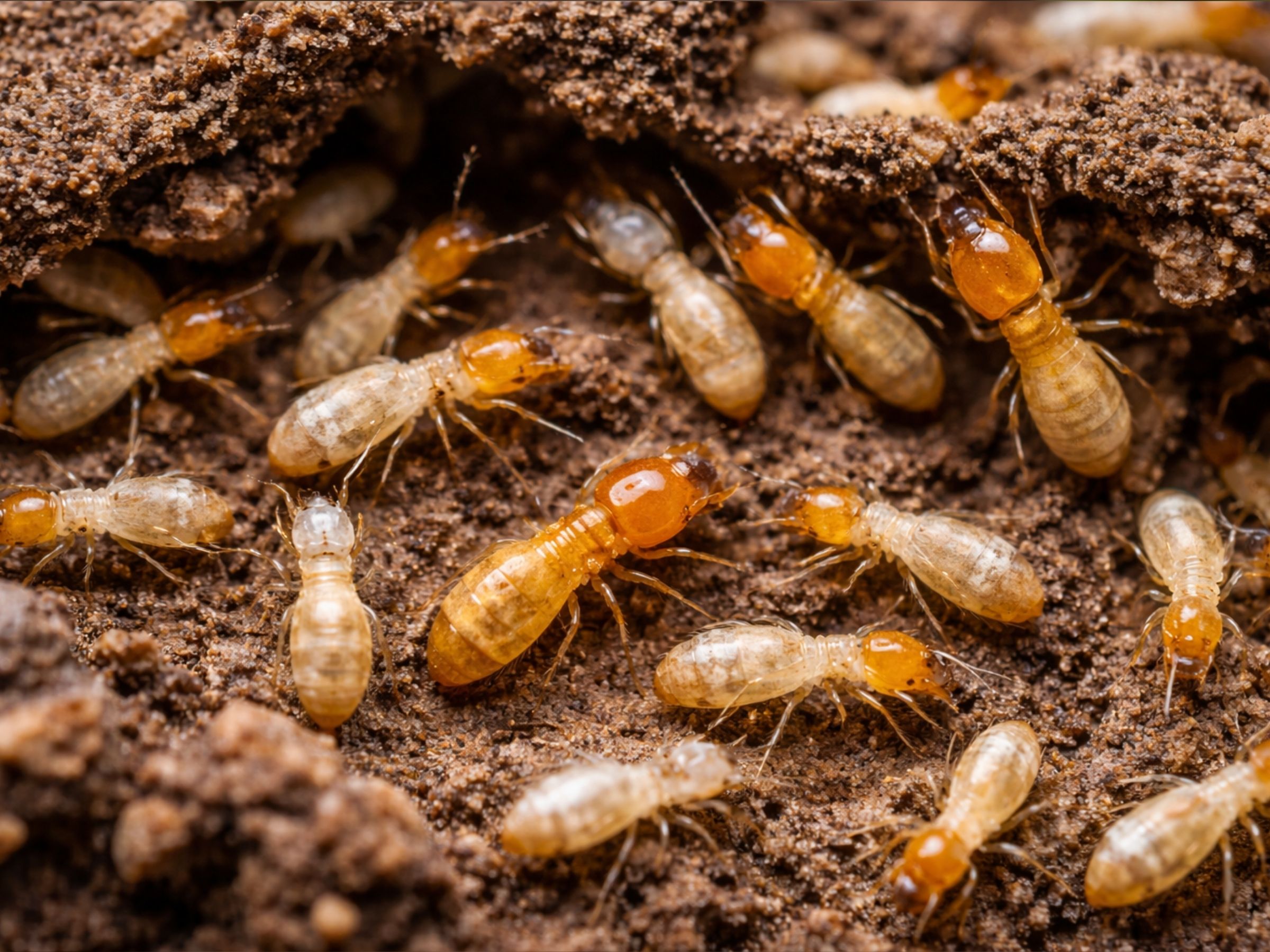
Subterranean termites use soil and mud tubes; drywood termites live inside dry timber; dampwood termites need persistently wet wood; harvester termites harvest grass and litter with diffuse underground nests. Treating the wrong pathway wastes time and leaves colonies feeding. We confirm before we prescribe. Educational context: subterranean termite guide, drywood termite guide, dampwood termite guide, harvester termite guide.
Baiting systems and/or liquid barrier treatments target colony elimination and soil-to-structure protection. Station servicing and barrier longevity follow product labels and your maintenance agreement when sold.
Localised wood treatments or whole-structure fumigation may apply for drywood pressure. Fumigation carries its own preparation, clearance, and certificate paperwork—separate from a standard interior baiting quote.
Wood-to-soil contact, leaks, and poor drainage sustain termites. We flag cooperation items that support warranty outcomes and long-term risk reduction.
Bait stations and scheduled revisits catch new hits early. Monitoring cadence and fees—if any—are listed on your contract when included.
You receive findings and treatment records suitable for sales, insurance, and future inspections—scope and format as quoted.
Published summary: /pests/termites/guarantee. Bait service plans and barrier product longevity may reference separate schedules.
Untreated structures, off-property colony pressure beyond the agreed protection line, and refused moisture or access steps can limit outcomes. Cover follows the footprint named in your paperwork.
Re-entry, pet, and preparation rules vary by method. General guidance: pest control safety.
Yes. Species, extent, and construction type determine whether baiting, soil barrier, localised wood treatment, or fumigation is appropriate. Quotes list the recommended scope.
A full property termite inspection takes 1–2 hours. Treatment duration varies by method and property size — baiting works over weeks as colonies consume bait; barriers and local treatments are applied in scheduled visits. Your quote includes an expected duration so you can plan accordingly.
Standard agreed termite programme: six months written guarantee from completion on the quoted treatment footprint—typically named structure zones, barrier or bait station layout, or fumigation scope as sold—when we document it as your Verminator termite agreement. Eligible warranty callbacks address covered termite activity returning on that quoted scope during the window, per inspection and species logic in your paperwork. Liquid barrier product longevity, bait-system monitoring or refill cycles, annual inspection plans, and whole-structure fumigation certificates follow their own written terms and may extend beyond or differ from this standard window. We do not warrant historical structural damage discovered after treatment, untreated outbuildings or soil outside the quoted line, or new pressure from off-property sources beyond what your agreement defines. Moisture remediation and construction cooperation may be listed for outcomes. Termite control is not part of Super 15. Commercial, estate, and pre-purchase scopes may differ—your quote prevails. Callbacks follow your written agreement when covered activity returns within the guarantee window on the quoted scope.
No. Termites require dedicated inspection and programmes. Super 15 targets other listed household pests—see that package paperwork.
Quotes list species logic, methods, and cooperation items.