Pest guide · bird family
Species anchor: Columba livia (domestic-derived feral populations). Proofing context: how we treat birds, identification guide.
The feral pigeon is one of the most familiar urban birds on earth, yet it is also one of the most misunderstood. People often dismiss it as a dirty city bird, but its real success comes from a remarkable combination of site fidelity, navigation ability, parental biology, and urban adaptability. That mix is what makes feral pigeons so persistent around buildings, bridges, warehouses, roofs, shopping areas, and transport hubs.
A feral pigeon is not a separate wild species. It is a free-living population descended from domestic pigeons, themselves derived from the rock pigeon / rock dove, Columba livia. In practical pest terms, “feral pigeon” refers to those urban and semi-urban flocks that nest on buildings and use human structures the way ancestral rock pigeons used sea cliffs and rocky ledges.
That cliff ancestry is one of the most important truths about this bird. It explains why pigeons are drawn to ledges, roof voids, beams, signage, bridge structures, warehouses, and sheltered building cavities. Cities are, in effect, artificial cliff systems. That is not a poetic comparison. It is one of the main ecological reasons pigeons fit urban life so well.
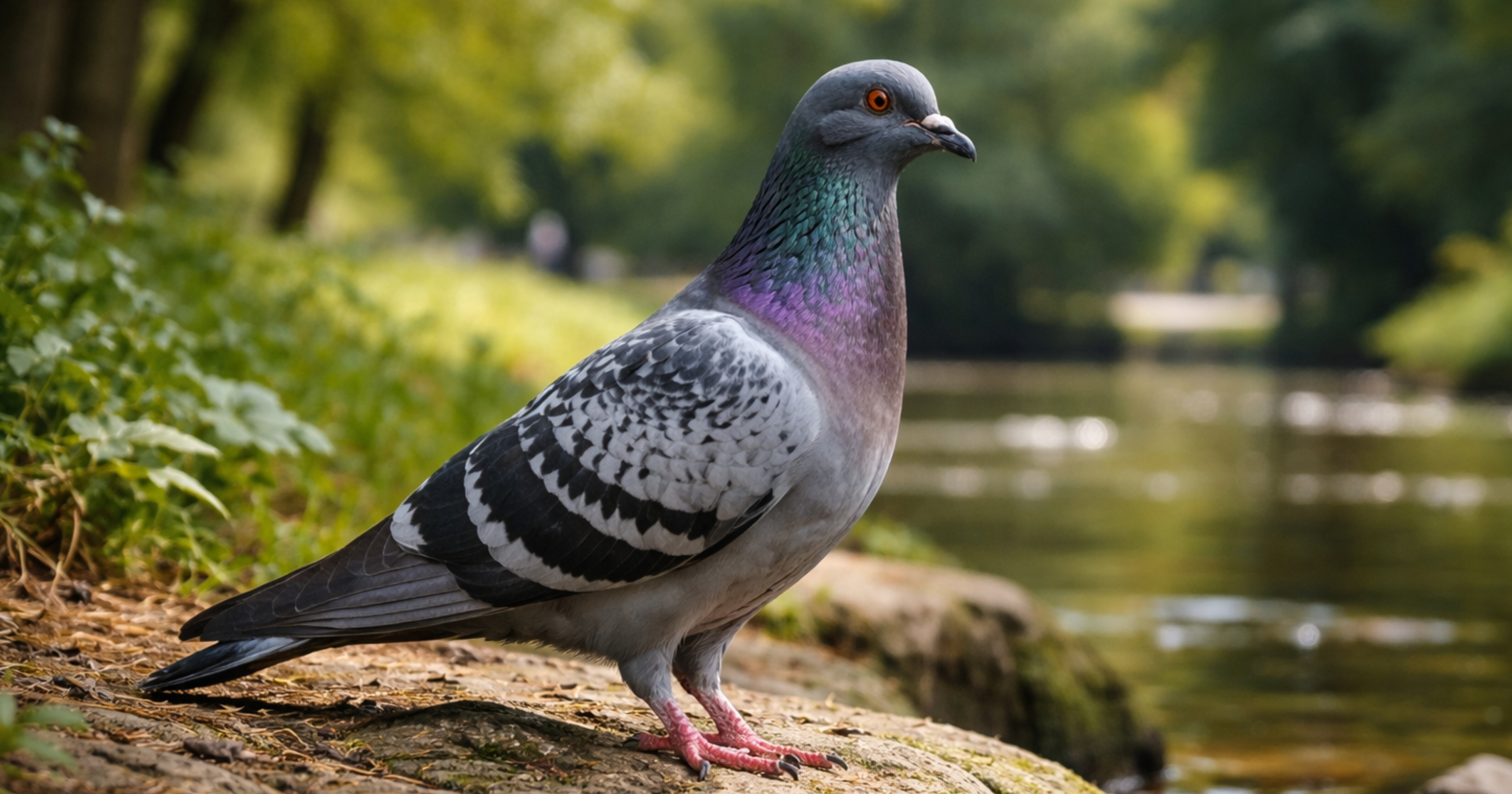
Most feral pigeons are medium-sized, heavy-bodied birds with a small head, short neck, and broad chest. The classic form is blue-grey with dark wing bars and iridescent green-purple neck feathers, but feral populations are highly variable because of their domestic ancestry, so many colour forms occur. That variation is normal and does not mean you are looking at different species.
What to look for
Feral pigeons succeed because cities give them what they need: roosting sites, nesting cavities, water, and predictable food. Recent work on urban roosting found that pigeon distribution is strongly influenced by proximity to anthropogenic food sources, and water is especially important during breeding because of the demands of crop milk production.
They are also highly faithful to established sites. Once pigeons settle on a structure that offers shelter and repeated food access, they often keep returning. That strong attachment is one reason simple disturbance rarely solves a pigeon problem for long. If the birds still have access to the same ledges, cavities, beams, or feeding opportunities, they tend to reoccupy them.
Most people think the pigeon's greatest power is its homing ability. That is real, but the deeper and more practical advantage is this:
Paired parental investment through crop milk
Pigeons have one of the most unusual breeding systems among common urban birds. Both parents produce crop milk and feed it to their chicks. Modern reviews describe pigeon crop milk as a nutrient-rich secretion formed in the crop, and both male and female pigeons contribute to feeding the young.
That is a huge biological advantage. It means chicks are not dependent on only one parent to provide a specialised early food source. The pair can invest intensely and efficiently, which helps explain why pigeons can breed so successfully in human environments when food and water are available. This is the lesser-known “special power” that makes the species so hard to outcompete: not just reproduction, but highly effective two-parent reproduction.
There is another layer to this. Research on pigeon milk has found that it is not merely nutrient pulp; it also carries a characteristic microbiota, suggesting it may help seed the young bird's gut community as well. That makes pigeon milk even more biologically impressive than most people realise.
Pigeons are one of the best-studied navigators in animal biology. Research reviews support a system in which pigeons use an olfactory map, a sun compass, and, in familiar areas, visual landscape cues. Magnetic-field sensitivity also forms part of the broader scientific discussion around avian orientation.
For a pest page, the practical takeaway is simple: pigeons are not random drifters. They are highly capable orientation birds with strong route learning and site memory. That helps explain why relocated pigeons may return, and why weak control strategies often fail.
Feral pigeons are difficult because they combine mobility, memory, flocking, site loyalty, and fast recovery where source populations remain nearby. Management literature specifically notes that successful control has to account for broader population dynamics and source areas, not just the birds visible on one roof or one building face.
That is a crucial truth. A pigeon issue at one property may actually be part of a wider neighbourhood system of roosts, feeding sites, bridge structures, warehouse roofs, shopping centres, or transport corridors. If only one tiny point in that system is addressed, birds often redistribute and return.
One of the most extraordinary facts about pigeons is that both parents produce a milk-like crop secretion for their chicks. Among the birds people encounter every day, that is a rare and remarkable adaptation. It is one of the reasons pigeons have been such a successful lineage under both domestication and feral urban life.
If you want one accurate answer, it is this:
It turns human structures into cliffs, human routine into food predictability, and pair-bonded parental care into high reproductive resilience. That combination — urban fit, navigation, memory, and crop-milk parenting — makes the feral pigeon one of the most successful human-associated birds on earth.
The feral pigeon is far more than a common city bird. It is a highly adapted urban survivor with advanced navigation, deep loyalty to successful roosting sites, and one of the most unusual parental systems in everyday bird life. That is why pigeon problems are rarely solved by annoyance alone. To understand the feral pigeon properly is to understand why it keeps winning in the built environment.
Next: how we treat birds, bird proofing guarantees, bird identification guide. Book a get a quote. Read bird treatment safety.
Columba livia — cliff ancestry, crop milk, site fidelity; proofing targets ledges and food predictability.
Fouling or nesting pressure on your footprint? Book through our quote flow for survey-led humane exclusion.
We survey the whole attractive footprint—then install humane spikes, netting, or mesh on the quoted scope so birds cannot reclaim the same cliff substitutes.
National methodology: bird proofing hub. Species cards: identification guide. Cavity specialists: house sparrow pest guide · Indian myna pest guide · Lawns & water: Egyptian goose pest guide · Lawns & roosts: Hadeda ibis pest guide.