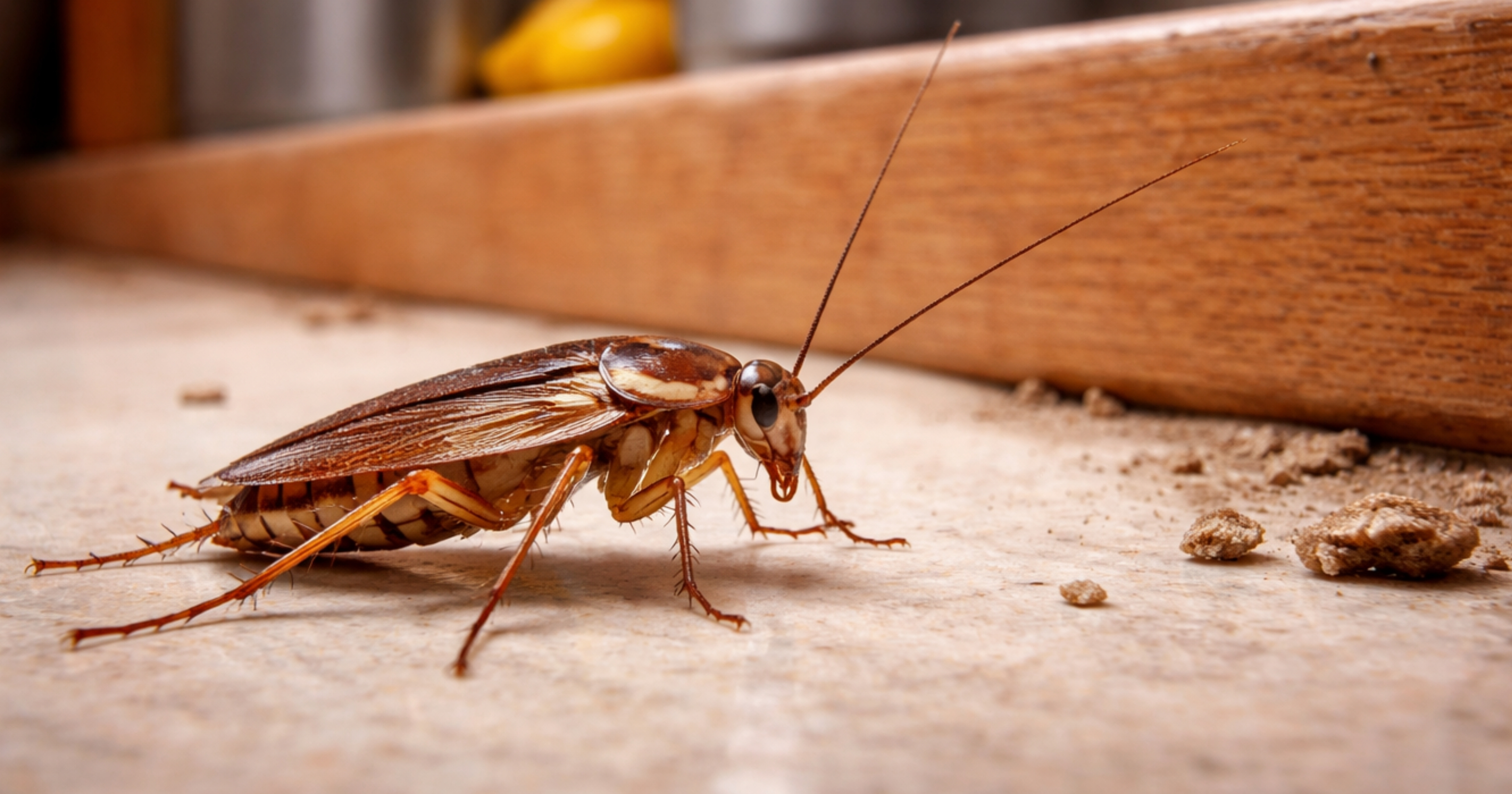
Cockroaches are not a surface problem. Populations persist because of how they reproduce, where they hide, and how incomplete treatment leaves the next wave intact. This page explains the biology behind that—so our treatment approach makes sense before you book.
Female cockroaches deposit egg cases—oothecae—that protect dozens of embryos. Those cases can sit in cracks, behind appliances, or in voids where spray never reaches. Killing adults does not remove eggs that are already laid; timing and follow-through matter.
Young cockroaches (nymphs) moult through several stages. Populations often look “gone” for a few days, then activity returns as nymphs emerge and grow. That is why one-off spraying of visible surfaces rarely matches the real timeline of the infestation.
A harbourage is anywhere cockroaches can rest, moult, and breed with food and moisture nearby: motor cavities, fridge seals, drain surrounds, wall voids, and stacked goods. German cockroaches in particular exploit tight kitchen gaps; American and Oriental species often tie to drains, basements, and service ducts. Treatment has to reach these zones—not just the floor centre.
Effective programmes combine inspection, species ID, bait-led transfer work for German and brown-banded cockroaches, and—where American or Oriental pathways dominate—sewer/void work with micro-encapsulated residuals and targeted spray where labels and inspection support them. Guarantees are species- and programme-matched; your written quote prevails.
For species-level ID, use our cockroach identification guide. For step-by-step methodology and timelines, see how we treat cockroaches.