Black Button Spider
Latrodectus indistinctus
Appearance
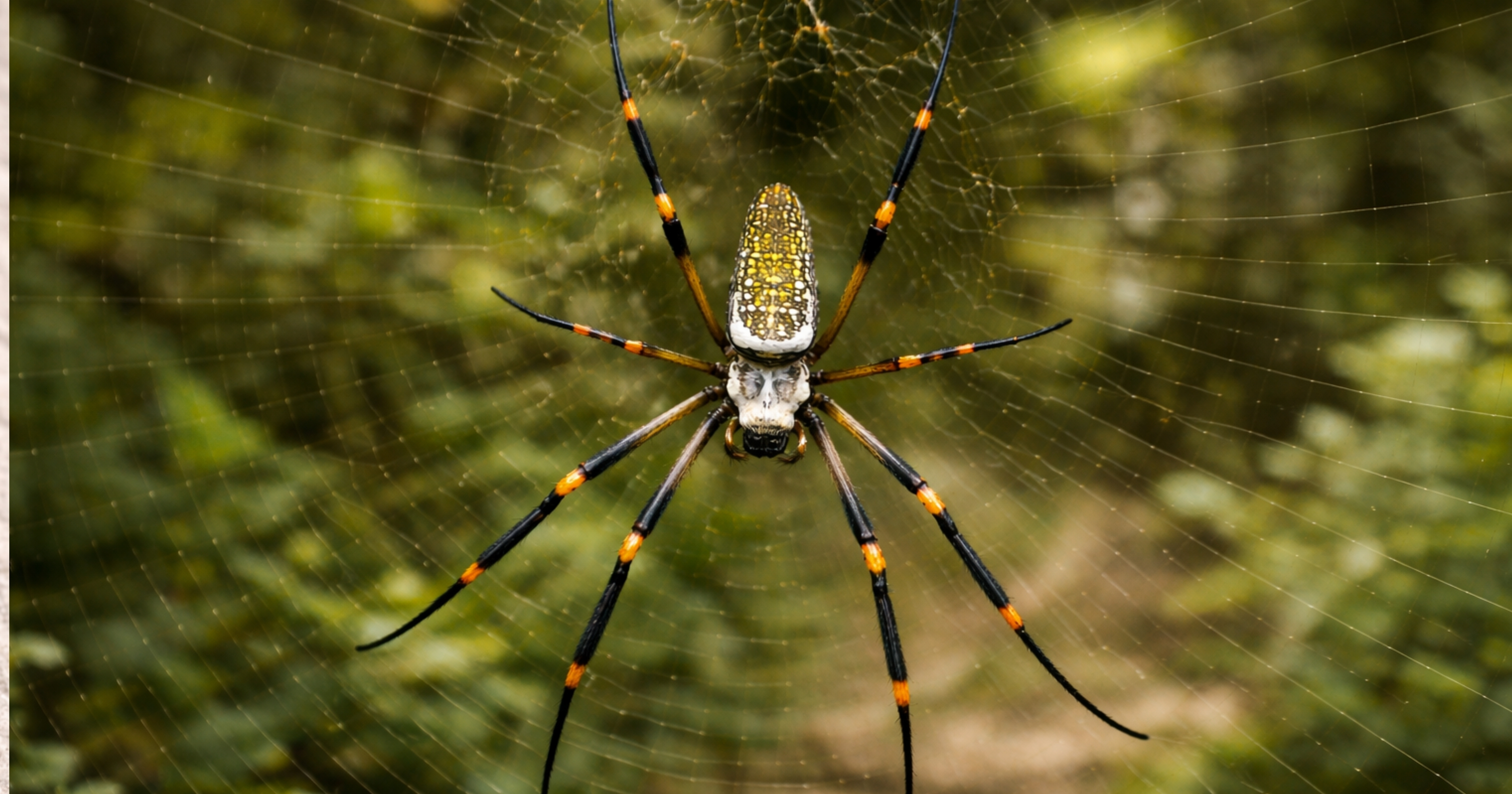
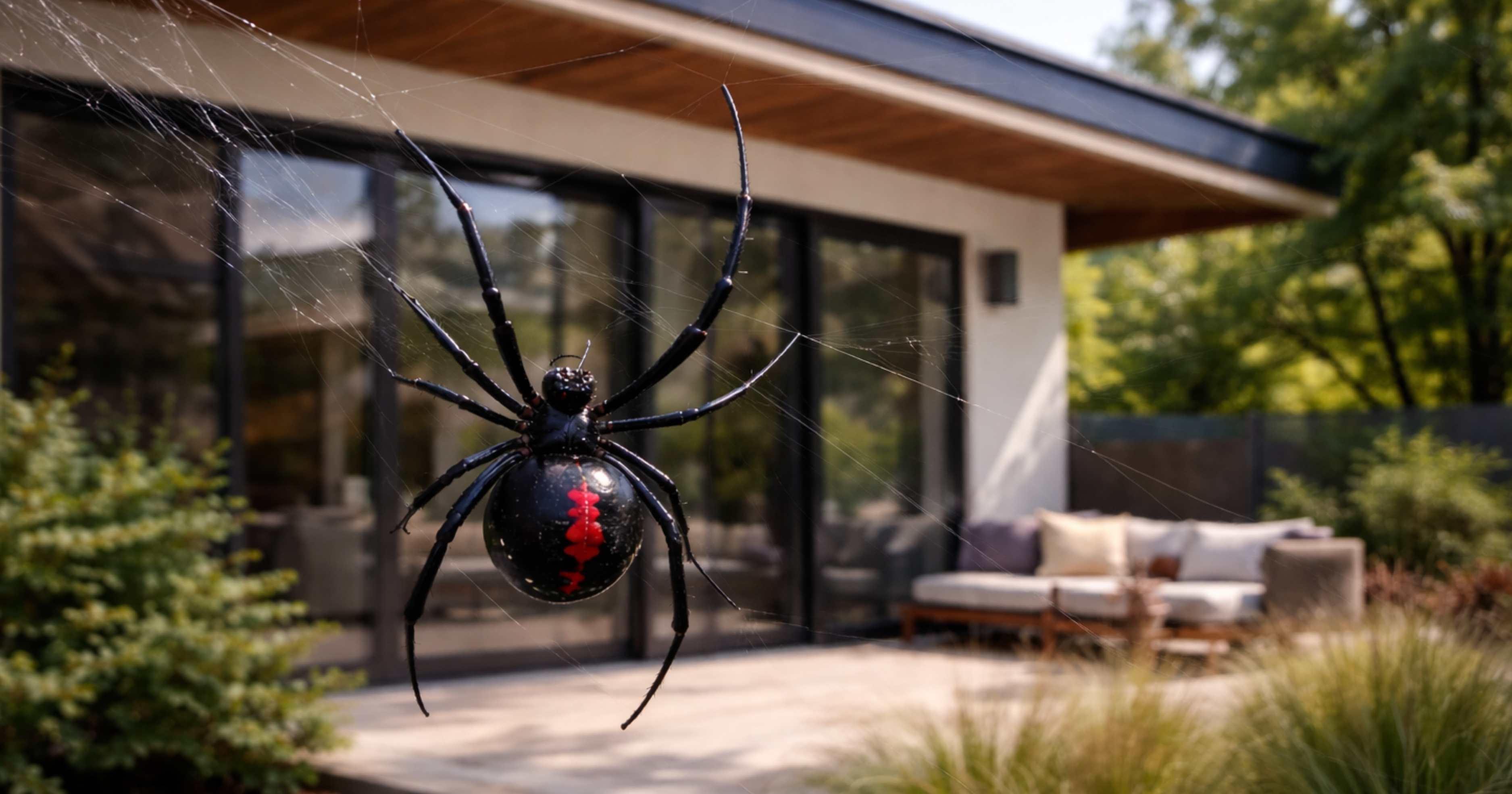
- Black or dark brown; glossy round abdomen
- Red, orange, or cream marking — often hourglass or spots on underside
- Body about 10–15 mm; legs add to overall size
- Web: irregular tangle, often in a retreat
Commonly found
Outdoors: under logsRocksVegetationQuiet garden cornersShedsRarely indoors in undisturbed areas
Behaviour
Button spiders (widow spiders) have a neurotoxic bite that can cause pain and systemic symptoms; medical attention may be needed. They are shy and bite only when disturbed. More common outdoors in the Western Cape and across South Africa. Web is messy, with a funnel or retreat where the spider hides.
Why you may be seeing them
Undisturbed spots — woodpiles, garden debris, sheds. They rarely enter busy living areas. Often found when moving logs or gardening.
Often confused with
Brown button spider (brown colour) · Other dark spiders without red marking (check underside)
When to get help
Bite suspected; spider in high-traffic area; or you want safe removal. Do not handle; seek medical advice if bitten.
Medically significant. Identification helps avoid confusion with harmless species.