Pest guide · spiders
National spider methodology: spider hub, how we treat spiders, spider guarantees, spider control by area. Identification: spider identification. Related: black button spider guide, brown button spider guide, violin spider guide, sac spider guide, rain spider guide, huntsman spider guide, cellar spider guide, golden orb weaver guide, wolf spider guide, jumping spider guide.
Theraphosidae — southern African mygalomorphs
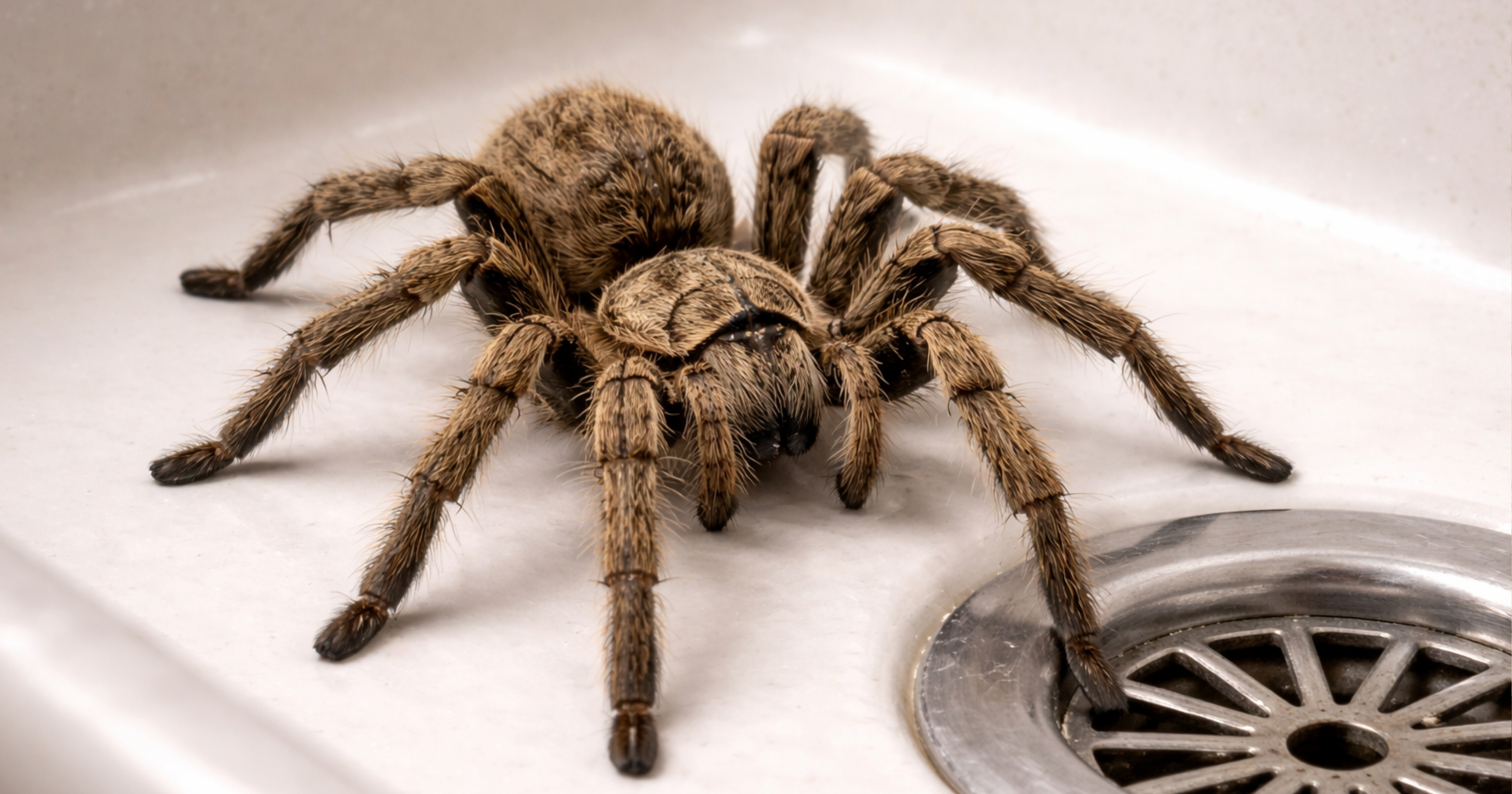
Large, hairy, and often feared on sight, the baboon spider is one of southern Africa's most misunderstood spiders. In South Africa, “baboon spider” refers to a group of large mygalomorph spiders in the family Theraphosidae, closely related to tarantulas. They are impressive animals, but the usual stories about them being “deadly house-invading killers” are not supported by the better sources. Southern African venom information from the African Snakebite Institute states that baboon spiders can inflict a painful bite, but are not regarded as medically important.
A baboon spider is not one single species. It is a group of large theraphosid spiders found in southern Africa. The Baboon Spider Atlas notes South African and Namibian baboon spiders across genera such as Harpactira, Harpactirella, and Idiothele, showing that “baboon spider” is a broader common name, not a single exact species label.
That matters for a pest guide, because people often talk about “the baboon spider” as though every large hairy spider is the same. It is more accurate to say baboon spiders.
The common name is generally linked to the resemblance between the spider's thick, hairy legs and the fingers of a baboon's hand. That is the traditional explanation behind the name in southern Africa, though the more important point for identification is that they are robust, hairy, ground-oriented spiders with large downward-pointing fangs typical of mygalomorph spiders. Southern African baboon spiders are described by the African Snakebite Institute as bulky, hairy spiders that can reach about 15 cm including the legs.
Baboon spiders are usually:
Many baboon spiders are burrow dwellers. The African Snakebite Institute notes that females live in large silky burrows in the ground, while adult males are often the ones people encounter because they wander in search of females. Britannica's general tarantula natural-history description also supports the key burrow-based lifestyle pattern in large theraphosids: silk-lined burrows, nocturnal hunting, and ambush predation.
This is one of the most important truths about baboon spiders: the big spider you see crossing a path is often not a permanent house pest. It is often a wandering male, while the female may remain hidden in a burrow for a long time.
Baboon spiders matter less as structural pests and more as wildlife that people frequently fear and misidentify. They are predators that feed mainly on insects and other small animals they can overpower. The African Snakebite Institute states that they eat insects, small rodents, small reptiles, and other prey they can subdue. Britannica's tarantula profile similarly describes large theraphosids as opportunistic ambush predators that take insects and small vertebrates.
So the real story is not that they damage homes. The real story is that they are large native predators that sometimes wander into human spaces.
Most people think a baboon spider's greatest strength is size.
That is not the best answer.
Britannica notes that large theraphosid spiders, despite having eight eyes, generally have poor vision and instead rely heavily on sensitive hairs on the legs and body to detect vibrations from nearby animals. That is a remarkable ability. It means a baboon spider is not primarily a visual hunter. It is a touch-and-vibration predator, reading the ground and surroundings through extremely sensitive body hairs.
This gives the spider a big advantage in:
The baboon spider's real edge is not just that it is large. It is that it can feel prey and danger through the world around it, making it highly effective as a nocturnal ambush predator.
That is a far better explanation of why this animal is so formidable than vague claims that it is “aggressive” or “evil.”
Baboon spiders are not just occupants of holes. They are often builders of silk-lined shelter systems. The African Snakebite Institute says females live in large silky burrows in the ground, and the image evidence and descriptions from the Baboon Spider Atlas show clear association with burrow mouths and silk reinforcement.
That matters because a burrow gives the spider:
So another major strength is not simply venom or fangs. It is the ability to create a fortified living space.
They look formidable because they combine:
But appearance is not the same as danger. That is one of the biggest mistakes people make with baboon spiders.
If you want the best factual answer, it is this:
They combine burrow security, vibration sensitivity, ambush predation, and powerful physical tools in one animal. Large size helps, but the real mastery lies in being able to stay hidden, detect movement without relying on sharp vision, and launch an efficient close-range strike from a protected retreat.
That is what makes them such effective predators.
Do not pick baboon spiders up with bare hands—a defensive bite can be very painful. If one is in an unsafe location, professional relocation or advice beats panic. Some populations may be protected; treat encounters as wildlife first. For recurring garden or threshold issues, get a quote can align identification and quoted scope with national spider methodology.
The baboon spider is one of southern Africa's most impressive native spiders. It is not remarkable because it is “deadly.” It is remarkable because it is a burrow-based, vibration-sensitive ambush hunter with a superb defensive design and an ancient spider body plan that has remained successful for millions of years. Once the myths are stripped away, what remains is not a monster, but a very specialised predator.
Next: black button spider guide, brown button spider guide, violin spider guide, sac spider guide, rain spider guide, huntsman spider guide, cellar spider guide, golden orb weaver guide, wolf spider guide, jumping spider guide, how we treat spiders, spider guarantees, spider identification guide. Book spider control in Cape Town. Read spider treatment safety.
Theraphosidae — burrow mygalomorphs; painful bite on common guidance but not the same medically important class as button or violin spiders. Your quote defines treatment scope.
Burrow mouths or wandering males? Use get a quote for calm identification-led advice.
We identify the species context first, then advise on humane handling boundaries and quoted control where appropriate—national spider methodology; your quote prevails.
Black button spider guide, Brown button spider guide, Violin spider guide, Sac spider guide, Rain spider guide, Huntsman spider guide, Cellar spider guide, Golden orb weaver guide, Wolf spider guide, Jumping spider guide, How we treat spiders, Spider guarantees, Spider control by area, Spider identification guide. Hub: spider control.