We identify the concern, treat harbourages for medically significant or agreed nuisance species, and advise on sealing and attractants—without promising to remove every spider from the ecosystem. Your written quote and agreement always prevail.
National guarantees hub · Spider guarantee summary · Spider control (booking)
Educational guides: Black button spider / black widow (L. indistinctus, ARC complex) · Brown button spider / brown widow (L. geometricus) — ID, egg sac clues, latrodectism context, and urban web habits. · Violin spider / recluse (Loxosceles spp.) — six-eye ID, retreat stealth, tissue bite risk vs social-media hype.
Sac spider (Cheiracanthium) — fabric silk retreats, night hunting, cytotoxic bite myths vs misdiagnosed skin lesions.
Rain spider (Palystes, e.g. P. superciliosus) — huntsman on walls/curtains, wet-weather sightings vs myth, painful bite if trapped but not medically dangerous on common ASI-style guidance.
Baboon spider (Theraphosidae) — burrow mygalomorphs, vibration-hair hunting, painful bite myths vs African Snakebite Institute “not medically important” framing.
Huntsman spider (Sparassidae) — flat laterigrade runners on walls and ceilings; web myth vs active hunting; bite pain vs medically prioritised widow and recluse literature; crevice mobility and rain-spider confusion (educational).
Cellar spider (Pholcidae) — corner daddy long-legs true spiders vs harvestmen; web-vibration defence; most-venomous myth debunk; not medically prioritised vs button/violin literature (educational).
Golden orb weaver (Trichonephila) — very large golden orb webs in vegetation; silk engineering vs danger myths; generally harmless in SA references; path-blocking webs as practical nuisance (educational).
Wolf spider (Lycosidae) — three-row eyes and ground pursuit; chase myth vs cover-seeking; egg sac and young on the female; not medically prioritised like button/violin spiders in common summaries (educational).
Jumping spider (Salticidae) — large forward-facing eyes and vision-led stalk-and-pounce; dragline silk vs orb-web myth; harmless beneficial framing in SA references; not medically prioritised like button/violin spiders (educational).
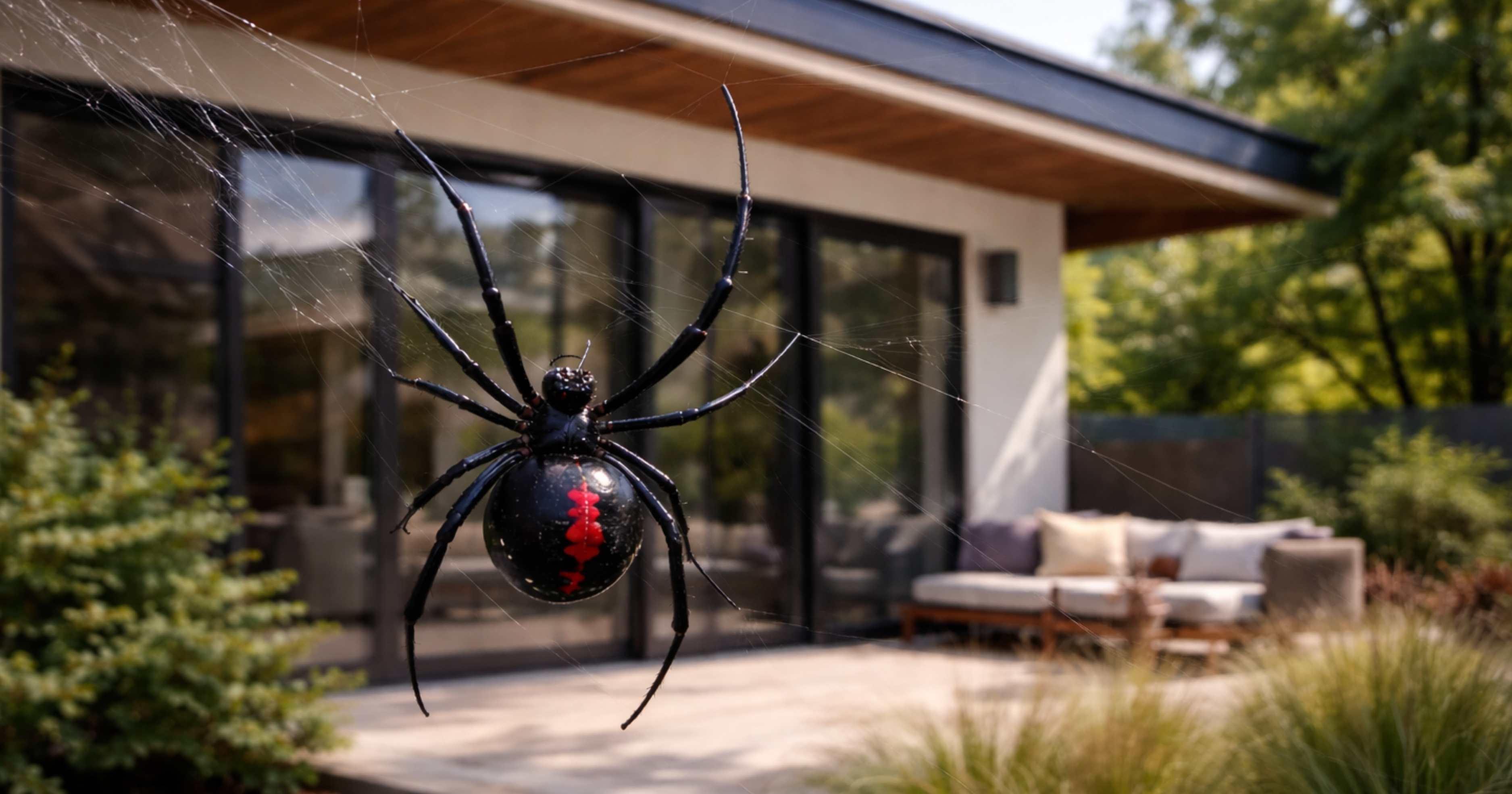
We combine what you have seen with our spider identification guide and on-site assessment so effort goes to species that justify treatment.
We inspect entry lines, eaves, storage, vegetation contact, and quiet harbourages. The quote lists treated zones and any cooperation items (clutter reduction, lighting changes).
Button spiders, violin spiders, and high-risk aggregations (e.g. dense cellar spider pressure in living spaces) drive treatment plans. Beneficial or outdoor orb-weavers may be left alone unless your agreement says otherwise.
Products and placement follow label, occupancy, and species risk. We treat webs, cracks, void entrances, and runways—not broadcast spraying of entire gardens without reason.
Gap sealing, door sweeps, and trimming vegetation off walls reduce reinvasion. Your paperwork may list which steps are advisory versus included.
Other insects support spider populations. Managing exterior lighting and general pest pressure supports lasting results alongside targeted treatment.
New sightings after treatment may be different species or outdoor strays. We reassess against your warranty scope before additional work.
Standard agreed premises targeted spider programme: six months written guarantee on the quoted scope when we sell it as such—typically named interior, perimeter, and harbourage zones for problem species (e.g. button spiders, violin spiders, high-risk nuisance aggregations). We do not promise zero spiders on the property forever: many species are harmless or beneficial; outdoor ecology and prey insects can bring new individuals. Warranty covers eligible resurgence of covered species/activity in the programme footprint during the window. Cooperation on clutter, lighting, and vegetation contact may be listed for warranty eligibility. Callbacks under guarantee are free within eligible scope. Commercial or intensive sites may use different cadence—your paperwork prevails. Full wording: spider guarantees.
Open windows, unsprayed outbuildings, or untreated neighbouring units can reintroduce spiders. Warranty attaches to the programme footprint on your quote—not every arachnid in the suburb.
Follow technician re-entry guidance, especially around medically significant species. General expectations: pest control safety.
No. We focus on problem species and high-risk harbourages named in your scope. Many spiders are harmless or useful for other pests.
We target nests, webs, and harbourages per assessment and label, and advise on reducing contact risk. Identification guides what we treat.
Standard agreed premises targeted spider programme: six months written guarantee on the quoted scope when we sell it as such—typically named interior, perimeter, and harbourage zones for problem species (e.g. button spiders, violin spiders, high-risk nuisance aggregations). We do not promise zero spiders on the property forever: many species are harmless or beneficial; outdoor ecology and prey insects can bring new individuals. Warranty covers eligible resurgence of covered species/activity in the programme footprint during the window. Cooperation on clutter, lighting, and vegetation contact may be listed for warranty eligibility. Callbacks under guarantee are free within eligible scope. Commercial or intensive sites may use different cadence—your paperwork prevails. Warranty callbacks follow your written agreement when covered activity returns within the guarantee window on the quoted scope.
New individuals can appear from outdoors or prey activity. Your programme defines which zones and species are covered and for how long.
We scope species risk, zones, and cooperation items in your quote.