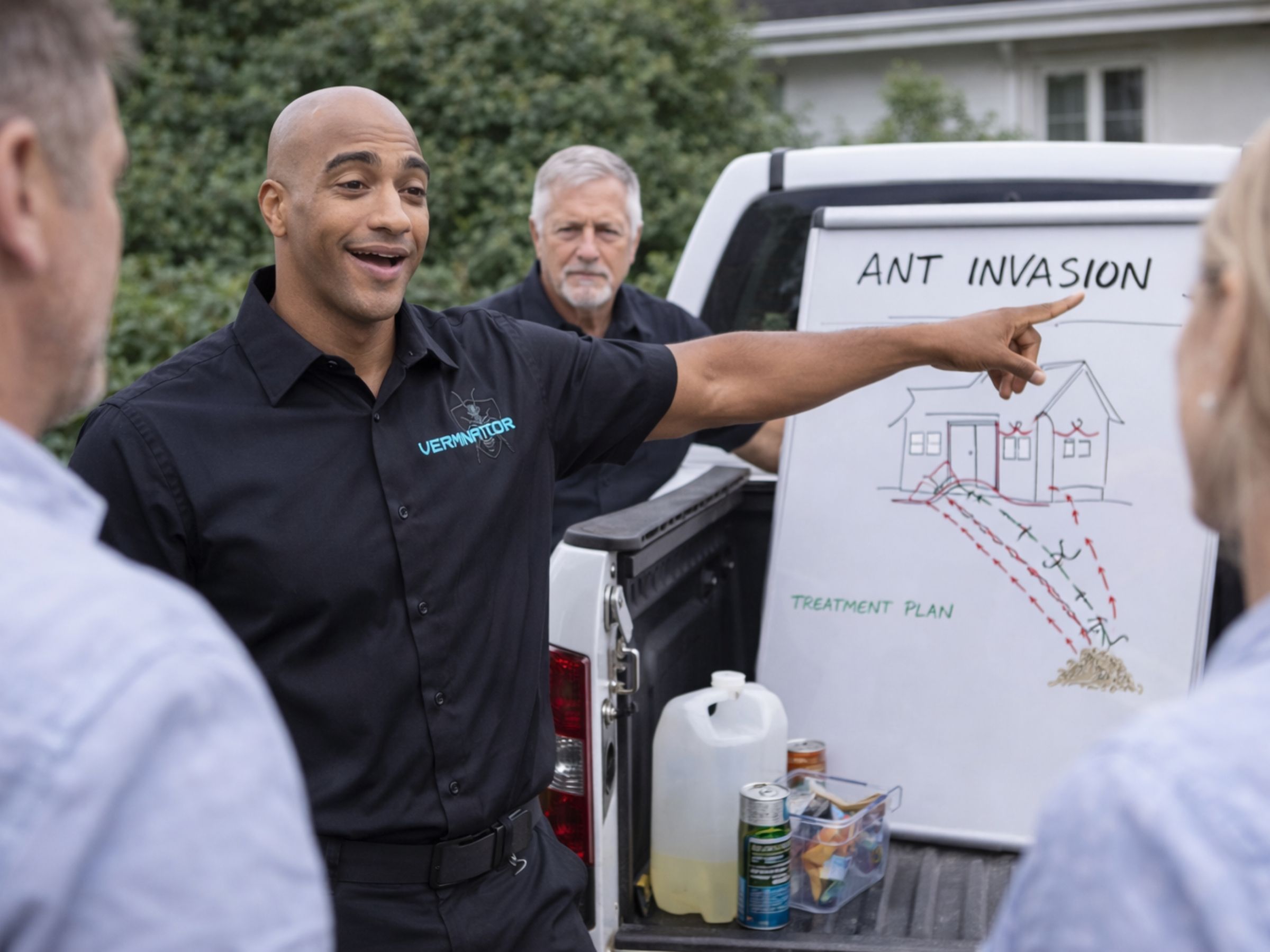
We walk the job room by room and surface by surface: kitchens, sculleries, pantries, under sinks, behind appliances, skirting and pipe entries, then the exterior shell and agreed outdoor zones. We follow trails, moisture, and food pressure—not a generic spray pattern.
Different ants leave different signs (trail shape, persistence, indoor vs paving, damage vs foraging). If identification is uncertain, we link the plan to ant identification and what we observe on site. For multi-nest Argentine ant context (Linepithema humile), see our Argentine ant pest guide. For large pugnacious ant context (Anoplolepis custodiens), see our Pugnacious ant pest guide. For big-headed ant context (Pheidole megacephala), see our Big-headed ant pest guide (same species under the South African name: Brown house ant pest guide). For Pharaoh ant context (Monomorium pharaonis), see our Pharaoh ant pest guide. For white-footed ant context (Technomyrmex difficilis), see our White-footed ant pest guide. For black sugar ant context (Lepisiota capensis), see our Black sugar ant pest guide. For cocktail ant context (Crematogaster peringueyi), see our Cocktail ant pest guide. For copper-bellied ant context (Ochetellus glaber), see our Copper-bellied ant pest guide.
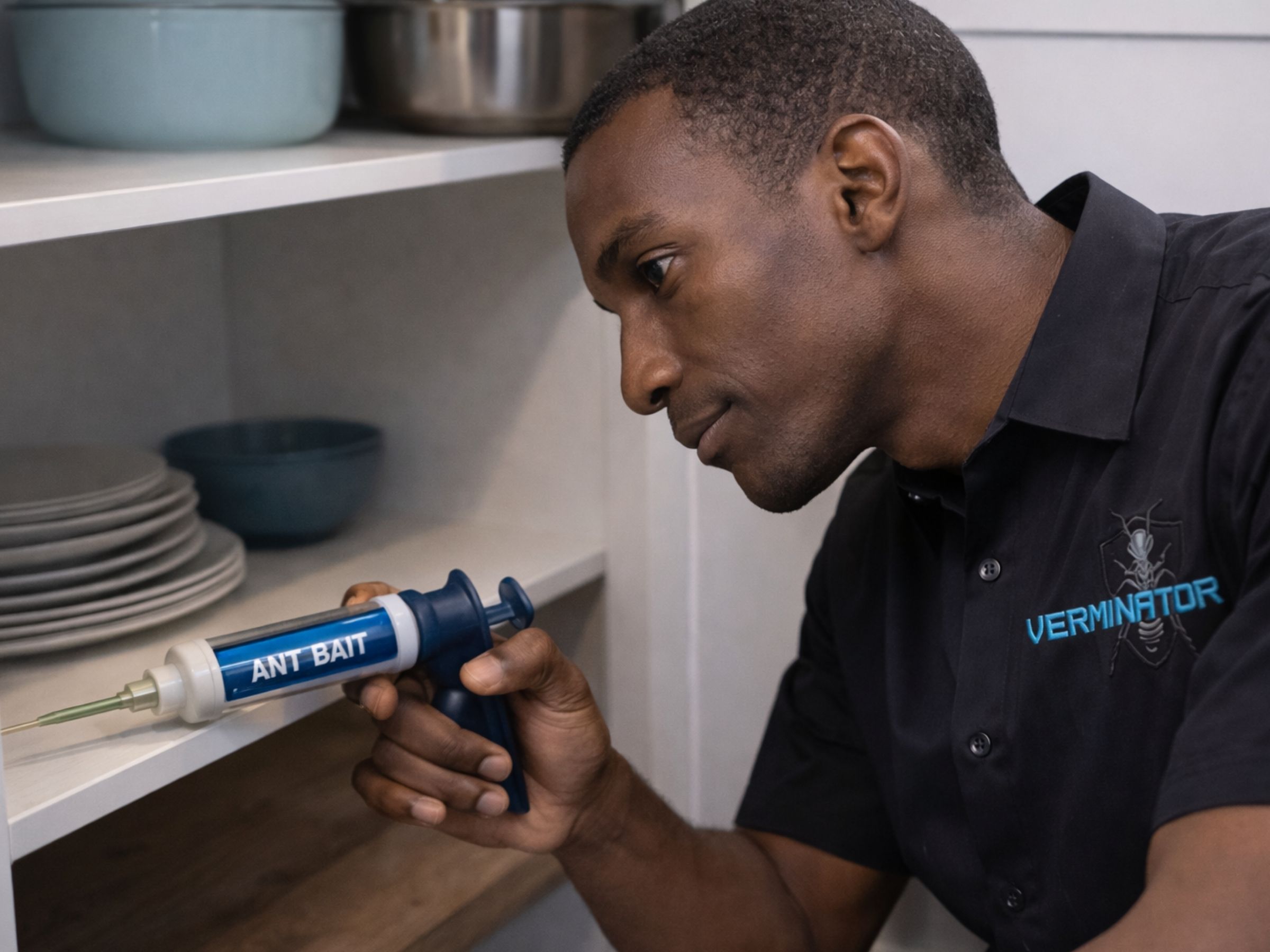
Gel baits and secured bait stations on proven trails and high-value intercepts—cupboards, appliance margins, void lines, and pipe entries. Placement is strategic, not broadcast across every surface.
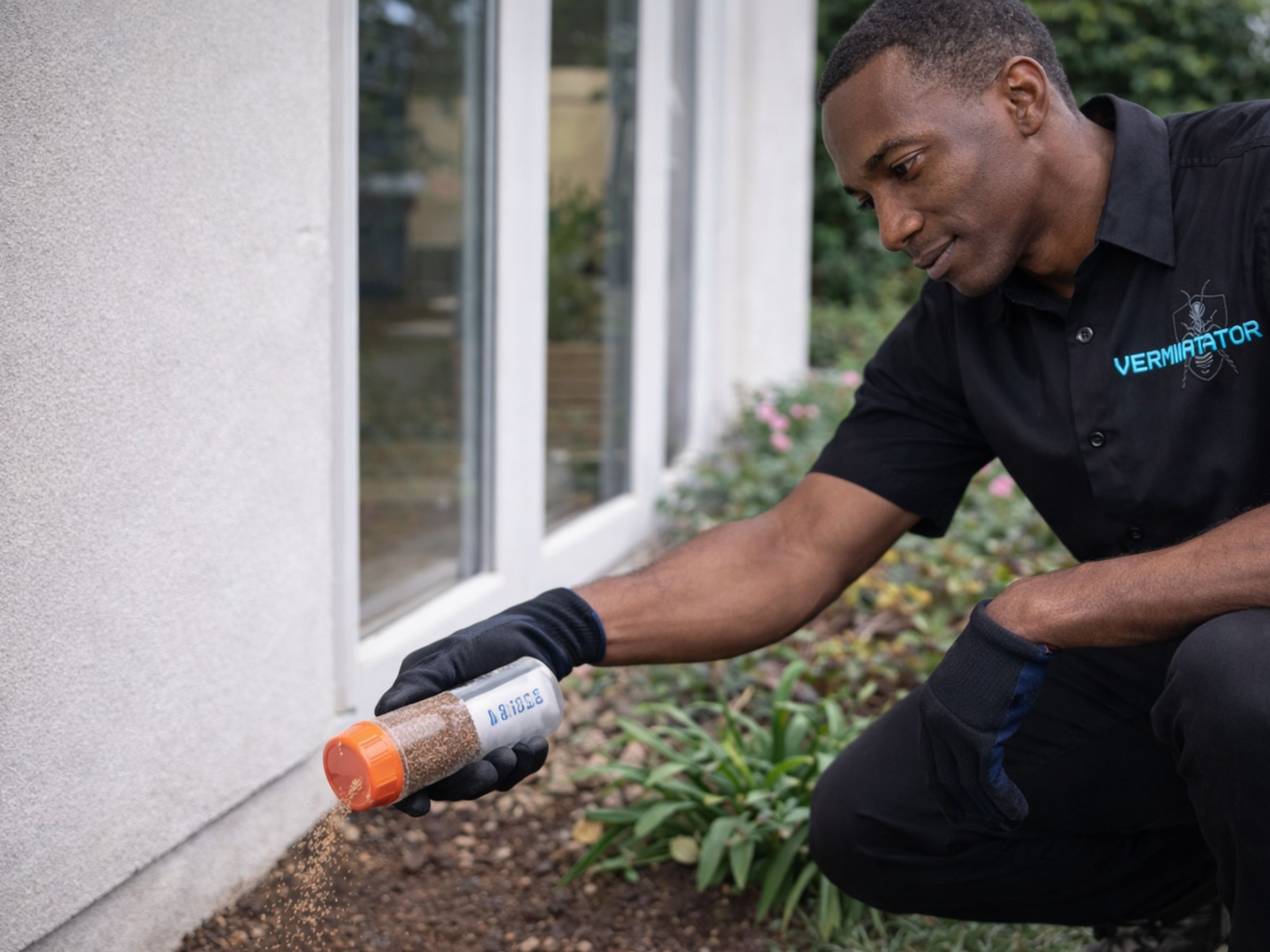
Paving, joints, patios, paths, garden beds, irrigation edges, and the building line where ants bridge from soil to walls. We inspect nest clues in hardscape and adjacent soil; outdoor work is scoped to agreed areas in your quote.
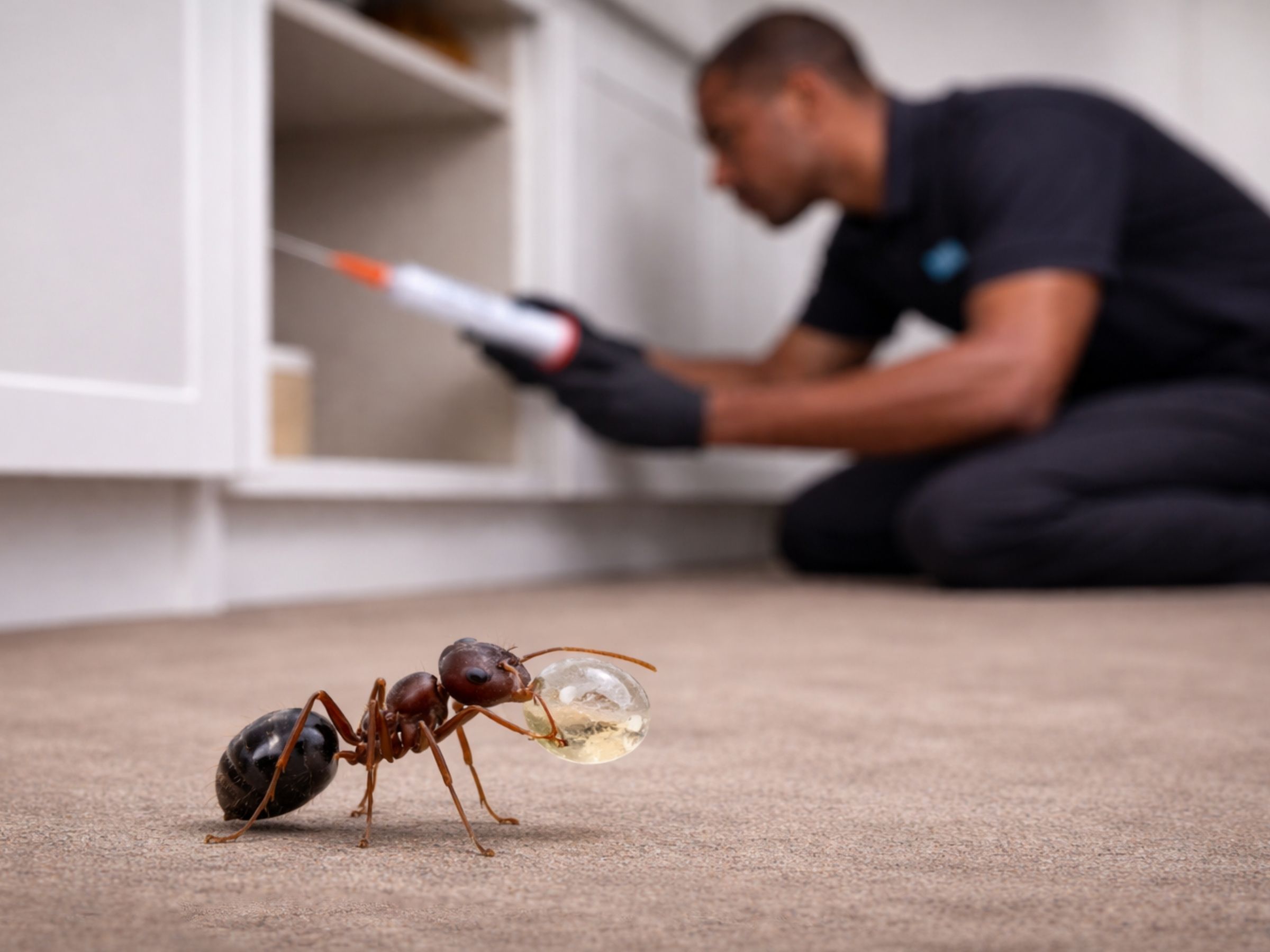
Gel baits and bait stations are the primary route to colony impact: workers recruit, share bait through the nest, and modern gel matrices include neonicotinoid-class actives (chemically related to nicotine in how they affect insects). We may run multiple bait matrices (for example sweet vs protein) when foragers ignore one type—species and season shift preference.
Pyrethroid perimeter barriers (odourless, label-directed) are often used outdoors to support a long-lasting shell where ants cross the building line. That barrier is a supporting layer: colony elimination still depends on bait reaching the nest, not contact kill alone.
Where inspection confirms nests or high-density foci, we add nest-directed or targeted applications—always strategically and legally, per registration and label. We do not rely on indiscriminate interior spraying as the first line; repellent misuse can reroute or split some species.
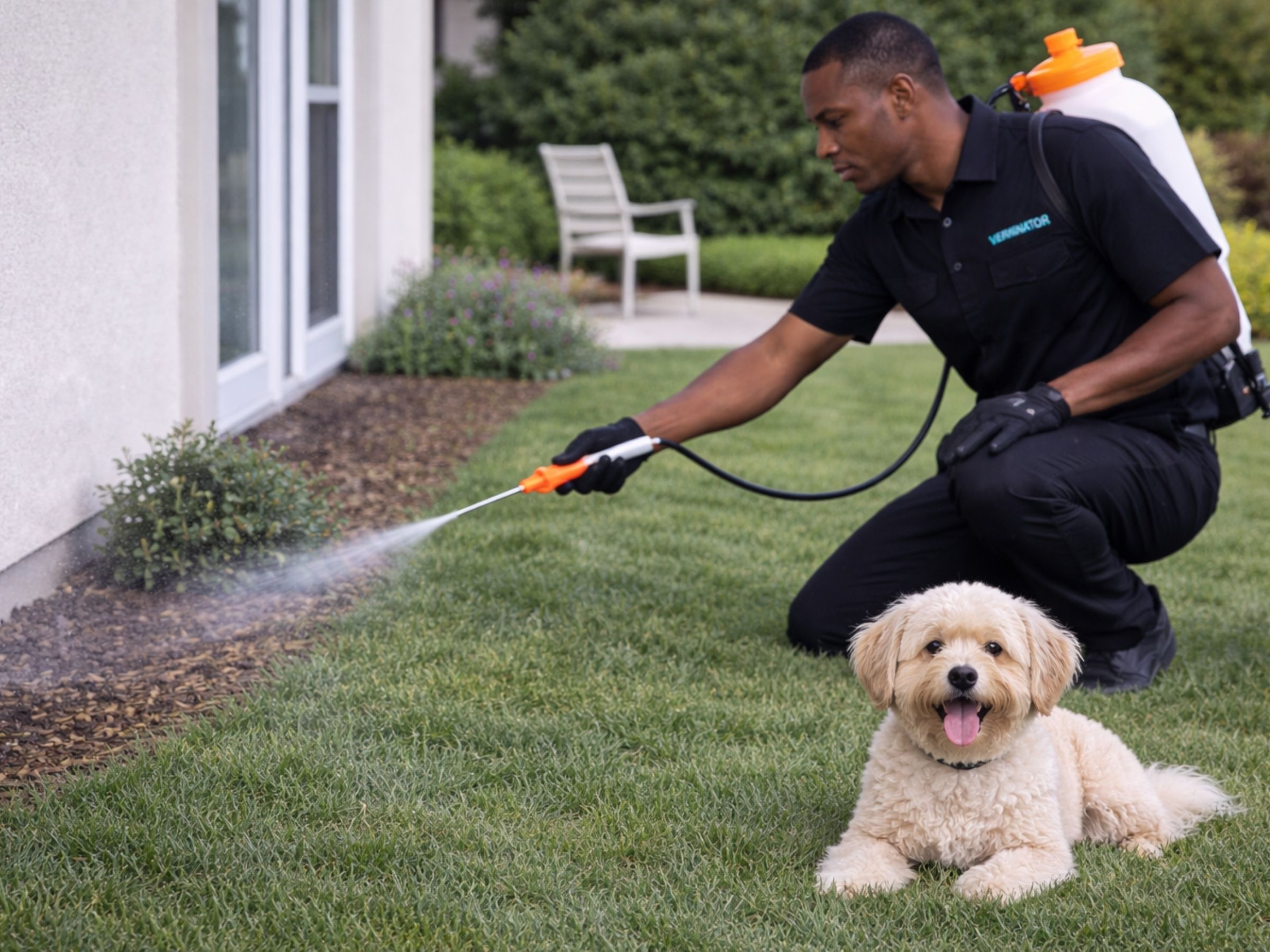
Outdoor perimeter support: odourless barrier applications, applied label-consciously around the building line.
Seal food, manage bins, fix leaks, reduce pet-food overnight exposure, and trim touch-points on walls. Good housekeeping supports the service; it does not replace colony-directed treatment when ants are established.
Outdoor ants play roles in soil health and food webs. Our outdoor work targets human conflict: trails into buildings, nests in paving or structure-adjacent hardscape, and agreed zones on your property—not blanket eradication of every ant from the landscape.
Want a standalone guarantee summary for sharing or bookmarking? Ant guarantees & re-inspections →
Internal (standard): six months from completion of the agreed internal scope, unless a different period is set out in writing (e.g. industrial or site-specific contracts).
External / outdoor: three months for agreed outdoor areas in the external package, as listed in your quote. Guarantee applies to paid / targeted property scope—not neighbouring land we do not treat.
Included follow-up: your agreement includes an initial follow-up visit as defined in the quote. After that follow-up, if further activity warrants return visits under guarantee, we provide up to three (3) additional complimentary guarantee re-inspections (technical re-inspections internally) to verify treatment integrity and adjust strategy or bait matrices.
Callbacks under guarantee are free within eligible scope.
Maintenance: after the guarantee window, ongoing scheduled maintenance is strongly recommended for hot-zone properties. Maintenance is sold as a separate Verminator plan for that property, including optional maintenance contracts that may extend coverage—see your written agreement.
Written quote, service agreement, and maintenance contract (if any) prevail. This page is a summary, not a contract.
All Verminator ant services use odourless applications only. You do not need to vacate—ant treatments are designed for occupied homes and workplaces. Baits are placed out of casual reach where practical. Always follow your technician's instructions on the day. General guidance: Pest control safety.
Baits are designed to be carried back to the colony and shared, so control reaches beyond the ants you see. Indiscriminate repellent spraying can reroute or split some species. We use label-directed baits and stations first, then add perimeter or nest-directed work where inspection supports it.
Many sites show clear improvement within about two days. Full colony knockdown often unfolds over roughly two weeks because baits work through recruitment and sharing. A short period of busy trails can be normal while ants collect bait.
If you are concerned during the guarantee period, we return at no charge for a guarantee re-inspection (internally we treat this as a technical re-inspection) to verify bait placement, application quality, and site factors—not only when ants are still visible.
Outdoor areas are exposed to rain, irrigation, UV, and foot traffic, so treatments can wear faster than protected indoor placements. External services are quoted for agreed areas only, as listed in your agreement.
No. All Verminator ant services use odourless applications only, and you do not need to vacate. Baits are placed out of casual reach where practical. Always follow your technician’s instructions on the day; see our pest control safety page for general guidance.
Get a quote for internal, external, or combined services—scoped to your property.
Case study
Argentine ant colony — Sea Point third-floor apartment
2 prior spray treatments failed. Colony source in pavement joint 3 floors below. Bait-led clearance, no vacating, 6-month guarantee.
Read the full case study →Case study
Argentine ant office park programme — Century City
6 tenants, 4 buildings, single supercolony in shared landscaping. All complaints resolved in 1 service cycle.
Read the full case study →